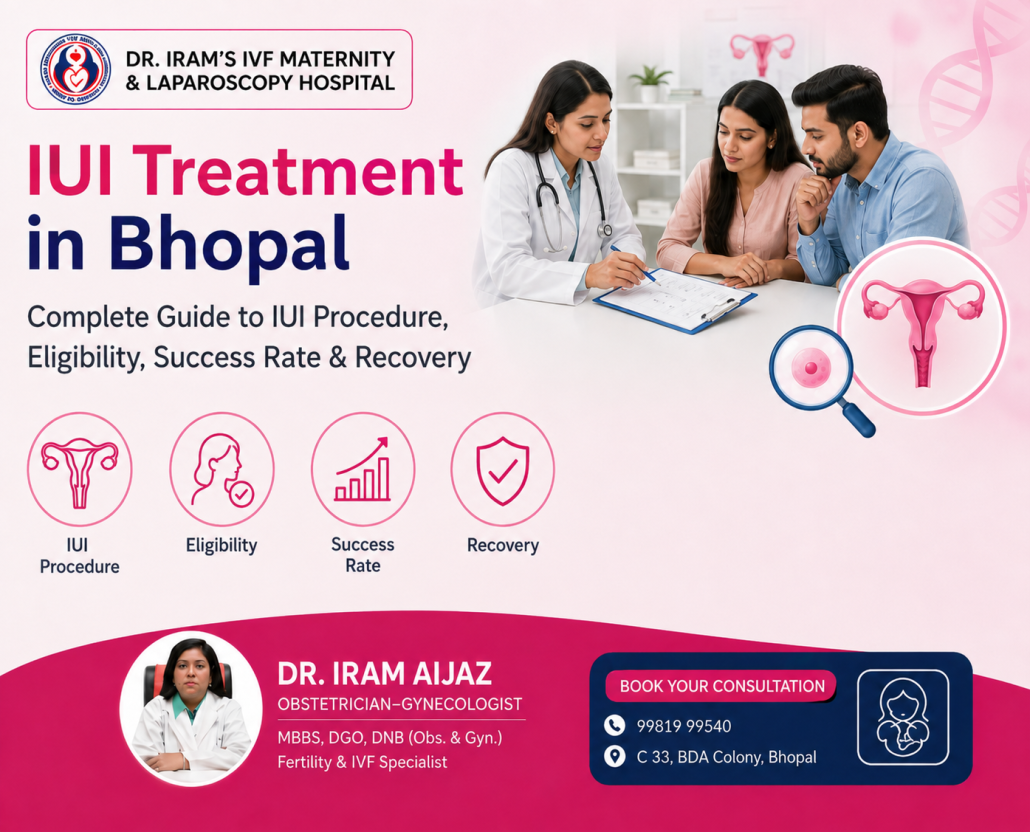
Trying to conceive can be an emotional journey for couples. When pregnancy does not occur naturally, fertility evaluation can help identify possible reasons and determine suitable treatment options. One such fertility treatment is IUI Treatment in Bhopal, a relatively simple assisted reproductive procedure in which prepared sperm is placed directly into the uterus around the time of ovulation.
For couples looking for fertility support, understanding the IUI process, eligibility, preparation, possible success rate, risks, and recovery can make the treatment journey easier to understand. IUI Treatment in Bhopal may be considered in selected cases of unexplained infertility, mild male-factor infertility, ovulation problems, or when donor sperm is required.
At an IVF Centre in Bhopal, fertility specialists can assess both partners and determine whether IUI, medication, IVF, or another approach is more appropriate for their individual situation.
What Is IUI Treatment?
IUI stands for Intrauterine Insemination. It is an assisted reproductive technique in which specially prepared sperm is placed directly inside the uterus close to the time of ovulation.
The purpose of IUI Treatment in Bhopal is to place a concentrated sample of healthy, motile sperm closer to the fallopian tubes, where fertilization may occur naturally.
Unlike IVF, fertilization during IUI takes place inside the woman’s body. IUI is therefore generally less invasive than IVF and may be considered before moving to more advanced fertility treatments in appropriate patients.
Why Is IUI Treatment Done?
There can be several reasons why a fertility specialist may recommend IUI Treatment in Bhopal.
Common situations include:
- Unexplained infertility
- Mild male-factor infertility
- Problems with ovulation
- Difficulty having vaginal intercourse
- Use of donor sperm
- Certain cervical factors
- Selected fertility problems where IUI may be appropriate
The exact indication depends on the couple’s age, fertility history, ovarian function, sperm parameters, fallopian-tube status, and previous treatment.
An IVF Centre in Bhopal generally performs a detailed fertility assessment before recommending IUI so that treatment is matched to the patient’s specific needs.
Who Is Eligible for IUI Treatment in Bhopal?
Not every couple experiencing infertility is an ideal candidate for IUI.
A fertility specialist may consider IUI Treatment in Bhopal when:
1. Fallopian Tubes Are Open
At least one fallopian tube generally needs to be open and functional because fertilization usually occurs in the fallopian tube.
2. Ovulation Is Occurring
Women who ovulate regularly may be candidates for natural-cycle IUI. In some cases, medicines are used to stimulate ovulation.
3. Sperm Quality Is Suitable
The male partner’s semen is evaluated before treatment. The number and movement of sperm can influence whether IUI is appropriate.
4. Infertility Is Unexplained
For some couples with unexplained infertility, ovarian stimulation combined with IUI can be considered as an initial treatment approach. ASRM guidelines commonly recommend a limited course of oral-medication ovarian stimulation with IUI before IVF for suitable couples.
5. Donor Sperm Is Required
IUI can also be performed using donor sperm in appropriate circumstances.
When May IUI Not Be Recommended?
IUI Treatment in Bhopal may not be the best option when there are fertility factors that significantly reduce the likelihood of success.
Examples may include:
- Blocked fallopian tubes
- Severe male-factor infertility
- Certain advanced stages of endometriosis
- Significant reduction in ovarian reserve
- Conditions requiring IVF or another assisted reproductive technique
The NHS notes that IUI is unlikely to increase pregnancy chances in some situations, including blocked fallopian tubes and severe sperm-quality problems.
A fertility specialist should therefore evaluate the couple before deciding whether IUI is appropriate.
IUI Treatment Procedure – Step-by-Step Guide
Understanding the IUI Treatment Procedure can help couples prepare for the treatment cycle.
Step 1: Fertility Evaluation
Before starting IUI, the doctor may evaluate:
- Menstrual history
- Ovulation pattern
- Ovarian reserve
- Uterine health
- Fallopian tubes
- Semen analysis
- Previous pregnancies
- Previous fertility treatments
A test to confirm that the fallopian tubes are open may be required before IUI.
Step 2: Ovulation Monitoring
The timing of IUI is extremely important.
Ovulation may be monitored through:
- Ultrasound
- Urine ovulation testing
- Blood tests
- Hormonal monitoring
Some women may undergo natural-cycle IUI, while others may receive medication to stimulate ovulation.
If ovarian stimulation is used, ultrasound monitoring is important to assess follicular development and reduce the risk of excessive stimulation.
Step 3: Ovulation Medicines
In selected patients, fertility medicines may be prescribed to encourage the development of one or more mature follicles.
Medicines can include oral ovulation-induction drugs or injectable medicines, depending on the treatment plan.
The choice of medicine and dose should always be determined by the fertility specialist.
Ovarian stimulation can increase the risk of multiple pregnancy, so appropriate monitoring is important.
Step 4: Sperm Collection and Preparation
On the day of IUI, a semen sample is usually collected.
The laboratory prepares the sample using a process commonly called sperm washing.
This preparation separates sperm from the seminal fluid and concentrates suitable, motile sperm for insemination.
If donor sperm is used, the fertility centre follows the applicable screening, storage, and preparation procedures.
Step 5: IUI Procedure
During IUI Treatment in Bhopal, the prepared sperm sample is placed into a thin catheter.
The catheter is gently passed through the cervix into the uterus, and the prepared sperm is introduced.
The procedure itself generally takes only a few minutes and usually does not require anaesthesia. Some women may experience mild discomfort or cramping.
Step 6: Pregnancy Test
After IUI, the fertility team will advise the couple when to perform a pregnancy test.
Testing too early can sometimes create confusion, particularly if an hCG trigger injection has been used.
Following the fertility specialist’s recommended testing date can provide a more reliable result.
IUI Treatment Success Rate
One of the most common questions couples ask is about the IUI Success Rate.
There is no single success rate that applies to every patient.
The chance of pregnancy can depend on:
- Woman’s age
- Egg quality
- Ovarian reserve
- Ovulation
- Sperm count and motility
- Cause of infertility
- Number of mature follicles
- Endometrial thickness
- Whether fertility medicines are used
- Previous fertility treatment
For example, UCLH reports a pregnancy rate of approximately 10–15% per IUI cycle in its service, illustrating why success figures should be interpreted according to the individual clinic and patient population rather than treated as a universal number.
Therefore, couples should discuss their individual IUI Success Rate with their fertility specialist rather than relying on a fixed percentage.
Factors That Can Affect IUI Success Rate
Several factors can influence the outcome of IUI Treatment in Bhopal.
Age
Female age is an important factor because egg quantity and quality generally change with age.
Sperm Quality
Adequate sperm concentration and movement can improve the likelihood that insemination will be useful.
Ovulation
Regular and appropriately timed ovulation is important for IUI.
Fallopian Tube Health
At least one open fallopian tube is generally required for natural fertilization following IUI.
Cause of Infertility
IUI may work better for some causes of infertility than others.
Treatment Protocol
The doctor may recommend natural-cycle IUI or IUI with carefully monitored ovarian stimulation depending on the patient’s condition.
How Many IUI Cycles May Be Needed?
The number of IUI cycles varies from patient to patient.
For suitable couples with unexplained infertility, ASRM recommends typically 3 or 4 cycles of ovarian stimulation with oral medications and IUI, followed by IVF if treatment is unsuccessful.
However, this does not mean every couple should undergo the same number of cycles.
A fertility specialist may recommend changing the treatment approach earlier depending on:
- Age
- Ovarian reserve
- Sperm parameters
- Previous treatment
- Duration of infertility
- Other medical factors
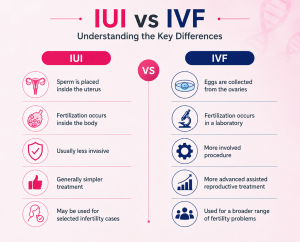
IUI vs IVF – What Is the Difference?
Both IUI and IVF are assisted reproductive treatments, but they work differently.
| IUI | IVF |
|---|---|
| Sperm is placed inside the uterus | Eggs are collected from the ovaries |
| Fertilization occurs inside the body | Fertilization occurs in a laboratory |
| Usually less invasive | More involved procedure |
| Generally simpler treatment | More advanced assisted reproductive treatment |
| May be used for selected infertility cases | Used for a broader range of fertility problems |
An IVF Centre in Bhopal can explain which treatment is appropriate based on the couple’s fertility evaluation.
For some couples, IUI may be attempted first, while others may benefit from proceeding directly to IVF.
IUI Treatment at an IVF Centre in Bhopal
A well-equipped IVF Centre in Bhopal can provide fertility evaluation, ovulation monitoring, semen preparation, IUI, and advanced fertility treatments under coordinated care.
The fertility journey may involve:
- Initial consultation
- Fertility investigations
- Ultrasound monitoring
- Hormonal assessment
- Semen analysis
- Ovulation induction
- Sperm preparation
- IUI
- Pregnancy testing
- Further fertility planning if required
The aim is to understand the underlying fertility problem and select a treatment plan appropriate for the couple.
Dr. Iram Ajaz – Fertility and IVF Care in Bhopal
According to the provided website information, Dr. Iram Ajaz is an Obstetrician-Gynecologist based in Bhopal and is the doctor behind Dr. Iram’s IVF.
The provided information states that Dr. Iram’s IVF began in 2013, with a focus on fertility care and supporting couples through their reproductive journey.
The centre describes a team of fertility professionals and trained staff working together to provide fertility services under one roof.
For couples considering IUI Treatment in Bhopal, a consultation with the fertility team can help determine whether IUI is suitable or whether another fertility treatment may provide a better option.
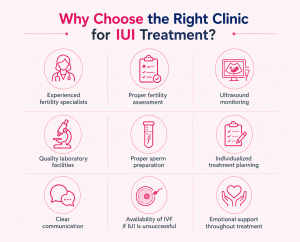
Why Choose an IVF Centre in Bhopal for IUI?
Choosing the right fertility centre can make the treatment process more organized and easier to understand.
Important factors include:
- Experienced fertility specialists
- Proper fertility assessment
- Ultrasound monitoring
- Quality laboratory facilities
- Proper sperm preparation
- Individualized treatment planning
- Clear communication
- Availability of IVF if IUI is unsuccessful
- Emotional support throughout treatment
A fertility centre should also explain the expected benefits, limitations, possible risks, and alternatives before starting treatment.
IUI Treatment Recovery
One of the advantages of IUI Treatment in Bhopal is that recovery is generally quick.
The procedure usually takes only a few minutes, and patients can normally return home after a short period of observation. Mild cramping or light spotting can occur after IUI.
Most patients can return to their regular daily activities unless their fertility specialist recommends otherwise.
There is generally no lengthy surgical recovery period associated with IUI.
What to Expect After IUI?
After IUI Treatment in Bhopal, some women may notice:
- Mild abdominal cramping
- Light spotting
- Temporary pelvic discomfort
- No noticeable symptoms at all
These symptoms do not necessarily indicate whether the treatment has worked.
Pregnancy symptoms usually cannot reliably confirm pregnancy immediately after IUI. The recommended pregnancy test should be performed at the time advised by the fertility team.
Possible Risks and Complications of IUI
IUI is generally considered a safe fertility procedure, but no medical treatment is completely without risk.
Possible concerns include:
- Mild cramping
- Light spotting
- Rare infection
- Multiple pregnancy when ovulation medicines are used
- Ovarian hyperstimulation syndrome in stimulated cycles
- Ectopic pregnancy
The NHS notes that the risk of infection after IUI is very small, while fertility medicines can increase the risk of multiple pregnancy and, rarely, ovarian hyperstimulation syndrome.
Patients should immediately contact their fertility team if they develop severe abdominal pain, significant bloating, breathing difficulty, faintness, or other concerning symptoms after stimulation.
How to Improve Your Chances During IUI Treatment
There is no guaranteed method to make IUI successful, but maintaining general health can support fertility treatment.
Patients may be advised to:
- Follow prescribed medicines correctly
- Attend scheduled ultrasound appointments
- Follow the recommended timing for IUI
- Avoid smoking
- Limit alcohol according to medical advice
- Maintain a balanced diet
- Maintain a healthy weight
- Get adequate sleep
- Manage stress
- Follow the fertility specialist’s instructions
Both partners should participate in the fertility evaluation because infertility can involve female, male, combined, or unexplained factors.
What Happens If IUI Does Not Work?
An unsuccessful IUI cycle does not necessarily mean that pregnancy is impossible.
Depending on the patient’s situation, the doctor may:
- Review the previous cycle
- Adjust medications
- Repeat IUI
- Perform additional investigations
- Consider IVF
- Recommend another assisted reproductive treatment
ASRM guidance supports moving to IVF after an appropriate course of oral-medication ovarian stimulation with IUI for suitable couples with unexplained infertility when pregnancy has not occurred.
Frequently Asked Questions About IUI Treatment in Bhopal
What is IUI Treatment in Bhopal?
IUI Treatment in Bhopal is an assisted reproductive procedure in which specially prepared sperm is placed directly into the uterus around ovulation to increase the opportunity for fertilization.
Is IUI painful?
IUI is generally not painful, although some women may experience temporary discomfort or mild cramping during or after the procedure.
How long does IUI take?
The actual insemination procedure usually takes only a few minutes and patients can generally go home after a short rest.
What is the IUI Success Rate?
The IUI Success Rate varies according to age, sperm quality, ovulation, fertility diagnosis, treatment protocol, and other factors. Some fertility services report approximately 10–15% pregnancy per cycle, but individual results can differ significantly.
How many IUI cycles should I try?
There is no universal number. For suitable couples with unexplained infertility, ASRM commonly recommends a course of about 3–4 cycles using oral ovarian stimulation with IUI before considering IVF if unsuccessful.
Is IUI better than IVF?
IUI and IVF are different treatments. IUI is less invasive and simpler, while IVF involves egg retrieval and laboratory fertilization. The appropriate option depends on the cause of infertility and individual circumstances.
Can I return to work after IUI?
Because IUI is usually a short outpatient procedure with quick recovery, many patients can return to normal daily activities soon afterward. Individual instructions may vary.
Can IUI result in twins?
If fertility medicines are used to stimulate multiple follicles, the risk of multiple pregnancy can increase. This is one reason monitoring is important during stimulated IUI cycles.
Conclusion – IUI Treatment in Bhopal
IUI Treatment in Bhopal can be an option for selected couples who are having difficulty conceiving. The procedure involves monitoring ovulation, preparing sperm, and placing the prepared sample directly into the uterus at an appropriate time.
The IUI Success Rate depends on several individual factors, including age, ovulation, sperm quality, fallopian-tube health, and the underlying cause of infertility. IUI is generally less invasive than IVF, but it is not appropriate for every fertility problem.
For couples considering fertility treatment, an IVF Centre in Bhopal can provide a complete evaluation and explain whether IUI, IVF, medication, or another approach is more suitable.
According to the information provided, Dr. Iram Ajaz has been involved in fertility care through Dr. Iram’s IVF since 2013. Couples considering IUI Treatment in Bhopal can discuss their fertility history, diagnostic reports, treatment options, expected outcomes, and possible next steps with an experienced fertility specialist before beginning treatment.