Posts

Trying to conceive can be an emotional journey for couples. When pregnancy does not occur naturally, fertility evaluation can help identify possible reasons and determine suitable treatment options. One such fertility treatment is IUI Treatment in Bhopal, a relatively simple assisted reproductive procedure in which prepared sperm is placed directly into the uterus around the time of ovulation.

For couples looking for fertility support, understanding the IUI process, eligibility, preparation, possible success rate, risks, and recovery can make the treatment journey easier to understand. IUI Treatment in Bhopal may be considered in selected cases of unexplained infertility, mild male-factor infertility, ovulation problems, or when donor sperm is required.

At an IVF Centre in Bhopal, fertility specialists can assess both partners and determine whether IUI, medication, IVF, or another approach is more appropriate for their individual situation.

What Is IUI Treatment?

IUI stands for Intrauterine Insemination. It is an assisted reproductive technique in which specially prepared sperm is placed directly inside the uterus close to the time of ovulation.

The purpose of IUI Treatment in Bhopal is to place a concentrated sample of healthy, motile sperm closer to the fallopian tubes, where fertilization may occur naturally.

Unlike IVF, fertilization during IUI takes place inside the woman’s body. IUI is therefore generally less invasive than IVF and may be considered before moving to more advanced fertility treatments in appropriate patients.

Why Is IUI Treatment Done?

There can be several reasons why a fertility specialist may recommend IUI Treatment in Bhopal.

Common situations include:

  • Unexplained infertility
  • Mild male-factor infertility
  • Problems with ovulation
  • Difficulty having vaginal intercourse
  • Use of donor sperm
  • Certain cervical factors
  • Selected fertility problems where IUI may be appropriate

The exact indication depends on the couple’s age, fertility history, ovarian function, sperm parameters, fallopian-tube status, and previous treatment.

An IVF Centre in Bhopal generally performs a detailed fertility assessment before recommending IUI so that treatment is matched to the patient’s specific needs.

Who Is Eligible for IUI Treatment in Bhopal?

Not every couple experiencing infertility is an ideal candidate for IUI.

A fertility specialist may consider IUI Treatment in Bhopal when:

1. Fallopian Tubes Are Open

At least one fallopian tube generally needs to be open and functional because fertilization usually occurs in the fallopian tube.

2. Ovulation Is Occurring

Women who ovulate regularly may be candidates for natural-cycle IUI. In some cases, medicines are used to stimulate ovulation.

3. Sperm Quality Is Suitable

The male partner’s semen is evaluated before treatment. The number and movement of sperm can influence whether IUI is appropriate.

4. Infertility Is Unexplained

For some couples with unexplained infertility, ovarian stimulation combined with IUI can be considered as an initial treatment approach. ASRM guidelines commonly recommend a limited course of oral-medication ovarian stimulation with IUI before IVF for suitable couples.

5. Donor Sperm Is Required

IUI can also be performed using donor sperm in appropriate circumstances.


When May IUI Not Be Recommended?

IUI Treatment in Bhopal may not be the best option when there are fertility factors that significantly reduce the likelihood of success.

Examples may include:

  • Blocked fallopian tubes
  • Severe male-factor infertility
  • Certain advanced stages of endometriosis
  • Significant reduction in ovarian reserve
  • Conditions requiring IVF or another assisted reproductive technique

The NHS notes that IUI is unlikely to increase pregnancy chances in some situations, including blocked fallopian tubes and severe sperm-quality problems.

A fertility specialist should therefore evaluate the couple before deciding whether IUI is appropriate.


IUI Treatment Procedure – Step-by-Step Guide

Understanding the IUI Treatment Procedure can help couples prepare for the treatment cycle.

Step 1: Fertility Evaluation

Before starting IUI, the doctor may evaluate:

  • Menstrual history
  • Ovulation pattern
  • Ovarian reserve
  • Uterine health
  • Fallopian tubes
  • Semen analysis
  • Previous pregnancies
  • Previous fertility treatments

A test to confirm that the fallopian tubes are open may be required before IUI.


Step 2: Ovulation Monitoring

The timing of IUI is extremely important.

Ovulation may be monitored through:

  • Ultrasound
  • Urine ovulation testing
  • Blood tests
  • Hormonal monitoring

Some women may undergo natural-cycle IUI, while others may receive medication to stimulate ovulation.

If ovarian stimulation is used, ultrasound monitoring is important to assess follicular development and reduce the risk of excessive stimulation.


Step 3: Ovulation Medicines

In selected patients, fertility medicines may be prescribed to encourage the development of one or more mature follicles.

Medicines can include oral ovulation-induction drugs or injectable medicines, depending on the treatment plan.

The choice of medicine and dose should always be determined by the fertility specialist.

Ovarian stimulation can increase the risk of multiple pregnancy, so appropriate monitoring is important.


Step 4: Sperm Collection and Preparation

On the day of IUI, a semen sample is usually collected.

The laboratory prepares the sample using a process commonly called sperm washing.

This preparation separates sperm from the seminal fluid and concentrates suitable, motile sperm for insemination.

If donor sperm is used, the fertility centre follows the applicable screening, storage, and preparation procedures.


Step 5: IUI Procedure

During IUI Treatment in Bhopal, the prepared sperm sample is placed into a thin catheter.

The catheter is gently passed through the cervix into the uterus, and the prepared sperm is introduced.

The procedure itself generally takes only a few minutes and usually does not require anaesthesia. Some women may experience mild discomfort or cramping.


Step 6: Pregnancy Test

After IUI, the fertility team will advise the couple when to perform a pregnancy test.

Testing too early can sometimes create confusion, particularly if an hCG trigger injection has been used.

Following the fertility specialist’s recommended testing date can provide a more reliable result.

IUI Treatment Success Rate

One of the most common questions couples ask is about the IUI Success Rate.

There is no single success rate that applies to every patient.

The chance of pregnancy can depend on:

  • Woman’s age
  • Egg quality
  • Ovarian reserve
  • Ovulation
  • Sperm count and motility
  • Cause of infertility
  • Number of mature follicles
  • Endometrial thickness
  • Whether fertility medicines are used
  • Previous fertility treatment

For example, UCLH reports a pregnancy rate of approximately 10–15% per IUI cycle in its service, illustrating why success figures should be interpreted according to the individual clinic and patient population rather than treated as a universal number.

Therefore, couples should discuss their individual IUI Success Rate with their fertility specialist rather than relying on a fixed percentage.

Factors That Can Affect IUI Success Rate

Several factors can influence the outcome of IUI Treatment in Bhopal.

Age

Female age is an important factor because egg quantity and quality generally change with age.

Sperm Quality

Adequate sperm concentration and movement can improve the likelihood that insemination will be useful.

Ovulation

Regular and appropriately timed ovulation is important for IUI.

Fallopian Tube Health

At least one open fallopian tube is generally required for natural fertilization following IUI.

Cause of Infertility

IUI may work better for some causes of infertility than others.

Treatment Protocol

The doctor may recommend natural-cycle IUI or IUI with carefully monitored ovarian stimulation depending on the patient’s condition.

How Many IUI Cycles May Be Needed?

The number of IUI cycles varies from patient to patient.

For suitable couples with unexplained infertility, ASRM recommends typically 3 or 4 cycles of ovarian stimulation with oral medications and IUI, followed by IVF if treatment is unsuccessful.

However, this does not mean every couple should undergo the same number of cycles.

A fertility specialist may recommend changing the treatment approach earlier depending on:

  • Age
  • Ovarian reserve
  • Sperm parameters
  • Previous treatment
  • Duration of infertility
  • Other medical factors

IUI vs IVF – What Is the Difference?

Both IUI and IVF are assisted reproductive treatments, but they work differently.

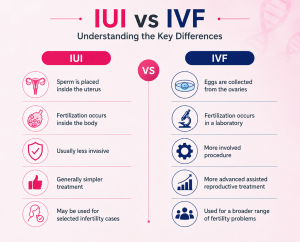
IUI IVF
Sperm is placed inside the uterus Eggs are collected from the ovaries
Fertilization occurs inside the body Fertilization occurs in a laboratory
Usually less invasive More involved procedure
Generally simpler treatment More advanced assisted reproductive treatment
May be used for selected infertility cases Used for a broader range of fertility problems

An IVF Centre in Bhopal can explain which treatment is appropriate based on the couple’s fertility evaluation.

For some couples, IUI may be attempted first, while others may benefit from proceeding directly to IVF.

IUI Treatment at an IVF Centre in Bhopal

A well-equipped IVF Centre in Bhopal can provide fertility evaluation, ovulation monitoring, semen preparation, IUI, and advanced fertility treatments under coordinated care.

The fertility journey may involve:

  • Initial consultation
  • Fertility investigations
  • Ultrasound monitoring
  • Hormonal assessment
  • Semen analysis
  • Ovulation induction
  • Sperm preparation
  • IUI
  • Pregnancy testing
  • Further fertility planning if required

The aim is to understand the underlying fertility problem and select a treatment plan appropriate for the couple.

Dr. Iram Ajaz – Fertility and IVF Care in Bhopal

According to the provided website information, Dr. Iram Ajaz is an Obstetrician-Gynecologist based in Bhopal and is the doctor behind Dr. Iram’s IVF.

The provided information states that Dr. Iram’s IVF began in 2013, with a focus on fertility care and supporting couples through their reproductive journey.

The centre describes a team of fertility professionals and trained staff working together to provide fertility services under one roof.

For couples considering IUI Treatment in Bhopal, a consultation with the fertility team can help determine whether IUI is suitable or whether another fertility treatment may provide a better option.

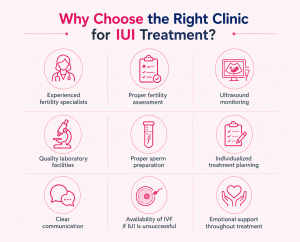
Why Choose an IVF Centre in Bhopal for IUI?

Choosing the right fertility centre can make the treatment process more organized and easier to understand.

Important factors include:

  • Experienced fertility specialists
  • Proper fertility assessment
  • Ultrasound monitoring
  • Quality laboratory facilities
  • Proper sperm preparation
  • Individualized treatment planning
  • Clear communication
  • Availability of IVF if IUI is unsuccessful
  • Emotional support throughout treatment

A fertility centre should also explain the expected benefits, limitations, possible risks, and alternatives before starting treatment.

IUI Treatment Recovery

One of the advantages of IUI Treatment in Bhopal is that recovery is generally quick.

The procedure usually takes only a few minutes, and patients can normally return home after a short period of observation. Mild cramping or light spotting can occur after IUI.

Most patients can return to their regular daily activities unless their fertility specialist recommends otherwise.

There is generally no lengthy surgical recovery period associated with IUI.

What to Expect After IUI?

After IUI Treatment in Bhopal, some women may notice:

  • Mild abdominal cramping
  • Light spotting
  • Temporary pelvic discomfort
  • No noticeable symptoms at all

These symptoms do not necessarily indicate whether the treatment has worked.

Pregnancy symptoms usually cannot reliably confirm pregnancy immediately after IUI. The recommended pregnancy test should be performed at the time advised by the fertility team.

Possible Risks and Complications of IUI

IUI is generally considered a safe fertility procedure, but no medical treatment is completely without risk.

Possible concerns include:

  • Mild cramping
  • Light spotting
  • Rare infection
  • Multiple pregnancy when ovulation medicines are used
  • Ovarian hyperstimulation syndrome in stimulated cycles
  • Ectopic pregnancy

The NHS notes that the risk of infection after IUI is very small, while fertility medicines can increase the risk of multiple pregnancy and, rarely, ovarian hyperstimulation syndrome.

Patients should immediately contact their fertility team if they develop severe abdominal pain, significant bloating, breathing difficulty, faintness, or other concerning symptoms after stimulation.

How to Improve Your Chances During IUI Treatment

There is no guaranteed method to make IUI successful, but maintaining general health can support fertility treatment.

Patients may be advised to:

  • Follow prescribed medicines correctly
  • Attend scheduled ultrasound appointments
  • Follow the recommended timing for IUI
  • Avoid smoking
  • Limit alcohol according to medical advice
  • Maintain a balanced diet
  • Maintain a healthy weight
  • Get adequate sleep
  • Manage stress
  • Follow the fertility specialist’s instructions

Both partners should participate in the fertility evaluation because infertility can involve female, male, combined, or unexplained factors.
What Happens If IUI Does Not Work?

An unsuccessful IUI cycle does not necessarily mean that pregnancy is impossible.

Depending on the patient’s situation, the doctor may:

  • Review the previous cycle
  • Adjust medications
  • Repeat IUI
  • Perform additional investigations
  • Consider IVF
  • Recommend another assisted reproductive treatment

ASRM guidance supports moving to IVF after an appropriate course of oral-medication ovarian stimulation with IUI for suitable couples with unexplained infertility when pregnancy has not occurred.

Frequently Asked Questions About IUI Treatment in Bhopal

What is IUI Treatment in Bhopal?

IUI Treatment in Bhopal is an assisted reproductive procedure in which specially prepared sperm is placed directly into the uterus around ovulation to increase the opportunity for fertilization.

Is IUI painful?

IUI is generally not painful, although some women may experience temporary discomfort or mild cramping during or after the procedure.

How long does IUI take?

The actual insemination procedure usually takes only a few minutes and patients can generally go home after a short rest.

What is the IUI Success Rate?

The IUI Success Rate varies according to age, sperm quality, ovulation, fertility diagnosis, treatment protocol, and other factors. Some fertility services report approximately 10–15% pregnancy per cycle, but individual results can differ significantly.

How many IUI cycles should I try?

There is no universal number. For suitable couples with unexplained infertility, ASRM commonly recommends a course of about 3–4 cycles using oral ovarian stimulation with IUI before considering IVF if unsuccessful.

Is IUI better than IVF?

IUI and IVF are different treatments. IUI is less invasive and simpler, while IVF involves egg retrieval and laboratory fertilization. The appropriate option depends on the cause of infertility and individual circumstances.

Can I return to work after IUI?

Because IUI is usually a short outpatient procedure with quick recovery, many patients can return to normal daily activities soon afterward. Individual instructions may vary.

Can IUI result in twins?

If fertility medicines are used to stimulate multiple follicles, the risk of multiple pregnancy can increase. This is one reason monitoring is important during stimulated IUI cycles.


Conclusion – IUI Treatment in Bhopal

IUI Treatment in Bhopal can be an option for selected couples who are having difficulty conceiving. The procedure involves monitoring ovulation, preparing sperm, and placing the prepared sample directly into the uterus at an appropriate time.

The IUI Success Rate depends on several individual factors, including age, ovulation, sperm quality, fallopian-tube health, and the underlying cause of infertility. IUI is generally less invasive than IVF, but it is not appropriate for every fertility problem.

For couples considering fertility treatment, an IVF Centre in Bhopal can provide a complete evaluation and explain whether IUI, IVF, medication, or another approach is more suitable.

According to the information provided, Dr. Iram Ajaz has been involved in fertility care through Dr. Iram’s IVF since 2013. Couples considering IUI Treatment in Bhopal can discuss their fertility history, diagnostic reports, treatment options, expected outcomes, and possible next steps with an experienced fertility specialist before beginning treatment.
For many couples, starting a family is one of life’s most meaningful dreams. While many conceive naturally within the first year of trying, some couples may experience difficulty achieving pregnancy despite having regular, unprotected intercourse. In such situations, the first and most important step is a comprehensive Infertility Workup in Bhopal, which helps identify the underlying causes of infertility before beginning fertility treatment.

Many couples feel anxious when they hear the word “infertility.” However, infertility is a medical condition that can affect both men and women, and identifying the exact cause is essential for choosing the most appropriate treatment. Rather than beginning advanced fertility procedures immediately, doctors first recommend a detailed fertility evaluation to understand reproductive health, hormonal balance, ovulation, sperm quality, and other important factors affecting conception.

At Dr. Iram’s IVF Hospital, one of the leading IVF Centres in Bhopal, couples receive compassionate, personalized, and evidence-based fertility care. Through advanced diagnostic facilities, experienced fertility specialists, and comprehensive infertility workup, the hospital helps couples understand their reproductive health and begin the most suitable fertility treatment with confidence.

Best IVF Centre in Bhopal – Dr. Iram’s IVF Hospital

The journey toward parenthood is unique for every couple. At Dr. Iram’s IVF Hospital, fertility care begins with careful evaluation rather than assumptions. Every couple undergoes a personalized infertility assessment to identify the specific factors affecting conception, allowing fertility specialists to recommend the most appropriate treatment plan.

The hospital believes that successful fertility treatment starts with an accurate diagnosis. A comprehensive infertility workup often helps identify conditions that can be treated effectively before moving toward assisted reproductive techniques.

Dr. Iram’s IVF Hospital provides complete fertility evaluation for:

✔ Female infertility assessment

✔ Male infertility evaluation

✔ Hormonal investigations

✔ Ovulation assessment

✔ Semen analysis

✔ Ultrasound evaluation

✔ Tubal patency assessment

✔ Ovarian reserve testing

✔ Genetic evaluation (when indicated)

✔ Fertility counseling

✔ IVF and IUI planning

✔ Recurrent pregnancy loss evaluation

Every fertility treatment plan is designed according to the individual medical needs of each couple.

About Dr. Iram’s IVF Hospital

The decision to have a baby is one of the most emotional and meaningful milestones in life. For many couples, the journey to parenthood may involve unexpected challenges, but hope, compassionate care, and expert medical guidance can make that journey easier.

Established in 2013, Dr. Iram’s IVF Hospital has grown into one of the respected fertility centers in India, offering comprehensive reproductive healthcare under one roof. The hospital is committed to providing ethical, evidence-based, and patient-centered fertility care while supporting couples through every stage of their fertility journey.

The experienced fertility team understands that infertility affects not only physical health but also emotional well-being. By combining advanced fertility technology with compassionate counseling and individualized treatment planning, the hospital helps couples move closer to their dream of becoming parents.

Dr. Iram’s IVF Hospital offers:

✔ Comprehensive infertility evaluation

✔ Personalized fertility treatment

✔ Advanced reproductive technologies

✔ Modern diagnostic facilities

✔ Experienced fertility specialists

✔ Compassionate patient care

✔ One-stop fertility services

✔ Ethical and transparent treatment approach

The hospital’s mission is to make fertility care accessible, supportive, and scientifically guided for every couple seeking parenthood.


Meet Dr. Iram Ajaz & Fertility Team

Dr. Iram Ajaz is a highly experienced Obstetrician and Gynecologist and the visionary behind Dr. Iram’s IVF Hospital in Bhopal. With years of experience in women’s reproductive health and infertility management, she has helped countless couples navigate the challenges of infertility through comprehensive evaluation and advanced fertility treatments.

Supported by a multidisciplinary team of fertility specialists, embryologists, counselors, and trained healthcare professionals, Dr. Iram’s IVF Hospital provides coordinated fertility care under one roof.

The fertility team specializes in:

✔ Female infertility management

✔ Male infertility evaluation

✔ IVF (In Vitro Fertilization)

✔ IUI (Intrauterine Insemination)

✔ Ovulation induction

✔ Fertility preservation

✔ Reproductive endocrinology

✔ Pregnancy care after fertility treatment

✔ Recurrent pregnancy loss evaluation

Their collaborative approach ensures that every patient receives personalized attention, detailed counseling, and evidence-based fertility care throughout the treatment process.


Why Choose Dr. Iram’s IVF Hospital?

Selecting the right fertility center is an important decision for couples planning infertility treatment. Dr. Iram’s IVF Hospital focuses on accurate diagnosis, individualized care, and comprehensive fertility services to improve the chances of successful treatment.

Couples choose Dr. Iram’s IVF Hospital because of:

✔ Established fertility center since 2013

✔ Experienced fertility specialists

✔ Comprehensive infertility workup

✔ Advanced fertility diagnostics

✔ IVF & IUI expertise

✔ Personalized treatment plans

✔ Modern laboratory facilities

✔ Ethical fertility practices

✔ Compassionate patient support

✔ Complete reproductive healthcare under one roof

The goal is to help every couple receive the right diagnosis before starting fertility treatment, ensuring that treatment decisions are based on accurate medical findings.


What is an Infertility Workup?

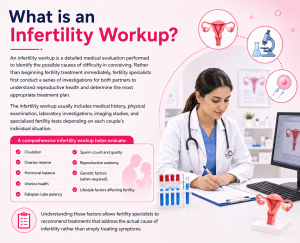
An infertility workup is a detailed medical evaluation performed to identify the possible causes of difficulty in conceiving. Rather than beginning fertility treatment immediately, fertility specialists first conduct a series of investigations for both partners to understand reproductive health and determine the most appropriate treatment plan.

The infertility workup usually includes medical history, physical examination, laboratory investigations, imaging studies, and specialized fertility tests depending on each couple’s individual situation.

A comprehensive infertility workup helps evaluate:

✔ Ovulation

✔ Ovarian reserve

✔ Hormonal balance

✔ Uterine health

✔ Fallopian tube patency

✔ Sperm count and quality

✔ Reproductive anatomy

✔ Genetic factors (when required)

✔ Lifestyle factors affecting fertility

Understanding these factors allows fertility specialists to recommend treatments that address the actual cause of infertility rather than simply treating symptoms.


Why is an Infertility Workup Important Before Fertility Treatment?

Beginning fertility treatment without identifying the underlying cause may reduce the effectiveness of treatment and delay pregnancy. A detailed infertility evaluation helps fertility specialists understand why conception is not occurring and allows them to select the most appropriate treatment.

An infertility workup helps:

✔ Identify the cause of infertility

✔ Detect hormonal disorders

✔ Evaluate egg quality and ovarian reserve

✔ Assess sperm health

✔ Examine uterine and fallopian tube health

✔ Detect ovulation problems

✔ Diagnose reproductive disorders

✔ Guide appropriate fertility treatment

✔ Improve treatment success rates

✔ Avoid unnecessary procedures

A proper fertility assessment ensures that each couple receives personalized treatment based on their unique reproductive health rather than following a generalized approach.


Who Should Get an Infertility Evaluation?

Couples should consider an infertility workup if pregnancy has not occurred despite regular, unprotected intercourse for an appropriate period. Early evaluation can also be beneficial for individuals with known reproductive health concerns.

An infertility evaluation is generally recommended for:

✔ Couples trying to conceive for 12 months without success

✔ Women over 35 years trying for 6 months without pregnancy

✔ Women with irregular menstrual cycles

✔ Women with PCOS

✔ Women with endometriosis

✔ Women with recurrent miscarriages

✔ Men with abnormal semen analysis

✔ Men or women with previous reproductive surgeries

✔ Couples with unexplained infertility

✔ Individuals with known hormonal disorders

Seeking timely fertility evaluation allows early diagnosis and improves the chances of successful treatment by addressing underlying reproductive health issues before they become more complex.

What Tests Are Included in an Infertility Workup?

A complete infertility workup involves evaluating both partners because infertility can result from female factors, male factors, or a combination of both. The purpose of these investigations is to identify the exact reason for difficulty in conceiving and recommend the most appropriate fertility treatment.

Depending on individual medical history and symptoms, fertility specialists may recommend different tests.

The infertility workup may include:

✔ Detailed medical history

✔ Physical examination

✔ Hormonal evaluation

✔ Ovulation assessment

✔ Pelvic ultrasound

✔ Semen analysis

✔ Fallopian tube evaluation

✔ Ovarian reserve testing

✔ Blood investigations

✔ Genetic testing (when indicated)

✔ Additional fertility investigations based on individual needs

These tests provide valuable information about reproductive health and help fertility specialists develop a personalized treatment plan.

Female Fertility Evaluation

The female fertility assessment focuses on identifying conditions that may affect ovulation, egg quality, hormonal balance, uterine health, or fallopian tube function.

A comprehensive female fertility workup may include:

Medical History

The fertility specialist reviews:

✔ Menstrual cycle pattern

✔ Previous pregnancies

✔ Miscarriage history

✔ Previous surgeries

✔ Medical conditions

✔ Family history

✔ Lifestyle factors

✔ Current medications

Understanding the patient’s medical background helps guide further investigations.

Hormonal Blood Tests

Hormones play a vital role in fertility. Blood investigations help evaluate reproductive hormone levels and identify hormonal disorders.

Common hormonal tests include:

✔ FSH (Follicle Stimulating Hormone)

✔ LH (Luteinizing Hormone)

✔ AMH (Anti-Müllerian Hormone)

✔ Estradiol

✔ Progesterone

✔ Prolactin

✔ Thyroid Function Tests

✔ Blood Sugar Evaluation

These investigations help assess ovarian function and ovulation.

Ovulation Assessment

Regular ovulation is essential for natural conception.

Ovulation assessment may include:

✔ Menstrual history

✔ Follicular monitoring

✔ Ultrasound examination

✔ Hormonal evaluation

✔ Ovulation tracking

These tests help determine whether eggs are developing and being released normally.

Pelvic Ultrasound

Ultrasound is an important part of infertility evaluation because it helps assess the reproductive organs.

Pelvic ultrasound evaluates:

✔ Uterus

✔ Ovaries

✔ Endometrial thickness

✔ Ovarian follicles

✔ Fibroids

✔ Ovarian cysts

✔ Polycystic ovaries (PCOS)

This examination provides valuable information about reproductive anatomy.


Fallopian Tube Evaluation

Healthy fallopian tubes are essential because fertilization normally occurs inside the tubes.

Doctors may recommend investigations such as:

✔ HSG (Hysterosalpingography)

✔ Sonosalpingography

✔ Laparoscopy (when indicated)

These procedures help determine whether the fallopian tubes are open or blocked.


Ovarian Reserve Testing

Ovarian reserve refers to the quantity and quality of remaining eggs.

Assessment may include:

✔ AMH test

✔ Antral Follicle Count (AFC)

✔ Ultrasound evaluation

These tests help fertility specialists estimate reproductive potential and plan treatment accordingly.


Male Fertility Evaluation

Male infertility contributes to a significant proportion of infertility cases. Therefore, evaluation of the male partner is equally important during infertility workup.

The male fertility assessment generally includes:

✔ Medical history

✔ Physical examination

✔ Semen analysis

✔ Hormonal evaluation

✔ Genetic testing (when required)

✔ Ultrasound examination (selected cases)

Early evaluation allows many male fertility problems to be identified and managed appropriately.


Semen Analysis

Semen analysis is one of the most important investigations in male infertility evaluation.

The test assesses:

✔ Sperm count

✔ Sperm motility

✔ Sperm morphology

✔ Semen volume

✔ Sperm concentration

✔ Presence of infection

✔ Overall semen quality

Abnormal findings may require additional investigations or consultation with a fertility specialist.

Hormonal Evaluation in Men

Hormonal blood tests may be recommended if semen analysis suggests hormonal abnormalities.

These investigations may include:

✔ Testosterone

✔ FSH

✔ LH

✔ Prolactin

✔ Thyroid Function Tests

Hormonal evaluation helps identify endocrine disorders affecting sperm production.

Common Causes of Infertility

Infertility can result from a variety of medical conditions affecting either partner. Sometimes, more than one factor contributes to difficulty in conceiving.

Common Female Causes

✔ Polycystic Ovary Syndrome (PCOS)

✔ Endometriosis

✔ Blocked fallopian tubes

✔ Ovulation disorders

✔ Diminished ovarian reserve

✔ Uterine fibroids

✔ Hormonal imbalance

✔ Thyroid disorders

✔ Premature ovarian insufficiency


Common Male Causes

✔ Low sperm count

✔ Poor sperm motility

✔ Abnormal sperm morphology

✔ Hormonal imbalance

✔ Varicocele

✔ Genetic disorders

✔ Infections

✔ Lifestyle factors


Combined or Unexplained Causes

In some couples, infertility results from factors affecting both partners. In other cases, all investigations appear normal, and no specific cause is identified.

This is known as:

✔ Unexplained infertility

A detailed infertility workup helps fertility specialists choose the most appropriate treatment even in such situations.

Lifestyle Factors That Can Affect Fertility

Lifestyle habits can influence reproductive health in both men and women. Improving these factors may enhance natural fertility and improve the success of fertility treatments.

Important lifestyle factors include:

✔ Smoking

✔ Alcohol consumption

✔ Obesity

✔ Poor nutrition

✔ Lack of physical activity

✔ Chronic stress

✔ Sleep disturbances

✔ Exposure to environmental toxins

✔ Excessive caffeine intake

✔ Uncontrolled medical conditions

Healthy lifestyle modifications are often recommended alongside fertility treatment to support better reproductive outcomes.

Treatment Options After an Infertility Workup

Once the infertility evaluation is complete, fertility specialists develop an individualized treatment plan based on the identified cause.

Treatment options may include:

Lifestyle Modifications

✔ Healthy diet

✔ Weight management

✔ Exercise

✔ Stress reduction

✔ Smoking cessation


Fertility Medications

Medicines may be prescribed to:

✔ Stimulate ovulation

✔ Correct hormonal imbalance

✔ Improve reproductive function


Intrauterine Insemination (IUI)

IUI may be recommended for selected couples after appropriate fertility evaluation.

It involves:

✔ Processing healthy sperm

✔ Placing sperm inside the uterus during ovulation


In Vitro Fertilization (IVF)

IVF may be considered for couples with:

✔ Blocked fallopian tubes

✔ Severe male infertility

✔ Advanced maternal age

✔ Failed previous fertility treatments

✔ Unexplained infertility

Dr. Iram’s IVF Hospital provides comprehensive fertility treatment based on detailed infertility workup and individualized reproductive care.


Benefits of Early Infertility Assessment

Seeking fertility evaluation early offers several important advantages for couples planning pregnancy.

Early infertility workup may help:

✔ Identify fertility problems sooner

✔ Improve treatment success

✔ Reduce unnecessary delays

✔ Detect treatable conditions

✔ Preserve fertility when appropriate

✔ Guide personalized treatment

✔ Improve pregnancy outcomes

✔ Provide emotional reassurance

Early diagnosis allows couples to begin the most suitable fertility treatment at the right time, improving their chances of achieving a successful pregnancy.

Currently Serving Couples Across Bhopal

Dr. Iram’s IVF Hospital provides comprehensive fertility care for couples from Bhopal and nearby regions who are facing challenges in conceiving naturally. With advanced fertility diagnostics, personalized treatment plans, and compassionate care, the hospital supports couples throughout every stage of their parenthood journey.

The fertility team provides specialized care for:

✔ Female Infertility Evaluation

✔ Male Infertility Evaluation

✔ Comprehensive Infertility Workup

✔ Hormonal Assessment

✔ Ovulation Monitoring

✔ Semen Analysis

✔ Ovarian Reserve Testing

✔ Fallopian Tube Evaluation

✔ IVF (In Vitro Fertilization)

✔ IUI (Intrauterine Insemination)

✔ Fertility Preservation

✔ Recurrent Pregnancy Loss Evaluation

✔ PCOS-related Infertility

✔ Endometriosis-related Infertility

✔ Unexplained Infertility

✔ Pregnancy Care After Fertility Treatment

Couples from different parts of Bhopal choose Dr. Iram’s IVF Hospital for ethical fertility care, advanced reproductive technology, and personalized guidance designed to improve the chances of successful conception.

How to Improve Fertility Naturally Before Treatment

While medical treatment may be necessary for many couples, adopting healthy lifestyle habits before and during fertility treatment can support reproductive health and improve treatment outcomes.

Helpful lifestyle recommendations include:

✔ Maintain a healthy body weight

✔ Eat a balanced and nutritious diet

✔ Exercise regularly

✔ Avoid smoking and tobacco

✔ Limit alcohol consumption

✔ Manage stress through relaxation techniques

✔ Get adequate sleep

✔ Take prescribed vitamins and supplements

✔ Control diabetes and thyroid disorders

✔ Attend regular fertility consultations

Healthy lifestyle changes cannot treat every cause of infertility, but they can improve overall reproductive health and complement fertility treatment.

Common Myths About Infertility

Infertility is surrounded by many myths that can create unnecessary confusion and delay proper treatment. Understanding the facts helps couples make informed decisions about their reproductive health.

Myth 1: Infertility Is Always a Woman’s Problem

Fact: Infertility can affect both men and women. Male factors contribute to a significant percentage of infertility cases, which is why evaluation of both partners is essential.

Myth 2: IVF Is the First Treatment for Every Couple

Fact: IVF is not always the first step. Many couples achieve pregnancy with lifestyle modifications, medications, or IUI after a proper infertility workup identifies the underlying cause.

Myth 3: Young Couples Cannot Have Infertility

Fact: Although fertility generally declines with age, infertility can affect couples of any age due to hormonal disorders, reproductive conditions, or male fertility factors.

Myth 4: Stress Alone Causes Infertility

Fact: Stress may affect overall well-being, but infertility usually results from identifiable medical conditions affecting either partner. A comprehensive infertility workup helps determine the actual cause.

Myth 5: If You Already Have One Child, You Cannot Experience Infertility

Fact: Secondary infertility is a recognized condition where couples who previously conceived naturally experience difficulty becoming pregnant again.

Summary

An Infertility Workup in Bhopal is the most important first step before beginning fertility treatment. A detailed fertility evaluation helps identify the underlying causes of infertility in both partners, allowing fertility specialists to recommend the most suitable treatment rather than relying on a generalized approach. Investigations such as hormonal testing, ovulation assessment, ultrasound, ovarian reserve testing, fallopian tube evaluation, and semen analysis provide valuable information that guides personalized fertility care.

At Dr. Iram’s IVF Hospital, fertility treatment begins with accurate diagnosis, compassionate counseling, and individualized care. Whether a couple requires lifestyle modifications, fertility medications, IUI, IVF, or advanced reproductive technologies, a thorough infertility workup improves treatment planning and increases the chances of achieving a healthy pregnancy.

FAQs – Infertility Workup in Bhopal: The First Step Before Fertility Treatment

1. What is an infertility workup?

An infertility workup is a comprehensive medical evaluation of both partners that helps identify the underlying causes of infertility before starting fertility treatment.

2. When should couples undergo an infertility evaluation?

Couples should consider evaluation if pregnancy has not occurred after 12 months of regular, unprotected intercourse, or after 6 months if the woman is over 35 years of age.

3. Is infertility testing necessary for both partners?

Yes. Since infertility can affect both men and women, evaluating both partners provides a complete understanding of reproductive health and improves treatment planning.

4. What tests are commonly included in an infertility workup?

Common investigations include hormonal blood tests, ovulation assessment, pelvic ultrasound, ovarian reserve testing, fallopian tube evaluation, semen analysis, and additional fertility tests based on individual needs.

5. Can infertility be treated after the workup?

Yes. Depending on the diagnosis, treatment may include lifestyle modifications, fertility medications, ovulation induction, IUI, IVF, or other assisted reproductive techniques.

6. Does every couple with infertility require IVF?

No. Many couples conceive successfully with simpler treatments after a proper infertility evaluation identifies the underlying cause.

7. How long does an infertility workup take?

The duration varies depending on the investigations required. Some tests are completed within a few days, while others are scheduled according to the woman’s menstrual cycle.

8. Who should I consult for an infertility workup in Bhopal?

Dr. Iram Ajaz and the experienced fertility team at Dr. Iram’s IVF Hospital provide comprehensive infertility evaluation, personalized fertility treatment, and advanced reproductive care for couples planning parenthood.

Conclusion – Infertility Workup in Bhopal: The First Step Before Fertility Treatment

The journey to parenthood begins with understanding your reproductive health. An Infertility Workup in Bhopal is the essential first step before starting fertility treatment, as it helps identify the exact cause of infertility and allows fertility specialists to recommend the most appropriate treatment plan. Early evaluation not only improves treatment success but also helps avoid unnecessary procedures, saving valuable time and providing clarity for couples planning a family.

At Dr. Iram’s IVF Hospital, every couple receives compassionate, evidence-based fertility care supported by advanced diagnostic facilities and personalized treatment plans. From infertility evaluation and fertility counseling to IUI, IVF, and comprehensive reproductive healthcare, the experienced fertility team is committed to guiding couples with confidence, transparency, and hope throughout their parenthood journey.

Egg Freezing in Bhopal has become an increasingly popular fertility preservation option for women who wish to delay pregnancy without compromising their future chances of becoming a mother. Whether due to career goals, higher education, medical conditions, or waiting for the right time to start a family, many women are choosing egg freezing to protect their reproductive potential. Advances in reproductive medicine have made fertility preservation safer, more effective, and accessible than ever before.

At Dr. Iram’s IVF Hospital, one of the leading IVF Centres in Bhopal, women receive comprehensive fertility assessment, personalized counselling, and advanced egg freezing services using modern cryopreservation technology. Our experienced fertility specialists guide every patient through the entire fertility preservation process, helping them make informed decisions about their reproductive future with confidence and peace of mind.

Many women believe fertility remains the same throughout life, but female fertility naturally declines with age. Understanding how egg freezing works, who can benefit from it, and when to consider fertility preservation can help women make timely decisions that improve their future family planning options.


What Is Egg Freezing?

Egg Freezing, also known as Oocyte Cryopreservation, is an advanced fertility preservation technique in which a woman’s healthy eggs are collected, frozen, and safely stored for future use.

The frozen eggs remain preserved until the woman decides she is ready to become pregnant. At that time, the eggs can be thawed, fertilized with sperm through IVF, and transferred into the uterus.

Egg freezing allows women to preserve younger, healthier eggs, which may improve the chances of pregnancy later in life.


Why Is Fertility Preservation Becoming More Common?

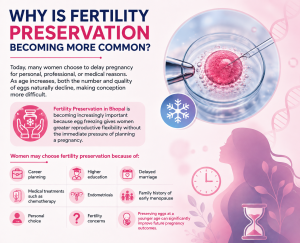
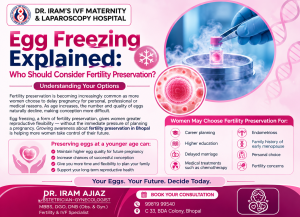
Today, many women choose to delay pregnancy for personal, professional, or medical reasons. As age increases, both the number and quality of eggs naturally decline, making conception more difficult.

Fertility Preservation in Bhopal is becoming increasingly important because egg freezing gives women greater reproductive flexibility without the immediate pressure of planning a pregnancy.

Women may choose fertility preservation because of:

  • Career planning
  • Higher education
  • Delayed marriage
  • Medical treatments such as chemotherapy
  • Endometriosis
  • Family history of early menopause
  • Personal choice
  • Fertility concerns

Preserving eggs at a younger age can significantly improve future pregnancy outcomes.


Who Should Consider Egg Freezing?

Egg freezing is not only for women facing infertility. It can also benefit women who wish to preserve their fertility before age-related decline or certain medical treatments.

You may consider Egg Freezing in Bhopal if you:

  • Want to delay pregnancy for personal reasons
  • Are focusing on career or higher education
  • Have been diagnosed with endometriosis
  • Are undergoing cancer treatment
  • Have low ovarian reserve
  • Have a family history of early menopause
  • Are planning fertility preservation before ovarian surgery
  • Want to preserve fertility before certain medical treatments

A fertility specialist can evaluate your reproductive health and help determine whether egg freezing is the right option for you.


What Is the Best Age for Egg Freezing?

Although egg freezing can be performed at different ages, fertility specialists generally recommend preserving eggs at a younger age because younger eggs have better quality and a higher chance of resulting in a healthy pregnancy later.

Many specialists suggest that the ideal age for egg freezing is between 25 and 35 years, when egg quality is usually at its best.

However, every woman is different. A fertility assessment can help determine the right timing based on ovarian reserve and overall reproductive health.


Benefits of Egg Freezing

Egg freezing offers several advantages for women planning their future families.

Some important benefits include:

  • Preserves fertility for future pregnancy
  • Maintains younger egg quality
  • Provides greater reproductive flexibility
  • Supports women undergoing cancer treatment
  • Reduces age-related fertility concerns
  • Helps with long-term family planning
  • Gives emotional reassurance for future parenthood

While egg freezing cannot guarantee pregnancy, it significantly improves future reproductive options when performed at the appropriate age.

How Is the Egg Freezing Procedure Performed?

The Egg Freezing Procedure is a well-planned fertility preservation process that is performed over a period of about two to three weeks. At Dr. Iram’s IVF Hospital, every step is carefully monitored to ensure patient safety and maximize the number of healthy eggs collected.

The procedure generally includes:

  • Fertility consultation and evaluation
  • Hormonal blood tests
  • Ultrasound assessment of the ovaries
  • Ovarian stimulation with fertility medications
  • Regular follicle monitoring
  • Egg retrieval procedure
  • Advanced cryopreservation (freezing) of mature eggs

The egg retrieval procedure is performed under mild anesthesia and usually takes about 20–30 minutes. Most women can return home the same day and resume normal activities within a short period.


Is Egg Freezing Safe?

One of the most common concerns women have is whether egg freezing is safe.

Modern Egg Freezing in Bhopal is considered a safe and well-established fertility preservation technique when performed by experienced fertility specialists. The procedure has helped thousands of women worldwide preserve their fertility for future family planning.

Some women may experience temporary side effects such as:

  • Mild abdominal discomfort
  • Bloating
  • Cramping
  • Temporary pelvic pain
  • Mild spotting after egg retrieval

These symptoms usually improve within a few days. Serious complications are uncommon when the procedure is performed in a specialized fertility center.


What Is the Success Rate of Egg Freezing?

The success of egg freezing depends on several important factors, including:

  • Woman’s age at the time of freezing
  • Number of eggs preserved
  • Egg quality
  • Overall reproductive health
  • Quality of the IVF laboratory

Women who freeze their eggs at a younger age generally have higher chances of achieving a successful pregnancy in the future.

Although egg freezing significantly improves future fertility options, no fertility treatment can guarantee pregnancy. An experienced fertility specialist can provide realistic expectations based on individual circumstances.


When Should You Consult a Fertility Specialist?

Many women wait until they experience fertility problems before consulting a specialist. However, discussing fertility preservation early allows women to make informed decisions while more reproductive options are available.

You should consider consulting a fertility specialist if you:

  • Are planning to delay pregnancy
  • Have irregular menstrual cycles
  • Have been diagnosed with PCOS or Endometriosis
  • Have a low ovarian reserve
  • Are preparing for cancer treatment
  • Have a family history of early menopause
  • Wish to preserve fertility before ovarian surgery

Early fertility evaluation can help determine whether egg freezing is the right choice for your future family planning goals.


Why Choose Dr. Iram’s IVF Hospital for Egg Freezing in Bhopal?

Women looking for Egg Freezing in Bhopal trust Dr. Iram’s IVF Hospital because of its patient-centered approach, advanced reproductive technology, and experienced fertility specialists.

Patients choose Dr. Iram’s IVF Hospital because of:

  • Experienced Fertility Specialists
  • Advanced Egg Freezing Technology
  • Modern IVF Laboratory
  • Personalized Fertility Counselling
  • Comprehensive Fertility Evaluation
  • Ethical and Transparent Treatment
  • High Standards of Patient Care
  • Complete Fertility Services Under One Roof

Every treatment plan is designed according to the patient’s age, reproductive health, and future family planning goals, ensuring compassionate and individualized care throughout the journey.

Summary

Egg Freezing in Bhopal has become an important fertility preservation option for women who want to delay pregnancy without compromising their future chances of becoming a mother. Whether the decision is based on career goals, medical treatment, personal circumstances, or age-related fertility decline, freezing healthy eggs at the right time can provide greater reproductive flexibility. While egg freezing cannot guarantee pregnancy in the future, preserving eggs at a younger age significantly improves the chances of successful conception later in life.

At Dr. Iram’s IVF Hospital, women receive personalized fertility counselling, comprehensive reproductive evaluation, advanced egg freezing technology, and compassionate support throughout the fertility preservation journey. Our experienced fertility specialists help every woman understand her reproductive health and make informed decisions with confidence.


Frequently Asked Questions (FAQs)

Who should consider egg freezing?

Egg freezing is recommended for women who wish to delay pregnancy, are undergoing cancer treatment, have PCOS, low ovarian reserve, endometriosis, or want to preserve fertility before age-related decline.

What is the best age for egg freezing?

Most fertility specialists recommend freezing eggs between the ages of 25 and 35, as egg quality and quantity are generally highest during these years.

Is the egg freezing procedure painful?

The egg retrieval procedure is performed under mild anesthesia, so most women experience little or no pain during the procedure. Mild discomfort or bloating may occur for a few days afterward.

How long can frozen eggs be stored?

Frozen eggs can be safely stored for many years using advanced cryopreservation techniques without significant loss of quality.

Does egg freezing guarantee pregnancy?

No. Egg freezing improves future fertility options, but pregnancy depends on several factors such as the woman’s age at freezing, egg quality, overall reproductive health, and embryo development.

Is egg freezing safe?

Yes. Egg freezing is considered a safe and well-established fertility preservation procedure when performed by experienced fertility specialists using modern laboratory techniques.


Conclusion

Egg Freezing in Bhopal offers women the opportunity to preserve their fertility and make future family planning decisions with greater confidence. As more women choose to balance their personal, professional, and medical priorities, fertility preservation has become an important part of reproductive healthcare. Consulting a fertility specialist at the right time allows women to understand their fertility potential and explore the best options for their future.

At Dr. Iram’s IVF Hospital, our experienced fertility team combines advanced reproductive technology with personalized, ethical, and compassionate care to support every woman’s parenthood journey. Whether you are considering egg freezing for medical reasons or personal planning, timely fertility preservation can help protect your future reproductive choices and provide peace of mind.

For many women, the journey of PCOS and Pregnancy can feel confusing and emotionally overwhelming. Irregular periods, hormonal imbalance, and difficulty in ovulation often make women worry about whether they can ever become pregnant naturally. However, having PCOS does not mean pregnancy is impossible. With the right lifestyle changes, medical support, and timely fertility care, many women successfully conceive and enjoy healthy pregnancies.

Today, awareness about fertility health is increasing, and more women are seeking proper PCOS Treatment in Bhopal to understand their condition better. In many cases, early treatment and healthy habits improve ovulation naturally without requiring complex procedures. However, if fertility issues continue for a long time, guidance from the Best IVF Hospital in Bhopal can help couples explore advanced reproductive options safely and effectively.

What is PCOS?

PCOS, or Polycystic Ovary Syndrome, is a hormonal condition that affects women during their reproductive years. In this condition, the ovaries produce an imbalance of hormones that can disturb the normal release of eggs during ovulation. Because ovulation becomes irregular, women may experience difficulty conceiving naturally.

The relationship between PCOS and Pregnancy mainly depends on ovulation health. If the body is not releasing eggs regularly, pregnancy becomes difficult. This is why proper diagnosis and early PCOS Treatment in Bhopal are important for women planning pregnancy.

Seeking timely PCOS Treatment in Bhopal helps manage these symptoms and supports better reproductive health.

Common Symptoms of PCOS

Women with PCOS may notice several physical and hormonal changes. These symptoms may develop slowly and can vary from person to person.

  • Irregular periods
    Menstrual cycles may become delayed, missed, or extremely unpredictable because ovulation does not happen regularly.
  • Weight gain
    Hormonal imbalance and insulin resistance often make it difficult to maintain a healthy body weight.
  • Acne and oily skin
    Increased androgen hormones may cause frequent acne breakouts, especially on the face and back.
  • Excess facial or body hair
    Some women notice unwanted hair growth on the chin, upper lip, chest, or abdomen.
  • Difficulty conceiving
    Irregular ovulation directly affects fertility and pregnancy chances.

Can Women with PCOS Conceive Naturally?

One of the most common questions related to PCOS and Pregnancy is whether natural conception is possible. The answer is yes. Many women with PCOS become pregnant naturally, especially when the condition is diagnosed early and managed properly.

Natural conception depends on how well ovulation improves over time. In mild PCOS cases, simple lifestyle modifications can significantly improve fertility. Women who follow healthy routines often notice regular cycles and better hormonal balance within a few months.

Along with lifestyle care, many women seek professional PCOS Treatment in Bhopal to improve their chances of pregnancy naturally. If pregnancy still does not occur after regular attempts, specialists at the Best IVF Hospital in Bhopal may suggest further fertility evaluation.

Ways Natural Pregnancy Chances Improve

There are several natural methods that help improve fertility in women with PCOS.

  • Weight management
    Losing even a small amount of excess weight can improve hormonal balance and support ovulation naturally.
  • Healthy eating habits
    Nutritious food helps regulate insulin levels and improves reproductive health.
  • Regular physical activity
    Exercise supports metabolism, reduces stress, and improves hormone function.
  • Proper sleep and stress control
    Stress hormones can negatively affect ovulation, making relaxation important.

How PCOS Affects Fertility

The connection between PCOS and Pregnancy becomes clearer when we understand how hormones affect ovulation. In a healthy cycle, the ovaries release a mature egg every month. In PCOS, hormonal imbalance interferes with this process, causing delayed or absent ovulation.

With proper PCOS Treatment in Bhopal, these fertility challenges can often be managed effectively. In advanced situations, couples may seek treatment support from the Best IVF Hospital in Bhopal for assisted reproductive care.

Without regular ovulation, conception becomes difficult. Some women may ovulate occasionally, while others may not ovulate at all.

Fertility Challenges in PCOS

PCOS can create multiple fertility-related problems that affect pregnancy chances.

  • Irregular ovulation
    Ovulation may happen unpredictably, making it difficult to identify fertile days.
  • Poor egg development
    Hormonal imbalance may prevent eggs from maturing properly.
  • Insulin resistance
    Increased insulin levels affect hormone production and reproductive function.
  • Inflammation in the body
    Chronic inflammation may affect reproductive health and implantation.

Lifestyle Changes That Improve PCOS and Pregnancy Chances

Lifestyle plays a major role in improving fertility naturally. Doctors often recommend lifestyle management as the first step in PCOS Treatment in Bhopal because healthy daily habits can positively affect hormone balance and ovulation.

These healthy habits improve the possibility of natural conception in women dealing with PCOS and Pregnancy concerns.

Important Lifestyle Tips for PCOS

  • Follow a balanced diet
    Include vegetables, fruits, whole grains, and protein-rich foods. Avoid excessive sugar and processed food because they worsen insulin resistance.
  • Exercise regularly
    Walking, yoga, cycling, or light workouts improve metabolism and hormone balance.
  • Maintain a healthy body weight
    Even a small reduction in weight can improve menstrual cycles and ovulation.
  • Reduce stress levels
    Stress can disturb hormonal function, affecting fertility and menstrual health.
  • Stay hydrated
    Drinking enough water supports overall reproductive health and metabolism.

When Should You Visit a Fertility Specialist?

Some women conceive naturally after lifestyle improvement, while others require medical guidance. It is important not to ignore fertility symptoms for a long time.

Doctors at the Best IVF Hospital in Bhopal may perform fertility tests to understand ovulation patterns and suggest suitable treatment options.

You should consider professional PCOS Treatment in Bhopal if pregnancy is not happening despite regular attempts.

Signs You Should Seek Medical Help

  • Irregular periods for many months
    Long gaps between cycles often indicate ovulation problems.
  • No pregnancy after 6–12 months of trying
    Fertility evaluation may be required.
  • Repeated hormonal imbalance symptoms
    Acne, hair growth, and weight gain may indicate worsening PCOS.
  • Previous miscarriage history
    Hormonal imbalance can sometimes increase pregnancy complications.

Treatment Options for PCOS and Pregnancy

Treatment depends on age, hormone levels, ovulation health, and fertility goals. Some women respond well to medicines and lifestyle management, while others may require advanced reproductive procedures.

Women seeking advanced fertility care may visit the Best IVF Hospital in Bhopal if simpler methods are unsuccessful.

Common PCOS Fertility Treatments

  • Ovulation induction medicines
    These medicines help stimulate the release of eggs.
  • Hormonal balance treatment
    Doctors may prescribe medicines to regulate menstrual cycles and hormones.
  • Insulin resistance management
    Improving insulin sensitivity often improves fertility naturally.
  • Fertility monitoring
    Ovulation tracking helps identify the best time for conception.

 Is IVF Necessary for Every PCOS Patient?

No, IVF is not required in every case of PCOS. Many women become pregnant naturally after proper PCOS Treatment in Bhopal and lifestyle improvement. IVF is usually considered only when ovulation treatment and basic fertility methods do not work.

The Best IVF Hospital in Bhopal provides advanced fertility technologies that help improve pregnancy success rates for couples facing complex fertility issues.

Situations Where IVF May Be Recommended

  • Severe ovulation problems
    Eggs may not release properly even after treatment.
  • Blocked fallopian tubes
    Natural conception becomes difficult.
  • Low egg quality
    Fertility specialists may recommend advanced reproductive support.
  • Long-term infertility
    Couples trying for many years may require IVF assistance.

Emotional Health During the PCOS and Pregnancy Journey

The emotional side of PCOS and Pregnancy is often overlooked. Women dealing with fertility challenges may experience anxiety, frustration, and emotional stress. These feelings are completely normal and should not be ignored.

Proper emotional care, along with PCOS Treatment in Bhopal, helps women stay positive during their fertility journey.

Ways to Support Emotional Well-Being

  • Talk openly with family or partner
    Emotional support reduces stress during fertility treatment.
  • Join support groups
    Hearing success stories from others can build confidence.
  • Practice relaxation techniques
    Meditation and yoga help calm the mind.
  • Seek professional counselling if needed
    Mental health support improves overall emotional strength.

FAQs About PCOS and Pregnancy

Can women with PCOS get pregnant naturally?

Yes, many women conceive naturally after improving their lifestyle and taking proper PCOS Treatment in Bhopal.

Does every PCOS patient need IVF?

No, IVF is not always necessary. Many cases improve without advanced fertility procedures.

How long does it take to conceive with PCOS?

The timeline varies for every woman depending on hormone balance, ovulation, and overall health.

Can weight loss improve fertility in PCOS?

Yes, maintaining a healthy weight often improves ovulation and increases pregnancy chances.

When should I visit the Best IVF Hospital in Bhopal?

If pregnancy does not happen after regular attempts or ovulation problems continue, fertility consultation is recommended.

Can stress affect PCOS and Pregnancy?

Yes, high stress levels can worsen hormonal imbalance and affect ovulation health.

Is pregnancy risky in PCOS?

With proper monitoring and medical care, most women with PCOS have healthy pregnancies.

Starting a family is one of the most beautiful dreams for many couples. However, for some people, getting pregnant may take longer than expected. Infertility is becoming increasingly common among couples due to lifestyle changes, stress, medical conditions, and delayed pregnancies. Understanding the causes of infertility can help couples take the right steps at the right time.

At DR. IRAM’S IVF MATERNITY HANDS LAPAROSCOPY HOSPITAL, many couples visit an experienced Infertility Specialist in Bhopal to understand why pregnancy is not happening naturally. Early diagnosis and proper treatment can improve the chances of conception and help couples move forward with confidence.

Infertility can affect both men and women. In many cases, both partners may contribute equally to fertility problems. Visiting the Best IVF Hospital in Bhopal helps couples receive proper evaluation, counseling, and advanced fertility treatment options based on their condition.

What is Infertility?

Infertility is the inability to conceive naturally even after trying for one year with regular unprotected intercourse. For women above the age of 35, doctors usually recommend fertility evaluation after six months of trying.

An experienced Infertility Specialist in Bhopal carefully evaluates both partners because fertility problems can arise from male factors, female factors, or a combination of both. At the Best IVF Hospital in Bhopal, couples receive detailed fertility assessments that help identify the root cause of infertility.

Common Causes of Female Infertility

Female infertility can happen due to hormonal imbalance, reproductive disorders, lifestyle habits, or age-related changes. Understanding these causes helps women seek timely treatment.

1. Polycystic Ovary Syndrome (PCOS)

PCOS is one of the most common causes of infertility in women. It affects hormone levels and may prevent regular ovulation. Women with PCOS often experience irregular periods, weight gain, acne, and excessive hair growth.

When ovulation does not occur regularly, pregnancy becomes difficult. An experienced Infertility Specialist in Bhopal may recommend lifestyle changes, medications, or fertility treatments depending on the severity of the condition.

At the Best IVF Hospital in Bhopal, advanced fertility management options are available for women suffering from PCOS-related infertility.

2. Blocked Fallopian Tubes

The fallopian tubes carry the egg from the ovaries to the uterus. If these tubes are blocked due to infection, previous surgery, or endometriosis, sperm cannot meet the egg.

Blocked tubes are one of the major reasons why natural pregnancy becomes difficult. A skilled Infertility Specialist in Bhopal may suggest laparoscopy or IVF treatment depending on the condition of the tubes.

Many women visit the Best IVF Hospital in Bhopal for advanced diagnostic procedures and minimally invasive fertility treatments.

3. Endometriosis

Endometriosis occurs when tissue similar to the uterine lining grows outside the uterus. This condition may cause severe pelvic pain, painful periods, and fertility problems.

Endometriosis can affect the ovaries, fallopian tubes, and reproductive organs, making conception difficult. Consulting an experienced Infertility Specialist in Bhopal can help women manage symptoms and improve fertility outcomes.

The Best IVF Hospital in Bhopal offers advanced laparoscopic treatment options for women suffering from endometriosis.

4. Irregular Ovulation

Ovulation is necessary for pregnancy. Hormonal imbalance, stress, thyroid disorders, obesity, and PCOS can interfere with ovulation.

Women who do not ovulate regularly may have irregular menstrual cycles or missed periods. A qualified Infertility Specialist in Bhopal can perform hormone tests and ultrasound evaluations to identify ovulation-related problems.

At the Best IVF Hospital in Bhopal, fertility experts create personalized treatment plans for ovulation disorders.

5. Age-Related Fertility Decline

As women age, both egg quality and egg quantity decline naturally. Fertility decreases significantly after the age of 35.

Many couples today delay pregnancy due to career goals or personal reasons, which may increase fertility challenges later in life. Consulting an Infertility Specialist in Bhopal at the right time can help women understand their reproductive health better.

The Best IVF Hospital in Bhopal provides fertility preservation guidance and advanced reproductive treatments for age-related infertility.

6. Uterine Fibroids

Fibroids are non-cancerous growths inside the uterus that may interfere with implantation or pregnancy. Some women may experience heavy bleeding, pelvic pressure, or pain.

Large fibroids can affect fertility and increase pregnancy complications. A trusted Infertility Specialist in Bhopal may recommend medication or surgical treatment based on the size and location of fibroids.

Women seeking fertility-friendly treatment often choose the Best IVF Hospital in Bhopal for expert care.

Common Causes of Male Infertility

Male infertility contributes to a significant number of infertility cases. Fertility problems in men are commonly related to sperm quality, sperm count, or hormonal imbalance.

1. Low Sperm Count

Low sperm count means fewer sperm are present in semen, reducing the chances of fertilization.

Several factors may cause low sperm count, including smoking, alcohol consumption, obesity, infections, stress, and hormonal disorders. An experienced Infertility Specialist in Bhopal can recommend semen analysis and fertility evaluations for proper diagnosis.

At the Best IVF Hospital in Bhopal, couples receive complete male fertility assessments and treatment options.

2. Poor Sperm Motility

Sperm motility refers to the ability of sperm to swim properly toward the egg. Poor sperm movement can reduce the chances of natural conception.

Lifestyle habits, infections, and genetic conditions can affect sperm motility. Consulting an Infertility Specialist in Bhopal helps men understand the underlying causes and available treatments.

The Best IVF Hospital in Bhopal offers advanced reproductive technologies that help overcome sperm motility issues.

3. Hormonal Imbalance in Men

Hormones play an important role in sperm production. Problems with testosterone or other hormones can affect fertility.

Symptoms may include fatigue, low sexual desire, and reduced muscle strength. A qualified Infertility Specialist in Bhopal may suggest blood tests to evaluate hormone levels.

The Best IVF Hospital in Bhopal provides fertility care for hormonal disorders affecting male reproductive health.

4. Varicocele

Varicocele is the enlargement of veins inside the scrotum. It can affect sperm quality and sperm production.

This condition is common and treatable in many cases. Early consultation with an Infertility Specialist in Bhopal can help improve fertility outcomes through proper treatment.

Men seeking advanced fertility solutions often visit the Best IVF Hospital in Bhopal for expert diagnosis and treatment.

5. Lifestyle Factors Affecting Male Fertility

Modern lifestyle habits significantly affect fertility in men. Smoking, alcohol, stress, unhealthy food, lack of sleep, and excessive heat exposure can reduce sperm health.

Simple lifestyle changes can improve fertility naturally. An experienced Infertility Specialist in Bhopal may guide couples regarding healthy habits that support reproductive health.

The Best IVF Hospital in Bhopal focuses on both medical treatment and lifestyle counseling for couples.

Lifestyle Factors That Affect Fertility in Men and Women

Stress and Mental Health

Stress affects hormonal balance and reproductive health in both men and women. Emotional pressure related to work, finances, or family expectations may impact fertility.

Relaxation techniques, counseling, and healthy routines can help improve emotional well-being. Consulting an Infertility Specialist in Bhopal may also help couples manage fertility-related anxiety.

Obesity and Poor Diet

Excess body weight can affect hormone levels, ovulation, and sperm quality. Eating unhealthy food regularly may reduce fertility over time.

The Best IVF Hospital in Bhopal encourages couples to follow a balanced diet rich in fruits, vegetables, proteins, and essential nutrients.

Smoking and Alcohol

Smoking damages eggs and sperm, while excessive alcohol intake can reduce fertility in both men and women.

An experienced Infertility Specialist in Bhopal often advises couples to quit smoking and reduce alcohol intake before starting fertility treatment.

When Should Couples See a Fertility Specialist?

Visiting an experienced Infertility Specialist in Bhopal early can improve the chances of successful treatment and pregnancy.

The Best IVF Hospital in Bhopal provides personalized fertility care with advanced diagnostic and treatment options.

Couples should consider consulting a fertility expert if:

  • Pregnancy is not happening after one year of trying
  • Women have irregular periods
  • Women are above 35 years of age
  • Men have low sperm count or sexual health concerns
  • There is a history of miscarriage
  • Couples have PCOS, endometriosis, or thyroid disorders

Fertility Treatments Available for Infertility

Ovulation Induction

This treatment uses medicines to stimulate ovulation in women who do not ovulate regularly.

IUI Treatment

Intrauterine Insemination (IUI) is a fertility procedure where healthy sperm is placed directly into the uterus to improve the chances of conception.

IVF Treatment

IVF is one of the most advanced fertility treatments available today. Eggs and sperm are fertilized in a laboratory, and the embryo is transferred into the uterus.

Many couples visit the Best IVF Hospital in Bhopal for advanced IVF treatment under the guidance of a trusted Infertility Specialist in Bhopal.

Laparoscopic Surgery

Laparoscopy helps diagnose and treat fertility-related conditions such as endometriosis, fibroids, and blocked fallopian tubes.

At DR. IRAM’S IVF MATERNITY HANDS LAPAROSCOPY HOSPITAL, minimally invasive procedures are performed with modern techniques to support reproductive health.

Tips to Improve Fertility Naturally

Maintain a Healthy Weight

Maintaining a healthy body weight supports hormone balance and improves reproductive health.

Eat a Fertility-Friendly Diet

Include fresh fruits, green vegetables, whole grains, nuts, and proteins in your daily meals.

Exercise Regularly

Moderate physical activity helps maintain overall health and improves blood circulation.

Reduce Stress

Meditation, yoga, and proper sleep can help reduce stress and support hormonal balance.

Avoid Smoking and Alcohol

Healthy lifestyle choices improve fertility and increase the chances of conception.

Couples visiting an Infertility Specialist in Bhopal are often advised to combine healthy habits with proper medical treatment for better fertility outcomes.

Frequently Asked Questions (FAQs)

What is the most common cause of infertility in women?

PCOS, irregular ovulation, blocked fallopian tubes, and age-related fertility decline are some of the most common causes of infertility in women.

Can male infertility be treated?

Yes, many cases of male infertility can be treated through lifestyle changes, medications, surgery, or advanced fertility treatments.

When should couples visit an infertility specialist?

Couples should consult an Infertility Specialist in Bhopal if pregnancy is not happening after one year of trying naturally.

Does stress affect fertility?

Yes, stress may affect hormones and reproductive health in both men and women.

Is IVF the only treatment for infertility?

No, treatment depends on the cause of infertility. Some couples may benefit from medications, lifestyle changes, IUI, or surgery before IVF.

Can lifestyle changes improve fertility?

Yes, healthy eating, exercise, stress management, and avoiding smoking and alcohol can improve fertility naturally.

Is age an important factor in fertility?

Yes, fertility decreases with age, especially after 35 years in women.

How is infertility diagnosed?

Doctors may recommend blood tests, ultrasound, semen analysis, and other diagnostic procedures to identify fertility problems.

Can PCOS cause infertility?

Yes, PCOS can affect ovulation and make pregnancy difficult without proper treatment.

Where can couples get fertility treatment in Bhopal?

Couples seeking fertility care can consult DR. IRAM’S IVF MATERNITY HANDS LAPAROSCOPY HOSPITAL, recognized by many patients as the Best IVF Hospital in Bhopal for advanced reproductive care.