Choosing the Best Fertility Doctor in Bhopal is an important decision for couples planning to start or expand their family. The journey toward parenthood can be exciting, but difficulties in conceiving may bring questions, uncertainty, and emotional stress. Understanding the available medical options and finding a qualified fertility specialist can help couples make informed decisions about their reproductive health.
Fertility difficulties can affect either partner or both. Factors such as ovulation disorders, blocked fallopian tubes, hormonal imbalances, sperm-related problems, age, and certain medical conditions may influence the ability to conceive. A detailed evaluation helps identify possible causes and determine whether treatment is needed.
Dr. Iram’s IVF Maternity & Laparoscopic Hospital in Bhopal provides fertility-related services, including infertility evaluation, intrauterine insemination (IUI), in vitro fertilisation (IVF), intracytoplasmic sperm injection (ICSI), cryopreservation, and selected reproductive procedures. Dr. Iram Ajaz is an obstetrician-gynaecologist associated with the hospital and its fertility services.
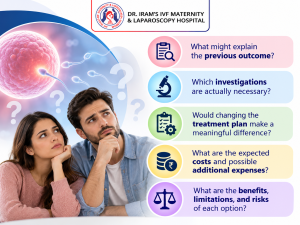
Located at C-33, BDA Colony, Koh-e-Fiza, Bhopal, Madhya Pradesh, PIN 462001, the hospital provides a setting where couples can discuss their concerns, understand available investigations, and explore suitable fertility treatment options. Before selecting a fertility specialist, it is helpful to ask questions about qualifications, diagnostic tests, treatment choices, success rates, costs, and patient support. These seven questions can help you prepare for your first consultation.
Why Is Choosing the Right Fertility Doctor Important?
Fertility treatment is not the same for every couple. Some people may conceive with guidance about ovulation timing, while others may need medication, surgery, IUI, IVF, or other assisted reproductive techniques. The right specialist should explain the possible causes of infertility, recommend appropriate investigations, and discuss suitable options based on the couple’s medical history.
Choosing a doctor involves more than looking at advertisements or selecting a clinic based on a promised success rate. Patients should consider professional qualifications, relevant experience, transparent communication, available services, and the quality of the treatment process. A consultation with a Fertility Doctor in BDA Colony, Bhopal can help couples understand their current reproductive health and decide on the next steps without feeling pressured into a particular procedure.
7 Questions to Ask Before Choosing a Fertility Doctor
1. What Are the Doctor’s Qualifications and Experience in Fertility Care?
The first question to ask is whether the doctor has appropriate qualifications and experience in reproductive health and infertility management.
Fertility care involves understanding the reproductive systems of both partners, interpreting diagnostic results, and determining which treatments may be appropriate. Depending on the case, a patient may need an obstetrician-gynaecologist, a reproductive medicine specialist, an andrologist, or another qualified healthcare professional.
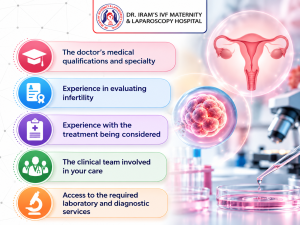
During your consultation, ask about:
- The doctor’s medical qualifications and specialty
- Experience in evaluating infertility
- Experience with the treatment being considered
- The clinical team involved in your care
- Access to the required laboratory and diagnostic services
Dr. Iram Ajaz is associated with Dr. Iram’s IVF Maternity & Laparoscopic Hospital and its fertility care services. Patients can discuss their medical history and treatment requirements with the clinical team to understand the appropriate care pathway.
When looking for an IVF Specialist in Koh-e-Fiza, Bhopal, verify the relevant qualifications and experience rather than relying solely on promotional descriptions.
2. What Fertility Tests Will Be Needed Before Treatment?
The second question is about diagnosis. Before recommending treatment, a fertility doctor should assess the possible causes of difficulty conceiving.
For many couples, evaluation may include a review of reproductive history, menstrual cycles, previous pregnancies, medical conditions, and the duration of attempts to conceive.
Depending on the individual case, investigations may include:
For women:
- Assessment of menstrual cycles and ovulation
- Hormonal tests when indicated
- Pelvic ultrasound
- Evaluation of the uterus and fallopian tubes when appropriate
- Ovarian reserve assessment when clinically useful
For men:
- Medical and reproductive history
- Semen analysis
- Hormonal testing or additional investigations when indicated
Not every patient needs every test. The doctor should explain why each investigation is recommended and how the results may influence the treatment plan.
An Infertility Treatment in Koh-e-Fiza, Bhopal consultation should focus on identifying the possible cause rather than automatically recommending IVF before an appropriate assessment.
3. Which Fertility Treatment Options Are Available?
The third question is whether the doctor can explain the different treatment options and their suitability for your circumstances.
Depending on the diagnosis, age, reproductive history, and other medical factors, treatment may involve lifestyle guidance, medication, surgery, IUI, IVF, or ICSI.
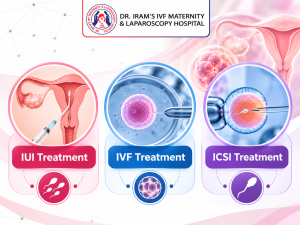
Intrauterine Insemination (IUI)
IUI involves placing prepared sperm into the uterus around the time of ovulation. It may be suitable for selected couples, depending on factors such as sperm quality, fallopian tube function, and the underlying cause of infertility.
In Vitro Fertilisation (IVF)
IVF involves stimulating the ovaries, collecting eggs, fertilising them in a laboratory, and transferring an embryo into the uterus. The precise process depends on the patient’s treatment plan.
Intracytoplasmic Sperm Injection (ICSI)
ICSI is a specialised laboratory technique in which an individual sperm is injected directly into an egg. It may be recommended for certain sperm-related fertility problems or other specific clinical circumstances.
Laparoscopy and Hysteroscopy
These procedures may be used to investigate or treat selected conditions involving the reproductive organs. Their suitability depends on the diagnosis.
Dr. Iram’s IVF Maternity & Laparoscopic Hospital lists fertility services including IUI, IVF, ICSI, cryopreservation, blastocyst culture and transfer, laparoscopy, and hysteroscopy.
When evaluating the Best IVF Hospital in Bhopal, ask why a particular treatment is recommended, what alternatives are available, and what the likely benefits and limitations are.
4. What Are the Expected Success Rates for My Situation?
The fourth question concerns treatment outcomes. Couples often want to know the likelihood of pregnancy before beginning fertility treatment.
However, success rates vary considerably. They can depend on the woman’s age, the cause and duration of infertility, ovarian reserve, sperm quality, embryo development, previous treatment outcomes, and the specific procedure used.
Ask the doctor to explain:
- Which success measure is being discussed
- Whether the figures refer to pregnancy or live birth
- Whether the rate is per treatment cycle or per embryo transfer
- How age and medical history affect the estimate
- Whether the figures apply to patients with circumstances similar to yours
A positive pregnancy test does not always lead to a live birth, so understanding the outcome being measured is important.
No fertility doctor can guarantee pregnancy. A responsible specialist should provide realistic estimates, explain uncertainty, and discuss what may happen if the first treatment is unsuccessful.
If you are consulting an IVF Doctor in Bhopal, ask for information relevant to your individual circumstances instead of relying on a single headline success percentage.
5. What Is the Total Cost of Fertility Treatment?
The fifth question is about the complete cost of the recommended treatment.
Fertility treatment costs can vary depending on the investigations required, medicines, laboratory procedures, number of visits, and whether additional treatment becomes necessary.
Before starting, ask for a written estimate that explains which services are included.
Potential cost components may include:
- Initial consultation
- Diagnostic investigations
- Fertility medications
- Ultrasound monitoring
- Egg collection and laboratory procedures for IVF
- Embryo transfer
- Anaesthesia or other clinical services when required
- Embryo or egg freezing, if applicable
- Follow-up consultations
- Additional treatment cycles if needed
Some couples may require more than one cycle, while others may be suitable for a different treatment approach. The total cost therefore cannot be accurately determined without an individual assessment.
At a Fertility Clinic in Koh-e-Fiza, Bhopal, ask the team to explain the payment schedule, possible additional charges, and what happens if the treatment plan needs to change.
Clear financial information allows couples to plan more effectively and avoid misunderstandings during treatment.
6. How Will the Doctor Support Us Throughout Treatment?
Fertility treatment can involve repeated appointments, medication schedules, investigations, and waiting periods. Emotional stress may also affect couples as they navigate uncertainty about the outcome.
A supportive fertility team should explain each stage, answer questions, and help patients understand what to expect next.
During your consultation, ask:
- Who will explain the test results?
- How can you contact the clinical team with treatment-related questions?
- Who will monitor your progress during treatment?
- What support is available if the process becomes emotionally difficult?
- How will changes to the treatment plan be communicated?
Good communication helps patients understand their choices and take an active role in decision-making.
At Dr. Iram’s IVF Maternity & Laparoscopic Hospital, the stated approach includes patient communication, guidance, and individualized fertility care. Couples can discuss how these arrangements work in practice during their consultation.
When choosing the Best Fertility Doctor in Bhopal, consider whether you feel heard, respected, and adequately informed.
7. What Happens If the First Treatment Does Not Work?
The seventh question is about the next steps if treatment does not result in pregnancy.
Not every fertility treatment succeeds on the first attempt. The appropriate response depends on the treatment performed, the results obtained, the patient’s health, and the couple’s preferences.
Ask the doctor how unsuccessful treatment would be reviewed and whether additional investigations or changes might be appropriate.
Possible next steps may include:
- Reviewing the original diagnosis
- Assessing the response to fertility medication
- Reviewing egg, sperm, or embryo-related findings where relevant
- Considering changes to the treatment protocol
- Discussing a different treatment option
- Reviewing whether further treatment is medically appropriate
The doctor should explain which options are available without promising that a particular change will guarantee success.
It is also reasonable to discuss the physical, emotional, and financial implications of further treatment before deciding whether to proceed.
A clear plan for follow-up helps couples make informed decisions even when the outcome is uncertain.
When Should You Consult a Fertility Doctor?
The right time to seek an evaluation depends on age, medical history, and reproductive circumstances.
In general, couples may consider an infertility evaluation if pregnancy has not occurred after 12 months of regular, unprotected intercourse when the woman is under 35. For women aged 35 or older, evaluation is generally recommended after six months. Earlier assessment may be appropriate for women over 40 or when known fertility concerns are present.
Consider seeking medical advice sooner if there is a history of irregular or absent periods, endometriosis, pelvic inflammatory disease, previous reproductive surgery, recurrent pregnancy loss, or known male-factor fertility problems.
A fertility consultation does not automatically mean that IVF will be necessary. The purpose is to understand the possible cause and discuss appropriate next steps.
Female Infertility Evaluation
Female fertility concerns may involve ovulation, ovarian reserve, the fallopian tubes, the uterus, hormonal conditions, or other medical factors.
Evaluation is based on symptoms, age, history, and examination findings. Treatment depends on the cause rather than on a single universal approach.
Male Infertility Evaluation
Male fertility problems may be associated with sperm production, sperm movement, hormonal conditions, anatomical factors, or other health concerns.
Semen analysis is commonly part of the initial evaluation. Additional tests may be recommended when indicated.
Both partners should be included in the assessment because fertility difficulties may involve either partner or a combination of factors.
Fertility Services at Dr. Iram’s IVF Maternity & Laparoscopic Hospital
Dr. Iram’s IVF Maternity & Laparoscopic Hospital provides fertility-related services designed to support couples at different stages of reproductive care.
Services listed by the hospital include:
Infertility Workup: Initial assessment and investigations to help identify possible causes of difficulty conceiving.
IUI Treatment: A fertility procedure that may be suitable for selected couples following evaluation.
IVF Treatment: Assisted reproduction involving egg collection, fertilisation in a laboratory, and embryo transfer.
ICSI Treatment: A specialised fertilisation technique used in selected cases.
Cryopreservation: Freezing of eggs, sperm, or embryos for potential future use when clinically appropriate.
Blastocyst Culture and Transfer: A laboratory approach involving embryo development to the blastocyst stage before transfer in selected treatment plans.
Laparoscopy and Hysteroscopy: Procedures that may be recommended to evaluate or treat certain reproductive conditions.
The suitability of each service depends on individual clinical findings. Patients should ask the treating doctor to explain the benefits, risks, alternatives, and costs before deciding on a procedure.
Meet Dr. Iram Ajaz
Dr. Iram Ajaz is an obstetrician-gynaecologist associated with Dr. Iram’s IVF Maternity & Laparoscopic Hospital in Bhopal. The hospital’s fertility services include evaluation and treatment options for couples experiencing difficulties conceiving.
Her role in the hospital’s fertility care is connected with helping patients understand reproductive health concerns and available treatment pathways.
During a consultation, couples can discuss their reproductive history, previous investigations, and concerns about conception. The appropriate evaluation and treatment plan should be based on individual clinical findings.
People searching for the Best Fertility Doctor in Bhopal should review the doctor’s relevant qualifications, experience, treatment approach, and communication style before making a decision.
About Dr. Iram’s IVF Maternity & Laparoscopic Hospital
Dr. Iram’s IVF Maternity & Laparoscopic Hospital is a fertility and maternity care facility in Bhopal. Its website describes services related to infertility evaluation, assisted reproduction, and selected laparoscopic and hysteroscopic procedures.
The hospital aims to provide guidance to couples navigating fertility investigations and treatment decisions. Patients can discuss available services, the clinical team, and the expected treatment process directly with the hospital.
The hospital is located at:
Dr. Iram’s IVF Maternity & Laparoscopic Hospital
C-33, BDA Colony
Koh-e-Fiza, Bhopal
Madhya Pradesh – 462001, India
The hospital’s published contact numbers are:
- +91 99819 99540
- 0755-4030410
- 0755-4280832
Before visiting, confirm the current appointment availability, consultation timings, and required documents directly with the hospital.
Why Choose a Fertility Centre That Emphasizes Individualized Care?
Fertility care should be based on medical assessment rather than a fixed treatment package for every patient. Couples may have different diagnoses, priorities, budgets, and expectations.
A suitable fertility centre should help patients understand the reason for each recommended investigation, the available options, and the potential outcomes.
Important factors to consider include:
- Qualified medical professionals
- Appropriate diagnostic investigations
- Clear treatment explanations
- Transparent cost estimates
- Informed consent before procedures
- Appropriate laboratory and clinical standards
- Follow-up and emotional support
These factors can help patients assess whether a centre meets their needs.
The decision to begin treatment should remain with the patient or couple after discussing the expected benefits, limitations, risks, and alternatives with the treating doctor.
Frequently Asked Questions – Best Fertility Doctor in Bhopal
1. How do I choose the Best Fertility Doctor in Bhopal?
Review the doctor’s relevant qualifications, experience, diagnostic approach, communication style, treatment options, and transparency about costs and outcomes. Choose a specialist who explains your options clearly and respects your decisions.
2. When should couples consult a fertility doctor?
An evaluation is generally recommended after 12 months of trying to conceive if the woman is under 35, or after six months if she is 35 or older. Earlier evaluation may be appropriate for known fertility concerns or women over 40.
3. Does every couple with infertility need IVF?
No. Depending on the diagnosis, treatment may involve medication, IUI, surgery, IVF, or other approaches. Some couples may need guidance and further evaluation before a treatment decision is made.
4. What tests may be required before IVF?
Tests may include reproductive history, hormonal investigations when indicated, ultrasound, assessment of the uterus and fallopian tubes, and semen analysis. The exact tests depend on the couple’s clinical circumstances.
5. What is the difference between IUI and IVF?
IUI places prepared sperm into the uterus around ovulation. IVF involves fertilising eggs in a laboratory and transferring an embryo into the uterus. The appropriate method depends on the cause of infertility and other medical factors.
6. How much does fertility treatment cost in Bhopal?
Costs vary depending on the treatment, medicines, diagnostic tests, laboratory procedures, and follow-up requirements. Request an individualized estimate from the hospital before beginning treatment.
7. Where is Dr. Iram’s IVF Maternity & Laparoscopic Hospital located?
The hospital is located at C-33, BDA Colony, Koh-e-Fiza, Bhopal, Madhya Pradesh, PIN 462001.
8. Can male infertility also be evaluated?
Yes. Fertility evaluation commonly considers both partners. Depending on the clinical history, a semen analysis and additional investigations may be recommended for the male partner.
9. What should I bring to my first fertility consultation?
Bring previous test results, ultrasound reports, relevant medical records, a list of current medicines, and details of previous fertility treatments if available. Both partners’ medical histories can be helpful.
10. Can a fertility doctor guarantee pregnancy?
No. Fertility treatment outcomes vary according to several medical factors. A responsible specialist should explain realistic expectations and available options without guaranteeing pregnancy.
Conclusion – How to Choose the Best Fertility Doctor in Bhopal
Choosing the Best Fertility Doctor in Bhopal involves more than comparing clinic names or advertised success rates. Couples should ask about the doctor’s qualifications, the investigations needed, available treatment options, expected outcomes, total costs, and the support provided throughout the process.
A thorough fertility evaluation can help identify possible causes of difficulty conceiving and determine whether medication, IUI, IVF, ICSI, or another approach may be appropriate. Treatment decisions should be personalized, and couples should receive clear information about benefits, risks, limitations, and alternatives.
Dr. Iram Ajaz is associated with Dr. Iram’s IVF Maternity & Laparoscopic Hospital, located at C-33, BDA Colony, Koh-e-Fiza, Bhopal, Madhya Pradesh, PIN 462001. Couples can contact the hospital to discuss consultation availability and the fertility services offered.
Taking the time to ask the right questions can help you understand your options, participate in treatment decisions, and approach your fertility journey with better information and realistic expectations.