
Posts

An unsuccessful IVF cycle can be emotionally difficult for couples who are trying to conceive. When treatment fails more than once, many questions arise: Why did the embryo not implant? Are there any underlying medical conditions? Should the treatment plan change? Is another attempt worth considering?

Repeated IVF Failure in Bhopal is a concern for couples who have experienced unsuccessful embryo transfers or pregnancy tests and want to understand their next steps. Although several factors can affect IVF outcomes, an unsuccessful cycle does not automatically mean that pregnancy is impossible.

At Dr. Iram’s IVF Maternity & Laparoscopic Hospital, couples can explore fertility evaluation and treatment options according to their medical history. An appointment with an appropriate IVF Specialist in Bhopal can help patients review previous reports, understand possible contributing factors, and decide whether further investigations are necessary.

The right approach is not to repeat every test or procedure automatically. Instead, the focus should be on understanding previous treatment results and creating an individualised plan.

What Is Repeated IVF Failure?

Repeated IVF failure generally describes unsuccessful outcomes after multiple IVF attempts. However, there is no single number of failed cycles that applies to every patient. Doctors consider factors such as age, embryo development, the number and quality of embryos transferred, and the predicted likelihood of implantation.

An IVF cycle may be unsuccessful because eggs do not fertilise, embryos stop developing, an embryo does not implant, or a pregnancy ends in an early loss. These outcomes are different and may require different assessments.

For couples concerned about Repeated IVF Failure in Bhopal, reviewing each stage of previous treatment can help clarify where difficulties occurred. A specialist may examine ovarian stimulation results, fertilisation reports, embryo development, transfer details, and pregnancy-test results before suggesting further treatment.

A Failed IVF Cycle does not always reveal a specific medical problem. Sometimes, no definite cause can be identified despite an appropriate evaluation.

What Are the Common Causes of Repeated IVF Failure?

1. Age-Related Changes in Egg Quality

Female age is an important factor affecting fertility and IVF outcomes. As age increases, ovarian reserve generally declines, and the proportion of eggs with chromosomal abnormalities increases. Such abnormalities may affect embryo development, implantation, or the continuation of pregnancy.

Ovarian reserve tests, including AMH and antral follicle count, can help assess the expected response to stimulation. However, these tests do not directly measure egg quality or guarantee the outcome of a future cycle.

A couple considering Repeated IVF Failure in Bhopal should discuss age, ovarian reserve, and previous egg-retrieval results with their fertility specialist. These details can help determine whether the treatment approach needs to be reviewed.

2. Embryo Development and Chromosomal Abnormalities

An embryo must develop appropriately before it can implant and continue growing. Some embryos stop developing in the laboratory, while others may appear suitable for transfer but have chromosomal abnormalities that cannot be identified from appearance alone.

Embryo grading provides useful information, but it cannot guarantee implantation or a live birth. In selected cases, a specialist may discuss preimplantation genetic testing for aneuploidy (PGT-A), including its limitations, costs, and possible benefits.

PGT-A is not appropriate for everyone and has not been shown to improve live-birth rates for all patients with infertility. A Failed IVF Cycle alone does not mean that genetic testing is automatically required.

3. Uterine and Endometrial Conditions

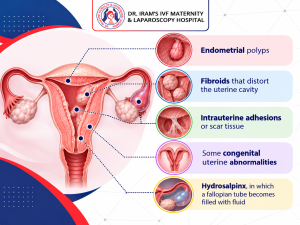
The uterus and its lining play an important role in embryo implantation. Certain conditions may affect the uterine cavity or reproductive health, including:

  • Endometrial polyps
  • Fibroids that distort the uterine cavity
  • Intrauterine adhesions or scar tissue
  • Some congenital uterine abnormalities
  • Hydrosalpinx, in which a fallopian tube becomes filled with fluid

Depending on the patient’s history and previous investigations, a doctor may recommend transvaginal ultrasound, saline sonography, or hysteroscopy.

For patients seeking Infertility Treatment in Bhopal, additional testing should be based on clinical findings rather than a standard package of investigations for everyone. The purpose is to identify conditions that could meaningfully change treatment decisions.
4. Sperm-Related Factors

Male fertility can also influence fertilisation and embryo development. Sperm concentration, movement, and shape may be assessed through a semen analysis. Further evaluation may be appropriate if results or medical history suggest an underlying issue.

Both partners should be included in the discussion whenever applicable. Fertility difficulties should not automatically be attributed to the female partner.

During IVF Treatment in Bhopal, the fertility team may review the male partner’s reports alongside the female partner’s ovarian response and embryo-development records. Additional tests should be recommended when they have a clear clinical purpose.

5. Ovarian Response and Hormonal Factors

Some patients produce fewer eggs than expected during ovarian stimulation. This may be associated with ovarian reserve, age, or individual differences in response to medication.

The treating specialist may review previous medication protocols, hormone measurements, the number of mature eggs retrieved, and fertilisation outcomes. Thyroid function or other hormonal assessments may be considered when symptoms, medical history, or previous results indicate a need.

An IVF Specialist in Bhopal can explain whether a change in stimulation protocol is reasonable and what limitations remain. Adjusting medication without reviewing the previous cycle may not address the actual reason for an unsuccessful outcome.

6. Medical Conditions and Lifestyle Factors

Certain medical conditions, including poorly controlled diabetes and thyroid disorders, may require attention before another pregnancy attempt. Other reproductive conditions may also influence fertility, depending on the individual case.

Smoking and tobacco use can negatively affect reproductive health. Maintaining a balanced diet, staying physically active, avoiding tobacco, and discussing alcohol use with a doctor can support general health. These steps cannot, however, guarantee IVF success or correct every underlying cause.

For couples experiencing Repeated IVF Failure in Bhopal, lifestyle advice should complement medical evaluation rather than replace it.

What Should You Do After a Failed IVF Cycle?

The next step is usually a structured review of previous treatment rather than immediately repeating the same protocol.

1. Collect All Previous IVF Reports

Bring together records from every previous cycle, including:

  • Stimulation medications and response
  • Number of eggs retrieved and mature eggs obtained
  • Fertilisation results
  • Embryo grading and development
  • Fresh or frozen embryo transfer details
  • Pregnancy-test results and any pregnancy losses
  • Previous scans and relevant medical investigations

These records help the doctor identify patterns and determine whether further evaluation may be useful.

2. Reassess the Treatment Plan

A specialist may consider changes to ovarian stimulation, embryo-transfer planning, or the management of an identified medical condition. Any change should have a clear clinical rationale.

Couples seeking IVF Treatment in Bhopal should ask why a particular change is being recommended, what benefit is expected, and whether there are alternative approaches. This helps them make informed decisions about further treatment.

3. Consider Targeted Investigations

Depending on the previous results, a doctor may recommend assessment of the uterine cavity, review of hormonal health, male fertility evaluation, or genetic counselling in selected situations.

Not every patient needs every investigation. Routine immune testing, endometrial receptivity panels, endometrial scratching, or other add-on procedures should not be assumed necessary simply because an earlier cycle was unsuccessful. Evidence for many such interventions remains limited.

A qualified IVF Specialist in Bhopal can explain which tests are supported by the patient’s history and which may not provide useful information.

4. Discuss the Chances of Another Attempt

The likely outcome of another cycle depends on several factors, including age, embryo availability, previous treatment response, and any identified medical conditions. General success rates advertised online may not accurately reflect an individual’s circumstances.

When discussing Repeated IVF Failure in Bhopal, ask the specialist to explain the expected benefits, limitations, costs, and alternatives of the proposed plan. No clinic or treatment can guarantee pregnancy.

5. Give Emotional Recovery Appropriate Attention

Unsuccessful fertility treatment can affect emotional well-being, relationships, and finances. Couples may benefit from counselling, support groups, or time to discuss their next steps together.

A negative result is not evidence that a patient has done something wrong. Emotional support should be offered alongside appropriate medical care.
How to Choose an IVF Centre in Bhopal After Unsuccessful Attempts

After one or more unsuccessful cycles, patients may want a second opinion or a detailed review of their existing treatment plan. Choosing a clinic should involve more than comparing advertised success rates.

When evaluating an IVF Centre in Bhopal, consider whether the team explains treatment options clearly, reviews previous reports, discusses costs transparently, and recommends investigations according to individual needs.

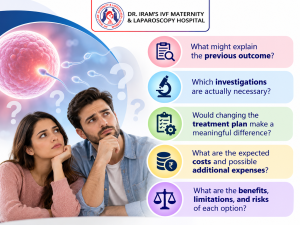
Ask questions such as:

  • What might explain the previous outcome?
  • Which investigations are actually necessary?
  • Would changing the treatment plan make a meaningful difference?
  • What are the expected costs and possible additional expenses?
  • What are the benefits, limitations, and risks of each option?

Patients looking for an IVF Clinic near Koh-e-Fiza can also confirm the clinic’s location, consultation availability, and the services offered before booking an appointment.

Dr. Iram’s IVF Maternity & Laparoscopic Hospital lists fertility services including IVF, IUI/ICSI, infertility workup, blastocyst culture and transfer, cryopreservation, and laparoscopy and hysteroscopy. Couples should confirm which services and consultations are appropriate for their individual circumstances.

Fertility Care Around Koh-e-Fiza and Nearby Areas

Finding a clinic that is convenient to reach can make consultations and follow-up visits easier during fertility treatment. Dr. Iram’s IVF Maternity & Laparoscopic Hospital lists its address as C-33, BDA Colony, Koh-e-Fiza, Bhopal, Madhya Pradesh – 462001.

Patients from BDA Colony, Koh-e-Fiza, Lalghati, and Bairagarh may consider travel distance and appointment schedules when planning consultations. Patients travelling from Arera Colony, Shahpura, MP Nagar, or Kolar Road can confirm directions and appointment availability directly with the clinic.

For those researching Repeated IVF Failure in Bhopal, location is one practical consideration, but the quality of counselling, clarity of treatment recommendations, and individual medical assessment are equally important.

A consultation at an IVF Centre in Bhopal should provide an opportunity to discuss previous treatment outcomes and understand the possible next steps without pressure to undergo unnecessary procedures.

Frequently Asked Questions – Repeated IVF Failure in Bhopal

1. How many unsuccessful IVF attempts indicate repeated IVF failure?

There is no universal number that applies to everyone. Doctors consider age, embryo quality, previous transfer outcomes, and the predicted chance of implantation. A detailed assessment may be appropriate when unsuccessful attempts accumulate.

2. Does a Failed IVF Cycle mean pregnancy is impossible?

No. An unsuccessful cycle does not automatically mean that a future attempt cannot result in pregnancy. The outlook depends on individual factors, and a specialist can provide a more personalised assessment.

3. Which tests may be needed after repeated IVF failure?

Depending on the clinical history, testing may include review of ovarian reserve, uterine anatomy, previous embryo-development records, and male fertility results. Additional tests should be recommended only when clinically justified.

4. Should I change my clinic after unsuccessful IVF attempts?

Not necessarily. You may first request a detailed review from your current team. If you remain uncertain about the explanation or proposed treatment, seeking a second opinion from a qualified specialist may help.

5. Can stress alone cause IVF failure?

It is not appropriate to assume that stress caused an unsuccessful cycle. Fertility treatment can be emotionally demanding, so counselling and emotional support can be useful without placing blame on the patient.

6. What should I ask during an IVF consultation?

Ask about the possible reasons for the previous outcome, the need for additional tests, realistic chances of success, available treatment options, total expected costs, and the risks or limitations of any proposed add-on procedure.

7. Where can I discuss my previous IVF reports in Bhopal?

You can contact a qualified fertility specialist to arrange a review of your previous treatment records. Dr. Iram’s IVF Maternity & Laparoscopic Hospital lists its location in BDA Colony, Koh-e-Fiza, Bhopal. Confirm consultation availability and relevant services directly with the clinic.

Conclusion – Repeated IVF Failure in Bhopal

Repeated unsuccessful IVF treatment can be difficult, but reviewing previous outcomes can help couples make informed decisions. Possible contributing factors include age-related changes in egg quality, embryo development, chromosomal abnormalities, uterine conditions, sperm-related factors, and individual responses to medication. In some cases, the exact cause remains unknown.

If you are concerned about Repeated IVF Failure in Bhopal, discuss your previous reports with a qualified fertility specialist before deciding on another cycle. A personalised assessment can help determine whether additional investigations, a change in treatment, or another approach may be appropriate.

The aim is to make informed decisions based on medical evidence, individual circumstances, and realistic expectations.
Infertility can be an emotional and challenging experience for couples who are trying to start or grow their families. When pregnancy does not occur despite regular, unprotected intercourse, a proper fertility evaluation can help identify possible causes and guide couples toward suitable treatment. Consulting an experienced Infertility Specialist in Bhopal can help both partners understand their reproductive health and explore appropriate treatment options.

Infertility can affect both men and women. Problems with ovulation, ovarian reserve, fallopian tubes, the uterus, sperm production, sperm movement, hormones, or other reproductive factors may contribute to difficulty conceiving. Sometimes, no specific cause is identified even after evaluation. For this reason, fertility assessment should ideally involve both partners.

An experienced Infertility Specialist in Bhopal can evaluate the medical history of both partners, recommend appropriate diagnostic tests, explain the findings, and develop an individualized treatment plan. Depending on the cause, treatment may include lifestyle changes, medicines, ovulation induction, IUI, or advanced assisted reproductive techniques such as IVF.

Infertility Specialist in Bhopal – Understanding Infertility

Infertility refers to difficulty achieving pregnancy despite regular unprotected sexual intercourse over a period of time. The World Health Organization recognizes infertility as a disease of the male or female reproductive system that may result from abnormalities affecting the reproductive system.

The condition may be related to male factors, female factors, a combination of both, or unexplained causes.

An Infertility Specialist in Bhopal generally evaluates both partners instead of assuming that infertility is caused only by the woman. This balanced approach can help identify the underlying issue and avoid unnecessary delays in treatment.

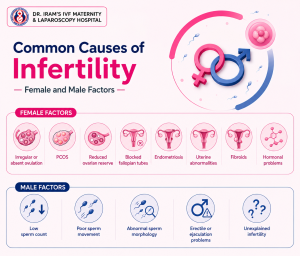
Common fertility-related concerns include:

  • Irregular or absent ovulation
  • PCOS
  • Reduced ovarian reserve
  • Blocked fallopian tubes
  • Endometriosis
  • Uterine abnormalities
  • Fibroids
  • Hormonal problems
  • Low sperm count
  • Poor sperm movement
  • Abnormal sperm morphology
  • Erectile or ejaculation problems
  • Unexplained infertility

Early evaluation can be particularly important when age, previous reproductive problems, or other risk factors may affect fertility.

Male Infertility in Bhopal – Causes and Risk Factors

Some common causes include:

Low Sperm Count

A lower-than-normal sperm concentration may reduce the chance of fertilization.

Poor Sperm Motility

Sperm need adequate movement to travel through the female reproductive tract. Reduced motility can affect natural conception.

Abnormal Sperm Morphology

Changes in sperm shape or structure may sometimes affect their ability to fertilize an egg.

Varicocele

A varicocele is an enlargement of veins around the testicle and may be associated with impaired sperm production in some men.

Hormonal Problems

Hormonal disorders involving reproductive hormones can affect sperm production.

Infections

Certain infections may affect the reproductive system or sperm quality.

Lifestyle Factors

Smoking, excessive alcohol consumption, obesity, poor sleep, prolonged heat exposure, and some medications may negatively affect reproductive health.

Previous Surgery or Injury

Previous testicular surgery, trauma, or certain medical conditions can sometimes contribute to male infertility.

For these reasons, men should be included in fertility evaluation from the beginning. An Infertility Specialist in Bhopal may recommend semen analysis and other investigations according to the patient’s history.

Female Infertility in Bhopal – Common Causes

Female Infertility in Bhopal may be associated with problems affecting ovulation, ovarian function, fallopian tubes, uterus, hormones, or reproductive age.

Some important causes include:

Ovulation Disorders

Irregular or absent ovulation is one of the common causes of female infertility. PCOS, thyroid disorders, high prolactin levels, significant weight changes, and other hormonal conditions may affect ovulation.

Reduced Ovarian Reserve

Ovarian reserve refers to the quantity of eggs remaining in the ovaries. It generally decreases with age, although the rate varies between individuals.

Fallopian Tube Blockage

Blocked or damaged fallopian tubes can prevent sperm and egg from meeting.

Endometriosis

Endometriosis can affect pelvic organs and may interfere with fertility through several mechanisms.

Uterine Conditions

Fibroids, polyps, adhesions, or certain structural abnormalities may affect implantation or pregnancy.

Age-Related Fertility Changes

Female fertility generally declines with increasing age, particularly because egg quantity and quality decrease over time.

Women experiencing persistent difficulty conceiving should consider evaluation by an Infertility Specialist in Bhopal rather than delaying assessment.

Male and Female Infertility – Why Both Partners Should Be Evaluated

Infertility is not exclusively a female health problem. Male and female factors may occur independently or together.

A complete fertility assessment may therefore include:

  • Medical history
  • Menstrual and ovulation history
  • Previous pregnancies
  • Physical examination when appropriate
  • Semen analysis
  • Hormonal testing
  • Ultrasound
  • Ovarian reserve assessment
  • Fallopian-tube evaluation
  • Uterine assessment

Evaluation of both partners can help identify the most appropriate treatment and prevent unnecessary procedures.

When couples consult an Infertility Specialist in Bhopal, the specialist can review both partners’ reports together and explain whether the problem appears to be male-factor, female-factor, combined, or unexplained infertility.

Diagnosis of Infertility – Tests and Investigations

The diagnosis of infertility is not based on one test. Different investigations may be recommended depending on age, medical history, symptoms, and previous treatment.

Semen Analysis

Semen analysis is one of the main investigations used to assess male fertility. It evaluates factors such as:

  • Sperm concentration
  • Sperm motility
  • Sperm morphology
  • Semen volume
  • Other semen characteristics

If the first result is abnormal, repeat testing may sometimes be recommended.

Ovulation Assessment

Ovulation can be assessed using:

  • Menstrual history
  • Ovulation predictor kits
  • Hormonal blood tests
  • Ultrasound follicular monitoring

Ovarian Reserve Testing

Depending on the clinical situation, doctors may recommend tests such as AMH and antral follicle count to assess ovarian reserve.

Ultrasound

Pelvic ultrasound can help evaluate the uterus, ovaries, follicles, fibroids, cysts, and other reproductive structures.

Fallopian-Tube Evaluation

Tests such as hysterosalpingography or other appropriate imaging methods may be used to determine whether the fallopian tubes are open.

Additional Testing

Additional hormonal, genetic, or other investigations may be recommended when indicated by the patient’s history or initial results.

A qualified Infertility Specialist in Bhopal selects investigations according to the individual patient rather than recommending every test for every couple.

When Should You Consult an Infertility Specialist in Bhopal?

Many couples wonder when fertility evaluation should begin.

Generally, couples may consider medical evaluation after:

  • 12 months of regular unprotected intercourse without pregnancy when the woman is under 35
  • 6 months when the woman is 35 or older
  • Earlier evaluation when there are known fertility problems or risk factors

Earlier consultation may be appropriate when a woman has very irregular periods, known PCOS, endometriosis, previous pelvic surgery, or other reproductive concerns, or when a man has a history of testicular problems, previous reproductive surgery, or known sperm abnormalities.

An Infertility Specialist in Bhopal can determine whether evaluation is required immediately or whether trying naturally for some additional time is reasonable.

Infertility Treatment in Bhopal – Available Treatment Options

Infertility Treatment in Bhopal depends on the underlying cause, age, duration of infertility, previous treatment, and reproductive health of both partners.

Treatment may include:

  • Lifestyle modification
  • Ovulation-induction medicines
  • Hormonal treatment
  • Treatment of underlying medical conditions
  • Surgical treatment when indicated
  • IUI
  • IVF
  • Other assisted reproductive techniques

Not every couple requires IVF. Some couples may achieve pregnancy with medicines or IUI, while others may benefit from proceeding to advanced fertility treatment.

A personalized approach helps ensure that treatment is appropriate for the specific fertility problem.

Ovulation Induction for Female Infertility

For women who do not ovulate regularly, fertility medicines may be used to encourage ovulation.

Before treatment, the doctor may assess:

  • Ovarian reserve
  • Hormonal status
  • Fallopian tubes
  • Partner’s semen parameters
  • Overall reproductive health

Ovulation induction may be combined with timed intercourse or IUI depending on the situation.

Women undergoing stimulation may require ultrasound monitoring to assess follicular development and reduce the risk of complications such as excessive ovarian response or multiple pregnancy.

For appropriate patients with Female Infertility in Bhopal, ovulation treatment can be an important part of the fertility-management plan.

IUI Treatment for Selected Infertility Cases

Intrauterine insemination, or IUI, involves placing prepared sperm directly into the uterus around the time of ovulation.

IUI may be considered for selected cases of:

  • Unexplained infertility
  • Mild male-factor infertility
  • Ovulation problems
  • Use of donor sperm
  • Certain cervical factors

The treatment involves monitoring ovulation, preparing the sperm sample, and performing insemination at the appropriate time.

IUI does not guarantee pregnancy, and its suitability depends on several factors. Couples should discuss expected outcomes with their fertility specialist before starting treatment.

IVF Treatment for More Complex Fertility Problems

IVF, or in-vitro fertilization, involves retrieving eggs from the ovaries and fertilizing them with sperm in a laboratory. An embryo is subsequently transferred into the uterus.

IVF may be considered in situations such as:

  • Blocked fallopian tubes
  • Severe male-factor infertility
  • Certain cases of endometriosis
  • Reduced ovarian reserve
  • Previous unsuccessful fertility treatments
  • Unexplained infertility after appropriate initial treatment
  • Other circumstances where IVF is clinically appropriate

An IVF Centre in Bhopal can provide fertility evaluation and explain whether IVF or another treatment is appropriate.

The decision to proceed with IVF should be based on the couple’s individual medical circumstances rather than simply choosing the most advanced treatment.

Male Infertility Treatment Options

Treatment for Male Infertility in Bhopal depends on the underlying problem.

Possible approaches may include:

  • Lifestyle modification
  • Treatment of hormonal disorders
  • Treatment of infections when appropriate
  • Management of varicocele in selected patients
  • Surgical correction of certain reproductive problems
  • IUI when sperm parameters are suitable
  • IVF or ICSI when indicated

ICSI, or intracytoplasmic sperm injection, involves injecting a single sperm directly into an egg during an IVF cycle. It may be considered in certain cases of significant male-factor infertility.

The appropriate treatment should be selected after proper evaluation rather than based only on a single semen-analysis value.

Female Infertility Treatment Options

Treatment for Female Infertility in Bhopal depends on the cause.

Management may include:

  • Ovulation induction
  • Treatment of PCOS-related ovulation problems
  • Hormonal management
  • Treatment of endometriosis
  • Surgery for selected uterine or tubal conditions
  • IUI
  • IVF
  • Fertility preservation when appropriate

Age and ovarian reserve are important considerations when developing a fertility plan.

A fertility specialist can explain which treatment is most appropriate after reviewing the complete evaluation.

Infertility Treatment at an IVF Centre in Bhopal

An IVF Centre in Bhopal can provide several fertility services under coordinated care.

A typical fertility-care pathway may include:

  1. Initial consultation
  2. Evaluation of both partners
  3. Required diagnostic testing
  4. Identification of possible infertility causes
  5. Individualized treatment planning
  6. Ovulation monitoring where required
  7. IUI or IVF when appropriate
  8. Pregnancy testing and follow-up

The provided information about Dr. Iram’s IVF states that the centre began its fertility journey in 2013 and provides fertility-related care with a team of trained professionals.

For couples seeking an Infertility Specialist in Bhopal, comprehensive evaluation can help them understand their reproductive health before selecting a treatment.

Dr. Iram Ajaz – Fertility Care in Bhopal

According to the information provided for this website, Dr. Iram Ajaz is an Obstetrician-Gynecologist based in Bhopal and is associated with Dr. Iram’s IVF.

The provided website content describes Dr. Iram’s IVF as a fertility centre established in 2013, with a focus on fertility evaluation and assisted reproductive care.

For couples dealing with Male Infertility in Bhopal or Female Infertility in Bhopal, the fertility team can evaluate the individual circumstances of both partners and discuss suitable treatment options.

The focus of fertility care should be on accurate diagnosis, clear communication, individualized treatment planning, and appropriate follow-up throughout the treatment journey.

Why Choose an Infertility Specialist in Bhopal?

Selecting an experienced Infertility Specialist in Bhopal can help couples receive structured fertility evaluation and understand their treatment options.

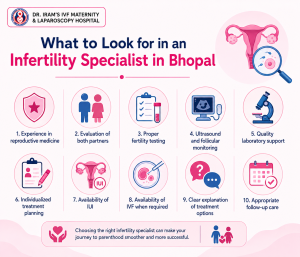
Important factors to consider include:

  • Experience in reproductive medicine
  • Evaluation of both partners
  • Proper fertility testing
  • Ultrasound and follicular monitoring
  • Quality laboratory support
  • Individualized treatment planning
  • Availability of IUI
  • Availability of IVF when required
  • Clear explanation of treatment options
  • Appropriate follow-up care

Fertility treatment should not be approached as a one-size-fits-all process. The treatment plan should be based on the couple’s age, medical history, fertility diagnosis, test results, and previous treatment experience.

Lifestyle and Fertility – Healthy Habits That May Help

Medical treatment is important when infertility has an underlying cause, but healthy lifestyle habits can also support overall reproductive health.

Couples may consider:

  • Maintaining a healthy body weight
  • Eating a balanced diet
  • Exercising regularly
  • Avoiding smoking
  • Limiting alcohol
  • Getting adequate sleep
  • Managing stress
  • Avoiding unnecessary medications
  • Managing existing medical conditions
  • Following medical advice during fertility treatment

Lifestyle changes cannot correct every cause of infertility, but they can contribute to general health and may support fertility management.

Emotional Support During Infertility Treatment

Infertility can affect emotional well-being as well as physical health. Couples may experience stress, frustration, anxiety, disappointment, or uncertainty during the treatment process.

It can help to:

  • Communicate openly with your partner
  • Understand the treatment before starting
  • Ask questions during consultations
  • Avoid comparing your fertility journey with others
  • Seek professional emotional support when needed
  • Take care of sleep, nutrition, and daily routines

An experienced Infertility Specialist in Bhopal should explain the treatment process clearly so couples can make informed decisions about their reproductive care.

Benefits of Early Infertility Evaluation

Early fertility evaluation can help identify potential problems and prevent unnecessary delays.

Potential benefits include:

  • Identification of possible infertility causes
  • Evaluation of both partners
  • Early treatment planning
  • Better understanding of reproductive health
  • Identification of ovulation problems
  • Assessment of sperm quality
  • Evaluation of ovarian reserve
  • Assessment of fallopian tubes
  • Appropriate selection of IUI or IVF when required

For couples experiencing persistent difficulty conceiving, timely consultation with an Infertility Specialist in Bhopal can help determine the next appropriate step.

Frequently Asked Questions – Infertility Specialist in Bhopal

What does an Infertility Specialist in Bhopal do?

An Infertility Specialist in Bhopal evaluates couples who are having difficulty conceiving, identifies possible male or female fertility factors, recommends appropriate investigations, and develops an individualized treatment plan.

What are the common causes of infertility?

Infertility can result from ovulation problems, reduced ovarian reserve, blocked fallopian tubes, endometriosis, uterine conditions, low sperm count, poor sperm motility, hormonal problems, or unexplained factors.

What is Male Infertility in Bhopal?

Male Infertility in Bhopal refers to difficulty achieving pregnancy because of factors affecting sperm production, sperm quality, sperm transport, hormones, or sexual function.

What is Female Infertility in Bhopal?

Female Infertility in Bhopal refers to difficulty conceiving because of factors involving ovulation, ovarian reserve, fallopian tubes, uterus, hormones, endometriosis, age, or other reproductive conditions.

When should I see an infertility specialist?

Evaluation is generally recommended after 12 months of trying to conceive when the woman is under 35, or after 6 months when she is 35 or older. Earlier evaluation may be recommended when there are known fertility concerns.

What tests are performed for infertility?

Depending on the situation, testing may include semen analysis, hormonal tests, ultrasound, ovarian-reserve assessment, ovulation evaluation, and fallopian-tube testing.

Can Male Infertility be treated?

Yes. Treatment depends on the underlying cause and may include lifestyle changes, medicines, surgery in selected cases, IUI, IVF, or ICSI.

Can Female Infertility be treated?

Many causes of female infertility can be managed with medicines, ovulation induction, surgery in selected cases, IUI, IVF, or other appropriate treatments.

Is IVF necessary for every infertile couple?

No. IVF is not required in every case. Some couples may achieve pregnancy through lifestyle changes, medicines, timed intercourse, or IUI, depending on the cause of infertility.

What happens if the cause of infertility cannot be identified?

This is called unexplained infertility. Even when no specific cause is identified, fertility specialists can recommend evidence-based treatment options based on age, duration of infertility, and other individual factors.


Summary

Infertility can affect both men and women, and identifying the underlying cause is an important part of effective fertility management. Male Infertility in Bhopal may be related to sperm production, sperm movement, hormones, reproductive anatomy, or other factors, while Female Infertility in Bhopal may involve ovulation, ovarian reserve, fallopian tubes, uterus, endometriosis, age, or hormonal conditions.

A detailed evaluation by an Infertility Specialist in Bhopal can help couples understand their reproductive health and choose an appropriate treatment pathway. Depending on the diagnosis, Infertility Treatment in Bhopal may include lifestyle changes, medicines, ovulation induction, IUI, IVF, or other assisted reproductive techniques.

An IVF Centre in Bhopal can provide coordinated fertility evaluation and advanced assisted reproductive services when required. Most importantly, treatment should be personalized according to the medical needs of both partners.


Conclusion – Infertility Specialist in Bhopal

Difficulty conceiving can be caused by several factors, and infertility should not be considered solely a female or male problem. Male Infertility in Bhopal and Female Infertility in Bhopal both require appropriate evaluation so that the underlying factors can be identified and managed correctly.

Consulting an Infertility Specialist in Bhopal can help couples understand their fertility status, undergo the right diagnostic tests, and select a suitable treatment option. From medicines and ovulation induction to IUI and advanced IVF treatment, modern fertility care provides several options depending on the individual situation.

For couples looking for Infertility Treatment in Bhopal, a structured fertility evaluation at an IVF Centre in Bhopal can be an important first step. According to the provided website information, Dr. Iram Ajaz and the team associated with Dr. Iram’s IVF have been providing fertility-focused care since 2013. A personalized consultation can help couples understand their options and make informed decisions about their journey toward parenthood.