
Starting an IVF journey can bring hope, expectations, and many questions for couples experiencing fertility challenges. One of the most common questions is how many IVF cycles may be needed to achieve pregnancy. Some couples conceive during their first IVF attempt, while others may require two or more cycles depending on their age, reproductive health, embryo quality, and underlying fertility conditions.
IVF Treatment in Bhopal offers couples an opportunity to explore assisted reproductive techniques when natural conception has not been successful or when specific medical conditions affect fertility. However, the number of IVF cycles required is different for every individual. There is no fixed number that guarantees pregnancy, and treatment outcomes depend on several medical factors.
Dr. Iram Ajaz is an Obstetrician and Gynecologist based in Bhopal and the visionary behind Dr. Iram’s IVF Maternity & Laparoscopy Hospital. The hospital began its journey in 2013 with a vision to support couples facing fertility challenges. Its medical team includes Dr. Shahid Hassan, an Expert Laparoscopic and General Surgeon specialising in piles, fissure, fistula, and hernia treatments.
Understanding how IVF cycles work, what influences success rates, and when another attempt may be considered can help couples make informed decisions about their treatment.
Dr. Iram Ajaz – Obstetrician and Gynecologist in Bhopal
Dr. Iram Ajaz is an Obstetrician and Gynecologist based in Bhopal, Madhya Pradesh. She is the visionary behind Dr. Iram’s IVF Maternity & Laparoscopy Hospital, which began its journey in 2013 with the aim of supporting couples experiencing fertility challenges.
The hospital focuses on providing fertility-related evaluation, treatment guidance, and coordinated patient care. Its approach includes explaining medical information, discussing available treatment options, and helping couples understand the different stages involved in fertility treatment.
Couples looking for an IVF Centre in Shahpura, Bhopal may consider consulting a qualified fertility care team to understand their reproductive health and available treatment options.
Choosing an appropriate fertility centre involves considering the doctor’s qualifications, the clinical team’s experience, available laboratory facilities, treatment protocols, and the quality of communication throughout the process.
Dr. Shahid Hassan – Laparoscopic and General Surgeon in Bhopal
Dr. Shahid Hassan is an Expert Laparoscopic and General Surgeon associated with Dr. Iram’s IVF Maternity & Laparoscopy Hospital. His areas of specialisation include the evaluation and surgical management of piles, anal fissure, fistula, and hernia.
His surgical specialities include:
- Laparoscopic Surgery
- General Surgery
- Piles Treatment
- Anal Fissure Treatment
- Fistula Treatment
- Hernia Treatment
Patients experiencing symptoms related to these conditions may consult a general surgeon for proper evaluation and guidance regarding suitable treatment options.
Having doctors from different medical specialities associated with the hospital provides patients with access to different areas of medical care. Dr. Iram Ajaz focuses on Obstetrics, Gynecology, and fertility-related care, while Dr. Shahid Hassan specialises in laparoscopic and general surgical conditions.
Both doctors have distinct clinical roles within the hospital’s medical team.
What Is IVF Treatment?
In Vitro Fertilization (IVF) is an assisted reproductive technology in which eggs are collected from the ovaries and fertilized with sperm in a laboratory. The resulting embryos are monitored, and a suitable embryo may be transferred into the uterus.
IVF Treatment in Bhopal may be considered for couples experiencing different fertility problems, including blocked fallopian tubes, ovulation disorders, male-factor infertility, endometriosis, or unexplained infertility.
The IVF process generally involves several stages:
- Ovarian stimulation.
- Monitoring of follicle development.
- Egg retrieval.
- Fertilization in the laboratory.
- Embryo development and assessment.
- Embryo transfer, when appropriate.
- Pregnancy testing and follow-up.
Not every IVF cycle follows exactly the same schedule. Some patients may require additional investigations, medication adjustments, or embryo freezing before proceeding with embryo transfer.
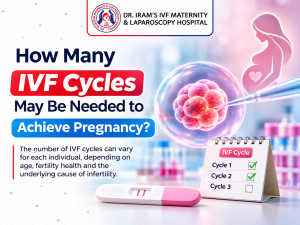
How Many IVF Cycles May Be Needed to Achieve Pregnancy?
There is no universal number of IVF cycles required to achieve pregnancy. Some couples may conceive after their first embryo transfer, while others may need multiple attempts.
The number of attempts depends on factors such as:
- Woman’s age.
- Ovarian reserve and egg quality.
- Sperm quality.
- Embryo development and quality.
- Uterine health.
- Underlying fertility conditions.
- Previous IVF treatment outcomes.
- Response to fertility medications.
When discussing IVF Treatment in Bhopal, it is important to understand that one unsuccessful cycle does not automatically mean that future attempts will also be unsuccessful.
A fertility specialist reviews the results of the previous cycle before recommending another attempt. The doctor may evaluate the ovarian response, number of eggs retrieved, fertilization results, embryo development, and uterine conditions.
1. First IVF Cycle – Understanding the Initial Response
The first IVF cycle provides important information about how the patient’s body responds to fertility medication and how the eggs develop. During this cycle, the doctor monitors ovarian follicles, determines the appropriate time for egg retrieval, and evaluates fertilization and embryo development. Some couples achieve pregnancy during their first attempt. Others may not achieve the expected result, but the treatment provides useful information for planning the next steps.
2. Second IVF Cycle – Reviewing and Adjusting Treatment
If the first IVF attempt does not result in pregnancy, the doctor may review the treatment response and identify possible reasons. Depending on the findings, adjustments may be considered in medication dosage, stimulation protocols, timing, or embryo transfer planning. Patients seeking an IVF Specialist in Gulmohar Colony, Bhopal should understand that repeating the same treatment without reviewing the previous cycle may not always be appropriate. A personalised treatment plan helps address individual fertility factors rather than following an identical approach for every patient.
3. Third IVF Cycle – Further Evaluation
If pregnancy has not occurred after two attempts, additional evaluation may be recommended.
The fertility specialist may review:
- Ovarian reserve.
- Egg development.
- Fertilization rates.
- Embryo quality.
- Uterine cavity.
- Endometrial thickness.
- Previous embryo transfer details.
- Male fertility factors.
The doctor may also discuss whether additional investigations or changes in the treatment approach are appropriate.
4. More Than Three IVF Cycles – Individualised Planning
Some couples may require more than three IVF cycles, depending on their medical circumstances. However, continuing treatment should always involve a careful discussion about expected benefits, risks, emotional well-being, and financial considerations. An IVF Clinic in Trilanga, Bhopal may be considered by couples seeking information about repeated IVF attempts and fertility evaluation.
There is no requirement for every couple to complete a fixed number of IVF cycles. The decision to continue, modify, or pause treatment should be made after reviewing individual medical findings.
Factors That Affect the Number of IVF Cycles Needed
Several factors influence how many IVF attempts may be required before achieving pregnancy.
1. Woman’s Age
Age is one of the important factors affecting IVF outcomes. As women grow older, ovarian reserve and egg quality may decline. This can influence the number of eggs retrieved, embryo development, and the likelihood of pregnancy. Younger women generally have better average IVF outcomes than older women, although individual results vary. Age-related fertility changes should be discussed early during an IVF Treatment in Bhopal consultation so that couples can understand their available options.
2. Ovarian Reserve
Ovarian reserve refers to the quantity of eggs remaining in the ovaries. Tests such as AMH (Anti-Müllerian Hormone) and antral follicle count may help assess ovarian reserve. A lower ovarian reserve may affect the number of eggs obtained during stimulation. However, ovarian reserve alone cannot determine whether a woman will or will not achieve pregnancy through IVF.
3. Egg Quality
Egg quality plays an important role in fertilization and embryo development. Chromosomal abnormalities in eggs become more common with increasing maternal age.
A fertility specialist evaluates the response during ovarian stimulation and reviews the laboratory findings before planning further treatment.
4. Sperm Quality
Sperm count, motility, and morphology can influence fertilization. Male-factor infertility may require additional evaluation and treatment planning.
In selected cases, a specialised laboratory technique called ICSI (Intracytoplasmic Sperm Injection) may be considered.
5. Embryo Quality
Embryo development is an important part of the IVF process. Embryos are assessed in the laboratory according to their developmental stage and appearance.
However, embryo appearance alone cannot guarantee implantation or a successful pregnancy.
6. Uterine Health
The uterus provides the environment in which an embryo implants and develops. Fibroids affecting the uterine cavity, polyps, adhesions, or other abnormalities may need evaluation.
Depending on the patient’s medical history, ultrasound, hysteroscopy, or other investigations may be recommended before embryo transfer.
7. Previous IVF History
Previous treatment outcomes provide valuable information. The number of eggs retrieved, fertilization rate, embryo development, and previous transfer results help the specialist understand what changes may be appropriate.
Couples considering Fertility Treatment in Arera Colony, Bhopal should share their previous investigation reports and IVF records during consultation.
How Is an IVF Cycle Performed?
Understanding the IVF process can help couples prepare for treatment and know what to expect at each stage.
Step 1: Initial Fertility Consultation
The doctor reviews the couple’s medical history, duration of infertility, previous treatments, menstrual history, and reproductive health.
Investigations may include:
- AMH testing.
- Hormonal blood tests.
- Pelvic ultrasound.
- Semen analysis.
- Uterine evaluation.
- Other tests based on medical requirements.
The findings help the doctor determine whether IVF is appropriate.
Step 2: Ovarian Stimulation
Fertility medications are prescribed to stimulate the ovaries to develop multiple follicles rather than the single egg generally released during a natural menstrual cycle. The response is monitored through ultrasound examinations and sometimes blood tests.
Step 3: Egg Retrieval
When the follicles reach an appropriate stage, a trigger medication is administered according to the treatment plan. Egg retrieval is generally performed using an ultrasound-guided procedure under suitable pain relief or anaesthesia. The collected eggs are sent to the laboratory for assessment.
Step 4: Fertilization
The retrieved eggs are combined with sperm in the laboratory. Depending on the clinical situation, conventional IVF or ICSI may be used.
The embryology team monitors fertilization and subsequent embryo development.
Step 5: Embryo Development
Fertilized eggs develop into embryos over the following days. The embryology team evaluates their development and identifies embryos that may be suitable for transfer or freezing.
Step 6: Embryo Transfer
A selected embryo is transferred into the uterus through a thin catheter. The procedure is generally performed without abdominal surgery.
Sometimes a fresh embryo transfer is planned, while in other situations embryos may be frozen for a later transfer.
Step 7: Pregnancy Test
A blood test measuring beta-hCG is generally performed at the time recommended by the fertility team.
A positive result indicates pregnancy hormone detection, but further ultrasound evaluation is needed to assess the pregnancy.
Diagnostic Evaluation Before IVF Treatment
A detailed medical evaluation is important before starting fertility treatment. It helps identify possible causes of infertility and determine the appropriate treatment approach. Depending on the patient’s history, investigations may include hormonal testing, ovarian reserve assessment, semen analysis, ultrasound, and uterine evaluation.
Some patients may also require assessment of reproductive organs or treatment of specific medical conditions before proceeding with IVF. Dr. Iram Ajaz focuses on Obstetrics and Gynecology, while Dr. Shahid Hassan specialises in laparoscopic and general surgical conditions. Their respective specialities address different medical concerns within the hospital.
Does Every IVF Cycle Include an Embryo Transfer?
No. An IVF cycle does not always proceed to embryo transfer. Sometimes the cycle may be cancelled because of an inadequate ovarian response, or egg retrieval may not result in suitable embryos. In other situations, the doctor may recommend freezing all suitable embryos and planning a frozen embryo transfer later. This is why couples should understand the difference between an ovarian stimulation cycle, an egg retrieval cycle, and an embryo transfer attempt.
What Is the Difference Between an IVF Cycle and an Embryo Transfer?
An IVF cycle generally refers to the treatment process involving ovarian stimulation and egg retrieval. Embryo transfer is a separate stage in which an embryo is placed into the uterus. One egg retrieval cycle may produce multiple embryos. These embryos may be transferred individually in separate fresh or frozen transfer attempts, depending on their suitability and the patient’s medical condition.
For example, a patient may undergo one egg retrieval and have additional frozen embryos available for future transfers.Therefore, the number of embryo transfers does not always equal the number of complete ovarian stimulation cycles.
Can Pregnancy Occur in the First IVF Attempt?
Yes, pregnancy can occur during the first IVF attempt. However, success is not guaranteed. The outcome depends on several factors, including maternal age, embryo quality, ovarian reserve, sperm health, and uterine conditions. Some couples may achieve pregnancy after their first transfer, while others may need additional attempts. A consultation for IVF Treatment in Bhopal can help couples understand their individual fertility profile and the factors that may influence treatment outcomes. It is important to avoid comparing one couple’s IVF journey with another because fertility conditions and treatment responses differ.
What Happens If the First IVF Cycle Fails?
An unsuccessful IVF cycle can be emotionally difficult for couples. However, it does not always mean that pregnancy will not be possible in the future.
The next step is usually to review the previous treatment cycle carefully.
The doctor may consider:
- Whether ovarian stimulation was adequate.
- How many mature eggs were collected.
- Whether fertilization occurred successfully.
- How embryos developed.
- Whether embryo transfer was performed.
- Whether any uterine concerns were identified.
- Whether further investigations are required.
Depending on the findings, the treatment protocol may be modified or another approach may be recommended.
Patients looking for an IVF Specialist in Gulmohar Colony, Bhopal should discuss the reasons for the unsuccessful attempt and understand the possible benefits and limitations of another cycle.
How Can Couples Prepare for IVF Treatment?
Preparing for IVF involves medical evaluation as well as lifestyle considerations.
Some helpful steps include:
- Maintain a balanced and nutritious diet.
- Avoid smoking and tobacco.
- Limit or avoid alcohol as advised by the doctor.
- Maintain a healthy body weight.
- Follow prescribed medications.
- Attend all monitoring appointments.
- Share previous medical reports with the fertility specialist.
- Discuss existing medical conditions and medications.
- Maintain realistic expectations about treatment outcomes.
- Seek emotional support when needed.
These steps may support general reproductive health, but they cannot guarantee IVF success.
Is IVF Treatment Safe?
IVF is an established fertility treatment, but it involves medications and medical procedures that may have potential risks.
Possible complications include:
- Ovarian Hyperstimulation Syndrome (OHSS).
- Bleeding or infection associated with egg retrieval.
- Complications related to sedation or anaesthesia.
- Multiple pregnancy, particularly when more than one embryo is transferred.
- Ectopic pregnancy.
- Emotional and financial stress.
The fertility specialist discusses relevant risks and preventive measures before treatment begins.
Patients exploring IVF Treatment in BDA Colony, Bhopal should understand the complete treatment plan, expected monitoring, and possible complications before starting an IVF cycle.
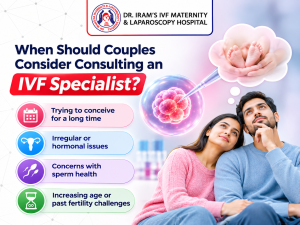
When Should Couples Consider Consulting an IVF Specialist?
Couples should consider fertility evaluation when pregnancy does not occur after:
- 12 months of regular unprotected intercourse if the woman is below 35 years.
- 6 months if the woman is 35 years or older.
- Earlier evaluation when the woman is above 40 years or when known fertility problems are present.
Earlier consultation may also be appropriate for women with irregular periods, suspected endometriosis, blocked fallopian tubes, or a history of reproductive health problems.
Male partners should also undergo fertility evaluation because infertility can involve either or both partners.
An IVF Clinic in Trilanga, Bhopal may be considered by couples who want to understand the available fertility investigations and treatment options.
IVF Treatment in BDA Colony, Bhopal
Couples searching for IVF Treatment in BDA Colony, Bhopal may have questions about the number of cycles required, treatment success, embryo transfer, and the overall IVF process. Dr. Iram Ajaz is the Obstetrician and Gynecologist behind Dr. Iram’s IVF Maternity & Laparoscopy Hospital in Bhopal. The hospital began its journey in 2013 and focuses on supporting couples through fertility-related evaluation and treatment.
During a consultation, couples can discuss their infertility history, previous investigations, and treatment expectations. The medical team can help explain the possible treatment pathway based on individual findings. The hospital also has Dr. Shahid Hassan, an Expert Laparoscopic and General Surgeon specialising in piles, fissure, fistula, and hernia treatments. The number of IVF cycles required should be assessed according to age, ovarian reserve, embryo development, and other fertility-related factors.
IVF Centre in Shahpura, Bhopal
Couples searching for an IVF Centre in Shahpura, Bhopal may be exploring fertility treatment options after experiencing difficulty conceiving. IVF involves several stages, and understanding each stage can help patients prepare for the process. A detailed evaluation of both partners is important before deciding whether IVF or another fertility treatment is appropriate. Patients should discuss the expected treatment timeline, available procedures, laboratory facilities, and follow-up arrangements with the fertility care team. Dr. Iram’s IVF Maternity & Laparoscopy Hospital has been supporting patients since its establishment in 2013.
IVF Specialist in Gulmohar Colony, Bhopal
Patients looking for an IVF Specialist in Gulmohar Colony, Bhopal may need guidance about repeated IVF attempts, low ovarian reserve, embryo quality, or previous unsuccessful transfers. A fertility specialist evaluates the reasons behind previous treatment outcomes before recommending another attempt. The consultation may involve reviewing hormonal reports, ultrasound findings, semen analysis, and previous IVF records. An individualised approach helps couples understand the available options and make informed decisions about their reproductive health.
IVF Clinic in Trilanga, Bhopal
Couples searching for an IVF Clinic in Trilanga, Bhopal may want to understand how many IVF cycles are generally required and what influences the chances of pregnancy. There is no fixed number of cycles suitable for every couple. Some patients may conceive after the first attempt, while others may require further evaluation and treatment. The doctor may recommend changes in medication protocols or additional investigations depending on the previous cycle results. Understanding the difference between egg retrieval and embryo transfer is also important when planning repeated IVF treatment.
Fertility Treatment in Arera Colony, Bhopal
People searching for Fertility Treatment in Arera Colony, Bhopal may be experiencing infertility due to hormonal problems, ovulation disorders, male-factor infertility, or unexplained causes. Fertility treatment begins with identifying the possible reason for difficulty conceiving. Depending on the diagnosis, treatment may include medication, ovulation induction, IUI, or IVF. Not every couple needs IVF as the first treatment option. The recommended approach depends on the patient’s age, fertility history, and medical findings. A proper fertility assessment helps determine which treatment may be suitable.
IVF Centre near Kolar Road, Bhopal
Couples searching for an IVF Centre near Kolar Road, Bhopal may want to compare fertility treatment options and understand the facilities available at different centres. Before starting treatment, patients should ask about the fertility specialist’s qualifications, embryology laboratory standards, treatment protocols, counselling, and follow-up care. They should also understand the estimated cost of treatment and whether additional procedures or frozen embryo transfers may involve separate expenses. Choosing a fertility centre should involve medical suitability and quality of care rather than location alone.
Summary
The number of IVF cycles required to achieve pregnancy varies from couple to couple. Some women may conceive during their first IVF attempt, while others may need additional cycles or embryo transfers. Age, ovarian reserve, egg quality, sperm health, embryo development, uterine conditions, and previous treatment outcomes all influence IVF results.
An unsuccessful first attempt does not automatically mean that future treatment will fail. Reviewing the previous cycle and understanding the underlying fertility factors can help guide further decisions. Dr. Iram Ajaz, Obstetrician and Gynecologist, and Dr. Shahid Hassan, Laparoscopic and General Surgeon, are associated with Dr. Iram’s IVF Maternity & Laparoscopy Hospital in Bhopal. Their respective specialities address different medical needs. The most appropriate number of IVF cycles should always be determined through an individual medical evaluation.
FAQs – How Many IVF Cycles May Be Needed to Achieve Pregnancy?
1. How many IVF cycles are usually needed to achieve pregnancy?
There is no fixed number of IVF cycles required. Some couples achieve pregnancy during their first attempt, while others may need two or more cycles depending on age, ovarian reserve, embryo quality, and other fertility factors.
2. Can I get pregnant in the first IVF cycle?
Yes, pregnancy is possible during the first IVF cycle. However, success depends on individual fertility conditions, egg and sperm quality, embryo development, and uterine health.
3. Does a failed first IVF cycle mean I cannot get pregnant?
No. An unsuccessful first IVF attempt does not mean future attempts will also fail. The doctor may review the previous cycle and recommend suitable changes or further investigations.
4. Is the second IVF cycle more successful than the first?
Not necessarily. Success depends on individual medical factors and the results of the previous cycle. Treatment adjustments may be considered when clinically appropriate.
5. How much time should I wait before another IVF cycle?
The waiting period depends on the patient’s recovery, ovarian response, medical history, and treatment plan. Some patients may proceed after their next menstrual cycle, while others may need additional time.
6. Does age affect the number of IVF cycles needed?
Yes. Age influences egg quality and ovarian reserve, which can affect IVF outcomes. Generally, fertility outcomes decline with increasing maternal age, although individual results vary.
7. Can one IVF egg retrieval produce multiple embryos?
Yes. One egg retrieval may produce multiple fertilized embryos. Suitable embryos may be transferred individually or frozen for future use, depending on the treatment plan.
8. What happens if IVF fails three times?
The fertility specialist may recommend a detailed review of previous cycles, embryo development, uterine health, and other reproductive factors. Further treatment should be planned according to the findings.
9. How do I choose an IVF centre in Bhopal?
Consider the doctor’s qualifications, fertility treatment experience, embryology laboratory facilities, treatment transparency, patient counselling, and follow-up arrangements before choosing a centre.
10. Who should I consult for IVF treatment in BDA Colony, Bhopal?
Couples can consult Dr. Iram Ajaz, associated with Dr. Iram’s IVF Maternity & Laparoscopy Hospital in Bhopal, to discuss fertility concerns, medical investigations, and available treatment options.
Conclusion – How Many IVF Cycles May Be Needed to Achieve Pregnancy?
The number of IVF cycles needed to achieve pregnancy cannot be predicted accurately for every couple. While some patients conceive after their first attempt, others may require additional treatment cycles or frozen embryo transfers.
A detailed fertility evaluation, appropriate treatment planning, and regular medical monitoring are important throughout the IVF journey. Dr. Iram Ajaz, Obstetrician and Gynecologist, and Dr. Shahid Hassan, Expert Laparoscopic and General Surgeon, are associated with Dr. Iram’s IVF Maternity & Laparoscopy Hospital in Bhopal. Their respective specialities support different areas of medical care.
Couples should discuss their individual medical condition and previous treatment results with a qualified fertility specialist before deciding on the next IVF attempt.