The journey of fertility treatment involves several important stages, and embryo transfer is one of the most significant steps in the IVF process. For couples who have frozen embryos from a previous IVF cycle, Frozen Embryo Transfer (FET) provides another opportunity to attempt pregnancy without repeating the complete egg retrieval and fertilisation process.
Frozen Embryo Transfer in Bhopal is an important fertility treatment option for couples who have suitable frozen embryos and are ready to proceed with embryo transfer. During this procedure, a previously frozen embryo is carefully thawed and placed into the woman’s uterus when the uterine lining is appropriately prepared. Dr. Iram Ajaz is an Obstetrician and Gynecologist based in Bhopal and the visionary behind Dr. Iram’s IVF Maternity & Laparoscopy Hospital. The hospital began its journey in 2013 with a vision to support couples experiencing fertility challenges through coordinated medical care and fertility treatment options.
The hospital’s medical team also includes Dr. Shahid Hassan, an Expert Laparoscopic and General Surgeon specialising in piles, fissure, fistula, and hernia treatments. Understanding the FET procedure, preparation, timing, medication, and recovery can help couples feel more informed before starting this stage of their fertility journey.
Dr. Iram Ajaz – Obstetrician and Gynecologist in Bhopal
Dr. Iram Ajaz is an Obstetrician and Gynecologist based in Bhopal, Madhya Pradesh. She is the visionary behind Dr. Iram’s IVF Maternity & Laparoscopy Hospital, which began its journey in 2013.The hospital focuses on fertility-related evaluation, treatment guidance, and coordinated patient care. Its approach involves helping couples understand reproductive health concerns, available treatment options, and the different stages of fertility treatment.
Women and couples looking for an IVF Centre in Shahpura, Bhopal may consider consulting a qualified fertility care team to understand their reproductive health and treatment requirements. Choosing a fertility centre involves considering the doctor’s qualifications, clinical experience, available laboratory facilities, treatment protocols, and communication throughout the treatment process.
Dr. Shahid Hassan – Laparoscopic and General Surgeon in Bhopal
Dr. Shahid Hassan is an Expert Laparoscopic and General Surgeon associated with Dr. Iram’s IVF Maternity & Laparoscopy Hospital.
His areas of specialisation include:
- Laparoscopic Surgery
- General Surgery
- Piles Treatment
- Anal Fissure Treatment
- Fistula Treatment
- Hernia Treatment
Patients experiencing symptoms associated with these conditions may consult a general surgeon for examination, diagnosis, and discussion of suitable treatment options.
Dr. Iram Ajaz and Dr. Shahid Hassan have different medical specialities. Dr. Iram Ajaz focuses on Obstetrics, Gynecology, and fertility-related care, whereas Dr. Shahid Hassan specialises in laparoscopic and general surgical conditions.
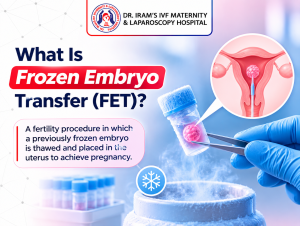
What Is Frozen Embryo Transfer (FET)?
When the couple is ready for another transfer, the frozen embryo is carefully thawed by the embryology team and transferred into the uterus.
Frozen Embryo Transfer in Bhopal may be considered when:
- Suitable embryos are available from a previous IVF cycle.
- A fresh embryo transfer was postponed.
- The doctor recommends allowing time for recovery after ovarian stimulation.
- The couple wants to use previously frozen embryos.
- Additional embryos remain after an earlier IVF attempt.
- The medical team recommends a later transfer based on the patient’s condition.
FET does not generally require another ovarian stimulation and egg retrieval cycle because the embryos have already been created and frozen.
Why Is Frozen Embryo Transfer Recommended?
There are several medical and personal reasons why a fertility specialist may recommend frozen embryo transfer instead of fresh embryo transfer.
1. Embryos Are Available from a Previous IVF Cycle
During IVF treatment, more than one suitable embryo may develop. If some embryos are not transferred during the initial cycle, they may be frozen for future use. This allows couples to consider another transfer without repeating egg collection and fertilisation.
2. The Uterine Lining Needs More Time
Sometimes the uterine lining may not be considered suitable for immediate embryo transfer. Hormonal changes during ovarian stimulation can influence the endometrial environment. In such situations, the doctor may recommend freezing suitable embryos and planning a transfer during a later cycle.
3. Prevention or Management of Ovarian Hyperstimulation Syndrome
Some women may develop or have an increased risk of Ovarian Hyperstimulation Syndrome (OHSS) following ovarian stimulation. When clinically indicated, the fertility specialist may recommend freezing all suitable embryos and postponing transfer until the patient has recovered.
4. Additional Medical Evaluation Is Required
Certain patients may need further investigations or treatment before embryo transfer. For example, the doctor may recommend evaluating the uterine cavity, reviewing hormonal levels, or addressing a medical condition before proceeding.
5. Family Planning and Fertility Preservation
Embryo freezing may also allow couples to preserve embryos for future family planning. These embryos can potentially be used later, subject to applicable consent requirements and medical considerations.
How Does the Frozen Embryo Transfer Procedure Work?
The FET process involves several stages. The exact treatment plan depends on the woman’s menstrual cycle, previous IVF history, embryo development stage, and uterine health.
Step 1: Initial Consultation and Medical Review
The first step involves reviewing the patient’s previous IVF treatment records and frozen embryo details.
The fertility specialist may evaluate:
- Previous IVF cycle reports.
- Number of frozen embryos.
- Embryo development stage.
- Previous embryo transfer history.
- Menstrual cycle pattern.
- Hormonal reports.
- Uterine health.
- Medical history and current medications.
This assessment helps determine the appropriate FET protocol.
Step 2: Preparation of the Uterine Lining
The endometrium is the inner lining of the uterus where the embryo needs to implant. Before embryo transfer, the doctor evaluates the thickness and development of the uterine lining. Preparation may be performed through a natural cycle or a medicated cycle. In a natural cycle, the doctor monitors the patient’s natural ovulation. In a medicated cycle, hormonal medicines such as oestrogen and progesterone may be prescribed to prepare the endometrium.
Step 3: Ultrasound and Hormonal Monitoring
The fertility team may perform transvaginal ultrasound scans and blood tests to monitor the uterine lining and hormonal response. These investigations help determine whether the endometrium is developing appropriately for embryo transfer. The timing of the transfer is planned according to the embryo’s developmental stage and the patient’s hormonal preparation.
Step 4: Thawing of Frozen Embryos
. The embryology team evaluates the embryo after warming to determine whether it is suitable for transfer.
Step 5: Embryo Transfer
The selected embryo is transferred into the uterus using a thin, flexible catheter. The doctor gently passes the catheter through the cervix and places the embryo inside the uterine cavity. Ultrasound guidance may be used to help position the catheter. The procedure generally does not require general anaesthesia and is usually completed within a short period.
Step 6: Pregnancy Testing
After embryo transfer, the patient continues prescribed medications according to the doctor’s instructions. A blood test measuring beta-hCG is performed on the date advised by the fertility specialist to check for pregnancy. If the result is positive, further follow-up and ultrasound examinations are arranged to assess the developing pregnancy.
Types of Frozen Embryo Transfer Cycles
There are two commonly used approaches for preparing the uterus before FET: the natural cycle and the medicated cycle.
1. Natural Cycle Frozen Embryo Transfer
A natural FET cycle follows the woman’s natural menstrual and ovulation pattern.
This approach may be suitable for women who have regular menstrual cycles and predictable ovulation.
The process generally includes:
- Monitoring the menstrual cycle.
- Ultrasound examination of the ovaries and uterine lining.
- Monitoring ovulation through blood or urine tests.
- Determining the appropriate transfer date.
- Thawing and transferring the embryo at the correct time.
Some patients may also receive progesterone support depending on their medical history and treatment plan.
2. Medicated Frozen Embryo Transfer
A medicated FET cycle uses hormonal medicines to prepare the uterine lining for embryo implantation.
This approach may be recommended for women with irregular menstrual cycles, unpredictable ovulation, or other medical requirements.
The process generally includes:
- Starting the prescribed hormonal medication.
- Monitoring the uterine lining through ultrasound.
- Assessing the hormonal response.
- Starting progesterone at the instructed time.
- Scheduling embryo thawing and transfer according to the embryo’s developmental stage.
The doctor determines which approach is appropriate based on the patient’s medical condition and previous treatment history.
When Is the Best Time for Frozen Embryo Transfer?
The timing of FET is an important part of fertility treatment. The embryo needs to be transferred when the uterine lining is receptive and appropriately synchronised with the embryo’s developmental stage.
The timing depends on:
- Whether the patient follows a natural or medicated cycle.
- The date of ovulation.
- The start of progesterone medication.
- The developmental stage of the frozen embryo.
- The thickness and appearance of the endometrium.
- Previous treatment history.
For example, a Day 5 blastocyst transfer in a programmed cycle is commonly planned after approximately five full days of progesterone exposure, according to the clinic’s protocol. However, exact timing can vary according to the embryo stage, medication schedule, and clinical assessment. Patients should never change the timing of progesterone or other prescribed medicines without consulting their fertility specialist.
How to Prepare for Frozen Embryo Transfer?
Proper preparation can help patients follow the treatment schedule and attend all necessary appointments.
1. Complete the Recommended Medical Tests
The doctor may recommend ultrasound examinations, hormonal blood tests, and other investigations before starting FET. Previous IVF records and embryo freezing reports should also be reviewed.
2. Follow the Medication Schedule
Oestrogen and progesterone may be prescribed during a medicated FET cycle. Patients should take medicines at the prescribed dose and time. Missing or changing medication without medical advice can affect the treatment schedule.
3. Maintain a Balanced Diet
A balanced diet containing vegetables, fruits, whole grains, protein, and adequate fluids supports general health. There is no particular food that guarantees embryo implantation or pregnancy.
4. Avoid Smoking and Tobacco
Smoking and tobacco use can negatively affect reproductive health. Couples should discuss lifestyle changes with their doctor before treatment.
5. Maintain Healthy Daily Habits
Adequate sleep, regular gentle physical activity, and stress-management practices may support general well-being during fertility treatment.
6. Discuss Existing Medical Conditions
Patients should inform the fertility specialist about diabetes, thyroid disorders, blood pressure problems, allergies, and any medicines they are taking. Existing health conditions may require appropriate management before embryo transfer.
7. Understand the Procedure and Timing
Patients should ask their doctor about the planned embryo transfer date, medication schedule, embryo stage, and follow-up appointments. Being informed about each step can help reduce uncertainty during the treatment process.
What Happens After Frozen Embryo Transfer?
After the embryo has been transferred into the uterus, the patient enters the waiting period before pregnancy testing.
During this period, the embryo may implant into the uterine lining if the conditions are suitable.
The doctor may recommend:
- Continuing prescribed progesterone or other hormonal medication.
- Taking medicines at the same time every day.
- Avoiding smoking and alcohol.
- Maintaining normal daily activities as advised.
- Attending the scheduled pregnancy test.
- Reporting unusual or concerning symptoms.
Mild cramping or light spotting may occur in some patients. However, these symptoms cannot confirm whether implantation has occurred.
Severe abdominal pain, heavy bleeding, fever, or other concerning symptoms should be reported to the healthcare provider.
Patients should not stop hormonal medication simply because they experience spotting or have no pregnancy symptoms.
What Is the Difference Between Fresh Embryo Transfer and Frozen Embryo Transfer?
Fresh and frozen embryo transfers are both used in IVF treatment, but they take place at different stages.
| Fresh Embryo Transfer | Frozen Embryo Transfer |
|---|---|
| Embryo is transferred during the same IVF treatment cycle. | Embryo is frozen and transferred during a later cycle. |
| Follows ovarian stimulation and egg retrieval. | Uses an embryo created during an earlier cycle. |
| Takes place without embryo freezing for that particular transfer. | Requires thawing a previously frozen embryo. |
| Timing depends on the stimulation and uterine response. | Timing depends on natural ovulation or hormonal preparation. |
| May not be suitable when fresh transfer is medically inadvisable. | Allows transfer to be postponed when clinically appropriate. |
Neither approach is automatically better for every patient. The choice depends on individual medical findings, embryo availability, and the fertility specialist’s recommendation.
What Are the Benefits of Frozen Embryo Transfer?
When clinically appropriate, FET offers several potential advantages.
1. Avoids Repeating Egg Retrieval
The patient does not generally need another ovarian stimulation and egg collection procedure for an FET using previously frozen embryos.
2. Allows Flexible Treatment Timing
Embryo transfer can be scheduled during a later menstrual cycle when the patient is medically and emotionally ready.
3. Provides Time for Medical Evaluation
The doctor may have additional time to evaluate uterine health and address medical concerns before transfer.
4. Supports Use of Previously Frozen Embryos
Embryos remaining from an earlier IVF cycle may be used for another pregnancy attempt or future family planning.
5. May Reduce Certain Risks
For selected patients at increased risk of OHSS, a freeze-all approach followed by later FET can reduce the risk associated with immediate fresh embryo transfer.
The benefits vary from patient to patient, and FET does not guarantee pregnancy.
What Are the Possible Risks of Frozen Embryo Transfer?
Frozen embryo transfer is commonly performed in fertility treatment, but it may involve certain risks.
These include:
- An embryo may not survive the thawing process.
- Embryo implantation may not occur.
- Pregnancy may not develop despite transfer.
- Ectopic pregnancy may occur.
- Multiple pregnancy may occur, particularly when more than one embryo is transferred.
- Hormonal medicines may cause side effects.
- Rare complications may occur during the treatment process.
The doctor explains the relevant risks, embryo transfer plan, and available alternatives before proceeding.
How Successful Is Frozen Embryo Transfer?
The success of FET varies depending on several factors.
Important factors include:
- Woman’s age when the eggs were collected.
- Embryo quality and developmental stage.
- Chromosomal status, if tested.
- Uterine health.
- Endometrial preparation.
- Previous fertility treatment history.
- Other medical conditions.
The age at which the eggs were collected is particularly relevant because egg quality is influenced by maternal age at the time of retrieval.
Embryo survival after thawing, implantation, and pregnancy outcomes can also vary.
A fertility specialist can discuss individual expectations using the patient’s medical records and embryo information. No single success percentage applies to every patient.
Frozen Embryo Transfer in BDA Colony, Bhopal
Couples searching for Frozen Embryo Transfer in BDA Colony, Bhopal may want to understand the procedure, preparation, medication, and appropriate timing before using their frozen embryos.
Dr. Iram Ajaz is associated with Dr. Iram’s IVF Maternity & Laparoscopy Hospital in Bhopal. The hospital began its journey in 2013 with a vision to support couples facing fertility challenges. During a fertility consultation, patients can discuss their previous IVF treatment, frozen embryo records, menstrual cycle, and medical history. The decision to proceed with FET depends on embryo availability, uterine preparation, and the patient’s overall medical condition.
IVF Centre in Shahpura, Bhopal
Couples looking for an IVF Centre in Shahpura, Bhopal may be exploring options for using embryos preserved during a previous IVF cycle. Frozen embryos can provide another opportunity for embryo transfer without repeating the complete egg retrieval and fertilisation process. Patients should understand the embryo freezing method, storage arrangements, thawing process, and the medical requirements before scheduling treatment. A detailed consultation helps determine whether a natural or medicated FET cycle may be appropriate.
IVF Specialist in Gulmohar Colony, Bhopal
Patients searching for an IVF Specialist in Gulmohar Colony, Bhopal may have questions about embryo implantation, uterine lining preparation, progesterone medication, and transfer timing. A fertility specialist reviews previous treatment reports and evaluates the uterine environment before recommending embryo transfer. Patients should also discuss any previous unsuccessful embryo transfers, irregular periods, or underlying medical conditions. The treatment schedule should always be individualised according to the patient’s reproductive health.
IVF Clinic in Trilanga, Bhopal
Couples searching for an IVF Clinic in Trilanga, Bhopal may want to understand how frozen embryos are stored and used during a later fertility treatment cycle. Embryos are generally preserved using vitrification and stored in specialised liquid nitrogen storage systems. When the patient is ready, the embryology team follows the planned warming procedure and evaluates the embryo before transfer. The doctor coordinates the transfer timing with the patient’s natural or medicated cycle.
Fertility Treatment in Arera Colony, Bhopal
People looking for Fertility Treatment in Arera Colony, Bhopal may need guidance about different fertility treatment options, including IVF, IUI, and frozen embryo transfer. The appropriate approach depends on the cause of infertility, previous treatment results, age, and reproductive health. Couples who already have frozen embryos may not need another complete IVF cycle before considering an embryo transfer. A medical consultation helps determine the next suitable step.
IVF Centre near Kolar Road, Bhopal
Couples searching for an IVF Centre near Kolar Road, Bhopal may want information about frozen embryo storage, laboratory facilities, embryo thawing, and transfer procedures. Before choosing a fertility centre, patients should understand the available laboratory facilities, embryo storage arrangements, treatment protocols, counselling, and follow-up care. They should also ask about the estimated treatment costs and whether medication, embryo storage, thawing, and transfer are included in the treatment plan. The choice of a fertility centre should be based on medical suitability and the quality of care.
Dr. Iram’s IVF Maternity & Laparoscopy Hospital – Bhopal
Dr. Iram’s IVF Maternity & Laparoscopy Hospital began its journey in 2013 with a vision to support couples experiencing fertility challenges.The hospital focuses on coordinated medical care, patient guidance, and helping individuals understand their available treatment options. Couples considering fertility treatment can discuss their reproductive health, previous IVF reports, and treatment requirements with the appropriate medical team.
FAQs – Frozen Embryo Transfer (FET)
1. What is Frozen Embryo Transfer (FET)?
Frozen Embryo Transfer is a fertility procedure in which an embryo created during an earlier IVF cycle is frozen, stored, thawed, and transferred into the uterus during a later cycle.
2. How long does a frozen embryo transfer procedure take?
The complete FET preparation cycle may take several weeks, depending on whether a natural or medicated protocol is used. The actual embryo transfer procedure is generally short and does not usually require general anaesthesia.
3. Is frozen embryo transfer painful?
Most patients experience little discomfort during embryo transfer. Some may experience mild cramping when the catheter is inserted. The procedure is generally performed without general anaesthesia.
4. When is the best time for frozen embryo transfer?
The transfer is scheduled when the uterine lining is appropriately prepared and synchronised with the embryo’s developmental stage. The exact timing depends on the patient’s cycle and treatment protocol.
5. What medications are used before FET?
Depending on the treatment plan, doctors may prescribe oestrogen and progesterone to prepare and support the uterine lining. Medication and dosage vary according to individual requirements.
6. Can frozen embryos survive the thawing process?
Most embryos survive modern vitrification and warming procedures, but not every embryo is guaranteed to survive. The embryology team evaluates the embryo after thawing before transfer.
7. Is bed rest necessary after frozen embryo transfer?
Prolonged bed rest is generally not required after an uncomplicated embryo transfer. Patients can usually return to normal light activities according to their doctor’s advice.
8. When can I take a pregnancy test after FET?
A beta-hCG blood test is generally performed on the date advised by the fertility specialist, often around 9–14 days after transfer depending on the embryo stage and clinic protocol.
9. Is frozen embryo transfer better than fresh embryo transfer?
Neither procedure is universally better. The choice depends on the patient’s medical condition, embryo availability, uterine preparation, and risk factors. The fertility specialist recommends the appropriate option.
10. Who should I consult for frozen embryo transfer in Bhopal?
Couples can consult an appropriately qualified fertility specialist to discuss their frozen embryo records, uterine health, medication requirements, and transfer timing. Dr. Iram Ajaz is associated with Dr. Iram’s IVF Maternity & Laparoscopy Hospital in Bhopal.
Conclusion – What Is Frozen Embryo Transfer (FET)?
Frozen Embryo Transfer is a fertility procedure that allows couples to use embryos preserved during a previous IVF cycle. It involves careful preparation of the uterine lining, appropriate hormonal support, embryo thawing, and transfer at the right time. Understanding the different FET protocols, preparation requirements, and possible risks helps couples make informed decisions about their fertility treatment.
Dr. Iram Ajaz, Obstetrician and Gynecologist, and Dr. Shahid Hassan, Expert Laparoscopic and General Surgeon, are associated with Dr. Iram’s IVF Maternity & Laparoscopy Hospital in Bhopal. Couples should discuss their individual fertility history, embryo quality, and treatment options with a qualified fertility specialist before proceeding with frozen embryo transfer.