Posts

Choosing the Best Fertility Doctor in Bhopal is an important decision for couples planning to start or expand their family. The journey toward parenthood can be exciting, but difficulties in conceiving may bring questions, uncertainty, and emotional stress. Understanding the available medical options and finding a qualified fertility specialist can help couples make informed decisions about their reproductive health.

Fertility difficulties can affect either partner or both. Factors such as ovulation disorders, blocked fallopian tubes, hormonal imbalances, sperm-related problems, age, and certain medical conditions may influence the ability to conceive. A detailed evaluation helps identify possible causes and determine whether treatment is needed.

Dr. Iram’s IVF Maternity & Laparoscopic Hospital in Bhopal provides fertility-related services, including infertility evaluation, intrauterine insemination (IUI), in vitro fertilisation (IVF), intracytoplasmic sperm injection (ICSI), cryopreservation, and selected reproductive procedures. Dr. Iram Ajaz is an obstetrician-gynaecologist associated with the hospital and its fertility services.

Located at C-33, BDA Colony, Koh-e-Fiza, Bhopal, Madhya Pradesh, PIN 462001, the hospital provides a setting where couples can discuss their concerns, understand available investigations, and explore suitable fertility treatment options. Before selecting a fertility specialist, it is helpful to ask questions about qualifications, diagnostic tests, treatment choices, success rates, costs, and patient support. These seven questions can help you prepare for your first consultation.

Why Is Choosing the Right Fertility Doctor Important?

Fertility treatment is not the same for every couple. Some people may conceive with guidance about ovulation timing, while others may need medication, surgery, IUI, IVF, or other assisted reproductive techniques. The right specialist should explain the possible causes of infertility, recommend appropriate investigations, and discuss suitable options based on the couple’s medical history.

Choosing a doctor involves more than looking at advertisements or selecting a clinic based on a promised success rate. Patients should consider professional qualifications, relevant experience, transparent communication, available services, and the quality of the treatment process. A consultation with a Fertility Doctor in BDA Colony, Bhopal can help couples understand their current reproductive health and decide on the next steps without feeling pressured into a particular procedure.

7 Questions to Ask Before Choosing a Fertility Doctor

1. What Are the Doctor’s Qualifications and Experience in Fertility Care?

The first question to ask is whether the doctor has appropriate qualifications and experience in reproductive health and infertility management.

Fertility care involves understanding the reproductive systems of both partners, interpreting diagnostic results, and determining which treatments may be appropriate. Depending on the case, a patient may need an obstetrician-gynaecologist, a reproductive medicine specialist, an andrologist, or another qualified healthcare professional.

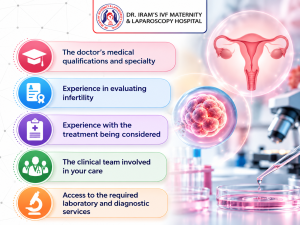
During your consultation, ask about:

  • The doctor’s medical qualifications and specialty
  • Experience in evaluating infertility
  • Experience with the treatment being considered
  • The clinical team involved in your care
  • Access to the required laboratory and diagnostic services

Dr. Iram Ajaz is associated with Dr. Iram’s IVF Maternity & Laparoscopic Hospital and its fertility care services. Patients can discuss their medical history and treatment requirements with the clinical team to understand the appropriate care pathway.

When looking for an IVF Specialist in Koh-e-Fiza, Bhopal, verify the relevant qualifications and experience rather than relying solely on promotional descriptions.
2. What Fertility Tests Will Be Needed Before Treatment?

The second question is about diagnosis. Before recommending treatment, a fertility doctor should assess the possible causes of difficulty conceiving.

For many couples, evaluation may include a review of reproductive history, menstrual cycles, previous pregnancies, medical conditions, and the duration of attempts to conceive.

Depending on the individual case, investigations may include:

For women:

  • Assessment of menstrual cycles and ovulation
  • Hormonal tests when indicated
  • Pelvic ultrasound
  • Evaluation of the uterus and fallopian tubes when appropriate
  • Ovarian reserve assessment when clinically useful

For men:

  • Medical and reproductive history
  • Semen analysis
  • Hormonal testing or additional investigations when indicated

Not every patient needs every test. The doctor should explain why each investigation is recommended and how the results may influence the treatment plan.

An Infertility Treatment in Koh-e-Fiza, Bhopal consultation should focus on identifying the possible cause rather than automatically recommending IVF before an appropriate assessment.

3. Which Fertility Treatment Options Are Available?

The third question is whether the doctor can explain the different treatment options and their suitability for your circumstances.

Depending on the diagnosis, age, reproductive history, and other medical factors, treatment may involve lifestyle guidance, medication, surgery, IUI, IVF, or ICSI.

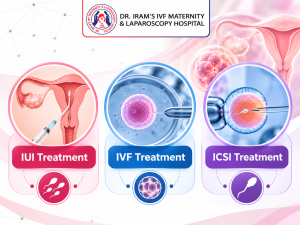
Intrauterine Insemination (IUI)

IUI involves placing prepared sperm into the uterus around the time of ovulation. It may be suitable for selected couples, depending on factors such as sperm quality, fallopian tube function, and the underlying cause of infertility.

In Vitro Fertilisation (IVF)

IVF involves stimulating the ovaries, collecting eggs, fertilising them in a laboratory, and transferring an embryo into the uterus. The precise process depends on the patient’s treatment plan.

Intracytoplasmic Sperm Injection (ICSI)

ICSI is a specialised laboratory technique in which an individual sperm is injected directly into an egg. It may be recommended for certain sperm-related fertility problems or other specific clinical circumstances.

Laparoscopy and Hysteroscopy

These procedures may be used to investigate or treat selected conditions involving the reproductive organs. Their suitability depends on the diagnosis.

Dr. Iram’s IVF Maternity & Laparoscopic Hospital lists fertility services including IUI, IVF, ICSI, cryopreservation, blastocyst culture and transfer, laparoscopy, and hysteroscopy.

When evaluating the Best IVF Hospital in Bhopal, ask why a particular treatment is recommended, what alternatives are available, and what the likely benefits and limitations are.

4. What Are the Expected Success Rates for My Situation?

The fourth question concerns treatment outcomes. Couples often want to know the likelihood of pregnancy before beginning fertility treatment.

However, success rates vary considerably. They can depend on the woman’s age, the cause and duration of infertility, ovarian reserve, sperm quality, embryo development, previous treatment outcomes, and the specific procedure used.

Ask the doctor to explain:

  • Which success measure is being discussed
  • Whether the figures refer to pregnancy or live birth
  • Whether the rate is per treatment cycle or per embryo transfer
  • How age and medical history affect the estimate
  • Whether the figures apply to patients with circumstances similar to yours

A positive pregnancy test does not always lead to a live birth, so understanding the outcome being measured is important.

No fertility doctor can guarantee pregnancy. A responsible specialist should provide realistic estimates, explain uncertainty, and discuss what may happen if the first treatment is unsuccessful.

If you are consulting an IVF Doctor in Bhopal, ask for information relevant to your individual circumstances instead of relying on a single headline success percentage.

5. What Is the Total Cost of Fertility Treatment?

The fifth question is about the complete cost of the recommended treatment.

Fertility treatment costs can vary depending on the investigations required, medicines, laboratory procedures, number of visits, and whether additional treatment becomes necessary.

Before starting, ask for a written estimate that explains which services are included.

Potential cost components may include:

  • Initial consultation
  • Diagnostic investigations
  • Fertility medications
  • Ultrasound monitoring
  • Egg collection and laboratory procedures for IVF
  • Embryo transfer
  • Anaesthesia or other clinical services when required
  • Embryo or egg freezing, if applicable
  • Follow-up consultations
  • Additional treatment cycles if needed

Some couples may require more than one cycle, while others may be suitable for a different treatment approach. The total cost therefore cannot be accurately determined without an individual assessment.

At a Fertility Clinic in Koh-e-Fiza, Bhopal, ask the team to explain the payment schedule, possible additional charges, and what happens if the treatment plan needs to change.

Clear financial information allows couples to plan more effectively and avoid misunderstandings during treatment.

6. How Will the Doctor Support Us Throughout Treatment?

Fertility treatment can involve repeated appointments, medication schedules, investigations, and waiting periods. Emotional stress may also affect couples as they navigate uncertainty about the outcome.

A supportive fertility team should explain each stage, answer questions, and help patients understand what to expect next.

During your consultation, ask:

  • Who will explain the test results?
  • How can you contact the clinical team with treatment-related questions?
  • Who will monitor your progress during treatment?
  • What support is available if the process becomes emotionally difficult?
  • How will changes to the treatment plan be communicated?

Good communication helps patients understand their choices and take an active role in decision-making.

At Dr. Iram’s IVF Maternity & Laparoscopic Hospital, the stated approach includes patient communication, guidance, and individualized fertility care. Couples can discuss how these arrangements work in practice during their consultation.

When choosing the Best Fertility Doctor in Bhopal, consider whether you feel heard, respected, and adequately informed.

7. What Happens If the First Treatment Does Not Work?

The seventh question is about the next steps if treatment does not result in pregnancy.

Not every fertility treatment succeeds on the first attempt. The appropriate response depends on the treatment performed, the results obtained, the patient’s health, and the couple’s preferences.

Ask the doctor how unsuccessful treatment would be reviewed and whether additional investigations or changes might be appropriate.

Possible next steps may include:

  • Reviewing the original diagnosis
  • Assessing the response to fertility medication
  • Reviewing egg, sperm, or embryo-related findings where relevant
  • Considering changes to the treatment protocol
  • Discussing a different treatment option
  • Reviewing whether further treatment is medically appropriate

The doctor should explain which options are available without promising that a particular change will guarantee success.

It is also reasonable to discuss the physical, emotional, and financial implications of further treatment before deciding whether to proceed.

A clear plan for follow-up helps couples make informed decisions even when the outcome is uncertain.

When Should You Consult a Fertility Doctor?

The right time to seek an evaluation depends on age, medical history, and reproductive circumstances.

In general, couples may consider an infertility evaluation if pregnancy has not occurred after 12 months of regular, unprotected intercourse when the woman is under 35. For women aged 35 or older, evaluation is generally recommended after six months. Earlier assessment may be appropriate for women over 40 or when known fertility concerns are present.

Consider seeking medical advice sooner if there is a history of irregular or absent periods, endometriosis, pelvic inflammatory disease, previous reproductive surgery, recurrent pregnancy loss, or known male-factor fertility problems.

A fertility consultation does not automatically mean that IVF will be necessary. The purpose is to understand the possible cause and discuss appropriate next steps.

Female Infertility Evaluation

Female fertility concerns may involve ovulation, ovarian reserve, the fallopian tubes, the uterus, hormonal conditions, or other medical factors.

Evaluation is based on symptoms, age, history, and examination findings. Treatment depends on the cause rather than on a single universal approach.

Male Infertility Evaluation

Male fertility problems may be associated with sperm production, sperm movement, hormonal conditions, anatomical factors, or other health concerns.

Semen analysis is commonly part of the initial evaluation. Additional tests may be recommended when indicated.

Both partners should be included in the assessment because fertility difficulties may involve either partner or a combination of factors.

Fertility Services at Dr. Iram’s IVF Maternity & Laparoscopic Hospital

Dr. Iram’s IVF Maternity & Laparoscopic Hospital provides fertility-related services designed to support couples at different stages of reproductive care.

Services listed by the hospital include:

Infertility Workup: Initial assessment and investigations to help identify possible causes of difficulty conceiving.

IUI Treatment: A fertility procedure that may be suitable for selected couples following evaluation.

IVF Treatment: Assisted reproduction involving egg collection, fertilisation in a laboratory, and embryo transfer.

ICSI Treatment: A specialised fertilisation technique used in selected cases.

Cryopreservation: Freezing of eggs, sperm, or embryos for potential future use when clinically appropriate.

Blastocyst Culture and Transfer: A laboratory approach involving embryo development to the blastocyst stage before transfer in selected treatment plans.

Laparoscopy and Hysteroscopy: Procedures that may be recommended to evaluate or treat certain reproductive conditions.

The suitability of each service depends on individual clinical findings. Patients should ask the treating doctor to explain the benefits, risks, alternatives, and costs before deciding on a procedure.
Meet Dr. Iram Ajaz

Dr. Iram Ajaz is an obstetrician-gynaecologist associated with Dr. Iram’s IVF Maternity & Laparoscopic Hospital in Bhopal. The hospital’s fertility services include evaluation and treatment options for couples experiencing difficulties conceiving.

Her role in the hospital’s fertility care is connected with helping patients understand reproductive health concerns and available treatment pathways.

During a consultation, couples can discuss their reproductive history, previous investigations, and concerns about conception. The appropriate evaluation and treatment plan should be based on individual clinical findings.

People searching for the Best Fertility Doctor in Bhopal should review the doctor’s relevant qualifications, experience, treatment approach, and communication style before making a decision.

About Dr. Iram’s IVF Maternity & Laparoscopic Hospital

Dr. Iram’s IVF Maternity & Laparoscopic Hospital is a fertility and maternity care facility in Bhopal. Its website describes services related to infertility evaluation, assisted reproduction, and selected laparoscopic and hysteroscopic procedures.

The hospital aims to provide guidance to couples navigating fertility investigations and treatment decisions. Patients can discuss available services, the clinical team, and the expected treatment process directly with the hospital.

The hospital is located at:

Dr. Iram’s IVF Maternity & Laparoscopic Hospital

C-33, BDA Colony
Koh-e-Fiza, Bhopal
Madhya Pradesh – 462001, India

The hospital’s published contact numbers are:

  • +91 99819 99540
  • 0755-4030410
  • 0755-4280832

Before visiting, confirm the current appointment availability, consultation timings, and required documents directly with the hospital.

Why Choose a Fertility Centre That Emphasizes Individualized Care?

Fertility care should be based on medical assessment rather than a fixed treatment package for every patient. Couples may have different diagnoses, priorities, budgets, and expectations.

A suitable fertility centre should help patients understand the reason for each recommended investigation, the available options, and the potential outcomes.

Important factors to consider include:

  • Qualified medical professionals
  • Appropriate diagnostic investigations
  • Clear treatment explanations
  • Transparent cost estimates
  • Informed consent before procedures
  • Appropriate laboratory and clinical standards
  • Follow-up and emotional support

These factors can help patients assess whether a centre meets their needs.

The decision to begin treatment should remain with the patient or couple after discussing the expected benefits, limitations, risks, and alternatives with the treating doctor.

Frequently Asked Questions – Best Fertility Doctor in Bhopal

1. How do I choose the Best Fertility Doctor in Bhopal?

Review the doctor’s relevant qualifications, experience, diagnostic approach, communication style, treatment options, and transparency about costs and outcomes. Choose a specialist who explains your options clearly and respects your decisions.

2. When should couples consult a fertility doctor?

An evaluation is generally recommended after 12 months of trying to conceive if the woman is under 35, or after six months if she is 35 or older. Earlier evaluation may be appropriate for known fertility concerns or women over 40.

3. Does every couple with infertility need IVF?

No. Depending on the diagnosis, treatment may involve medication, IUI, surgery, IVF, or other approaches. Some couples may need guidance and further evaluation before a treatment decision is made.

4. What tests may be required before IVF?

Tests may include reproductive history, hormonal investigations when indicated, ultrasound, assessment of the uterus and fallopian tubes, and semen analysis. The exact tests depend on the couple’s clinical circumstances.

5. What is the difference between IUI and IVF?

IUI places prepared sperm into the uterus around ovulation. IVF involves fertilising eggs in a laboratory and transferring an embryo into the uterus. The appropriate method depends on the cause of infertility and other medical factors.

6. How much does fertility treatment cost in Bhopal?

Costs vary depending on the treatment, medicines, diagnostic tests, laboratory procedures, and follow-up requirements. Request an individualized estimate from the hospital before beginning treatment.

7. Where is Dr. Iram’s IVF Maternity & Laparoscopic Hospital located?

The hospital is located at C-33, BDA Colony, Koh-e-Fiza, Bhopal, Madhya Pradesh, PIN 462001.

8. Can male infertility also be evaluated?

Yes. Fertility evaluation commonly considers both partners. Depending on the clinical history, a semen analysis and additional investigations may be recommended for the male partner.

9. What should I bring to my first fertility consultation?

Bring previous test results, ultrasound reports, relevant medical records, a list of current medicines, and details of previous fertility treatments if available. Both partners’ medical histories can be helpful.

10. Can a fertility doctor guarantee pregnancy?

No. Fertility treatment outcomes vary according to several medical factors. A responsible specialist should explain realistic expectations and available options without guaranteeing pregnancy.

Conclusion – How to Choose the Best Fertility Doctor in Bhopal

Choosing the Best Fertility Doctor in Bhopal involves more than comparing clinic names or advertised success rates. Couples should ask about the doctor’s qualifications, the investigations needed, available treatment options, expected outcomes, total costs, and the support provided throughout the process.

A thorough fertility evaluation can help identify possible causes of difficulty conceiving and determine whether medication, IUI, IVF, ICSI, or another approach may be appropriate. Treatment decisions should be personalized, and couples should receive clear information about benefits, risks, limitations, and alternatives.

Dr. Iram Ajaz is associated with Dr. Iram’s IVF Maternity & Laparoscopic Hospital, located at C-33, BDA Colony, Koh-e-Fiza, Bhopal, Madhya Pradesh, PIN 462001. Couples can contact the hospital to discuss consultation availability and the fertility services offered.

Taking the time to ask the right questions can help you understand your options, participate in treatment decisions, and approach your fertility journey with better information and realistic expectations.
For many couples, starting a family is one of life’s most meaningful dreams. While many conceive naturally within the first year of trying, some couples may experience difficulty achieving pregnancy despite having regular, unprotected intercourse. In such situations, the first and most important step is a comprehensive Infertility Workup in Bhopal, which helps identify the underlying causes of infertility before beginning fertility treatment.

Many couples feel anxious when they hear the word “infertility.” However, infertility is a medical condition that can affect both men and women, and identifying the exact cause is essential for choosing the most appropriate treatment. Rather than beginning advanced fertility procedures immediately, doctors first recommend a detailed fertility evaluation to understand reproductive health, hormonal balance, ovulation, sperm quality, and other important factors affecting conception.

At Dr. Iram’s IVF Hospital, one of the leading IVF Centres in Bhopal, couples receive compassionate, personalized, and evidence-based fertility care. Through advanced diagnostic facilities, experienced fertility specialists, and comprehensive infertility workup, the hospital helps couples understand their reproductive health and begin the most suitable fertility treatment with confidence.

Best IVF Centre in Bhopal – Dr. Iram’s IVF Hospital

The journey toward parenthood is unique for every couple. At Dr. Iram’s IVF Hospital, fertility care begins with careful evaluation rather than assumptions. Every couple undergoes a personalized infertility assessment to identify the specific factors affecting conception, allowing fertility specialists to recommend the most appropriate treatment plan.

The hospital believes that successful fertility treatment starts with an accurate diagnosis. A comprehensive infertility workup often helps identify conditions that can be treated effectively before moving toward assisted reproductive techniques.

Dr. Iram’s IVF Hospital provides complete fertility evaluation for:

✔ Female infertility assessment

✔ Male infertility evaluation

✔ Hormonal investigations

✔ Ovulation assessment

✔ Semen analysis

✔ Ultrasound evaluation

✔ Tubal patency assessment

✔ Ovarian reserve testing

✔ Genetic evaluation (when indicated)

✔ Fertility counseling

✔ IVF and IUI planning

✔ Recurrent pregnancy loss evaluation

Every fertility treatment plan is designed according to the individual medical needs of each couple.

About Dr. Iram’s IVF Hospital

The decision to have a baby is one of the most emotional and meaningful milestones in life. For many couples, the journey to parenthood may involve unexpected challenges, but hope, compassionate care, and expert medical guidance can make that journey easier.

Established in 2013, Dr. Iram’s IVF Hospital has grown into one of the respected fertility centers in India, offering comprehensive reproductive healthcare under one roof. The hospital is committed to providing ethical, evidence-based, and patient-centered fertility care while supporting couples through every stage of their fertility journey.

The experienced fertility team understands that infertility affects not only physical health but also emotional well-being. By combining advanced fertility technology with compassionate counseling and individualized treatment planning, the hospital helps couples move closer to their dream of becoming parents.

Dr. Iram’s IVF Hospital offers:

✔ Comprehensive infertility evaluation

✔ Personalized fertility treatment

✔ Advanced reproductive technologies

✔ Modern diagnostic facilities

✔ Experienced fertility specialists

✔ Compassionate patient care

✔ One-stop fertility services

✔ Ethical and transparent treatment approach

The hospital’s mission is to make fertility care accessible, supportive, and scientifically guided for every couple seeking parenthood.


Meet Dr. Iram Ajaz & Fertility Team

Dr. Iram Ajaz is a highly experienced Obstetrician and Gynecologist and the visionary behind Dr. Iram’s IVF Hospital in Bhopal. With years of experience in women’s reproductive health and infertility management, she has helped countless couples navigate the challenges of infertility through comprehensive evaluation and advanced fertility treatments.

Supported by a multidisciplinary team of fertility specialists, embryologists, counselors, and trained healthcare professionals, Dr. Iram’s IVF Hospital provides coordinated fertility care under one roof.

The fertility team specializes in:

✔ Female infertility management

✔ Male infertility evaluation

✔ IVF (In Vitro Fertilization)

✔ IUI (Intrauterine Insemination)

✔ Ovulation induction

✔ Fertility preservation

✔ Reproductive endocrinology

✔ Pregnancy care after fertility treatment

✔ Recurrent pregnancy loss evaluation

Their collaborative approach ensures that every patient receives personalized attention, detailed counseling, and evidence-based fertility care throughout the treatment process.


Why Choose Dr. Iram’s IVF Hospital?

Selecting the right fertility center is an important decision for couples planning infertility treatment. Dr. Iram’s IVF Hospital focuses on accurate diagnosis, individualized care, and comprehensive fertility services to improve the chances of successful treatment.

Couples choose Dr. Iram’s IVF Hospital because of:

✔ Established fertility center since 2013

✔ Experienced fertility specialists

✔ Comprehensive infertility workup

✔ Advanced fertility diagnostics

✔ IVF & IUI expertise

✔ Personalized treatment plans

✔ Modern laboratory facilities

✔ Ethical fertility practices

✔ Compassionate patient support

✔ Complete reproductive healthcare under one roof

The goal is to help every couple receive the right diagnosis before starting fertility treatment, ensuring that treatment decisions are based on accurate medical findings.


What is an Infertility Workup?

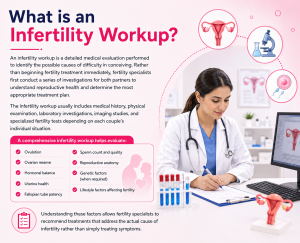
An infertility workup is a detailed medical evaluation performed to identify the possible causes of difficulty in conceiving. Rather than beginning fertility treatment immediately, fertility specialists first conduct a series of investigations for both partners to understand reproductive health and determine the most appropriate treatment plan.

The infertility workup usually includes medical history, physical examination, laboratory investigations, imaging studies, and specialized fertility tests depending on each couple’s individual situation.

A comprehensive infertility workup helps evaluate:

✔ Ovulation

✔ Ovarian reserve

✔ Hormonal balance

✔ Uterine health

✔ Fallopian tube patency

✔ Sperm count and quality

✔ Reproductive anatomy

✔ Genetic factors (when required)

✔ Lifestyle factors affecting fertility

Understanding these factors allows fertility specialists to recommend treatments that address the actual cause of infertility rather than simply treating symptoms.


Why is an Infertility Workup Important Before Fertility Treatment?

Beginning fertility treatment without identifying the underlying cause may reduce the effectiveness of treatment and delay pregnancy. A detailed infertility evaluation helps fertility specialists understand why conception is not occurring and allows them to select the most appropriate treatment.

An infertility workup helps:

✔ Identify the cause of infertility

✔ Detect hormonal disorders

✔ Evaluate egg quality and ovarian reserve

✔ Assess sperm health

✔ Examine uterine and fallopian tube health

✔ Detect ovulation problems

✔ Diagnose reproductive disorders

✔ Guide appropriate fertility treatment

✔ Improve treatment success rates

✔ Avoid unnecessary procedures

A proper fertility assessment ensures that each couple receives personalized treatment based on their unique reproductive health rather than following a generalized approach.


Who Should Get an Infertility Evaluation?

Couples should consider an infertility workup if pregnancy has not occurred despite regular, unprotected intercourse for an appropriate period. Early evaluation can also be beneficial for individuals with known reproductive health concerns.

An infertility evaluation is generally recommended for:

✔ Couples trying to conceive for 12 months without success

✔ Women over 35 years trying for 6 months without pregnancy

✔ Women with irregular menstrual cycles

✔ Women with PCOS

✔ Women with endometriosis

✔ Women with recurrent miscarriages

✔ Men with abnormal semen analysis

✔ Men or women with previous reproductive surgeries

✔ Couples with unexplained infertility

✔ Individuals with known hormonal disorders

Seeking timely fertility evaluation allows early diagnosis and improves the chances of successful treatment by addressing underlying reproductive health issues before they become more complex.

What Tests Are Included in an Infertility Workup?

A complete infertility workup involves evaluating both partners because infertility can result from female factors, male factors, or a combination of both. The purpose of these investigations is to identify the exact reason for difficulty in conceiving and recommend the most appropriate fertility treatment.

Depending on individual medical history and symptoms, fertility specialists may recommend different tests.

The infertility workup may include:

✔ Detailed medical history

✔ Physical examination

✔ Hormonal evaluation

✔ Ovulation assessment

✔ Pelvic ultrasound

✔ Semen analysis

✔ Fallopian tube evaluation

✔ Ovarian reserve testing

✔ Blood investigations

✔ Genetic testing (when indicated)

✔ Additional fertility investigations based on individual needs

These tests provide valuable information about reproductive health and help fertility specialists develop a personalized treatment plan.

Female Fertility Evaluation

The female fertility assessment focuses on identifying conditions that may affect ovulation, egg quality, hormonal balance, uterine health, or fallopian tube function.

A comprehensive female fertility workup may include:

Medical History

The fertility specialist reviews:

✔ Menstrual cycle pattern

✔ Previous pregnancies

✔ Miscarriage history

✔ Previous surgeries

✔ Medical conditions

✔ Family history

✔ Lifestyle factors

✔ Current medications

Understanding the patient’s medical background helps guide further investigations.

Hormonal Blood Tests

Hormones play a vital role in fertility. Blood investigations help evaluate reproductive hormone levels and identify hormonal disorders.

Common hormonal tests include:

✔ FSH (Follicle Stimulating Hormone)

✔ LH (Luteinizing Hormone)

✔ AMH (Anti-Müllerian Hormone)

✔ Estradiol

✔ Progesterone

✔ Prolactin

✔ Thyroid Function Tests

✔ Blood Sugar Evaluation

These investigations help assess ovarian function and ovulation.

Ovulation Assessment

Regular ovulation is essential for natural conception.

Ovulation assessment may include:

✔ Menstrual history

✔ Follicular monitoring

✔ Ultrasound examination

✔ Hormonal evaluation

✔ Ovulation tracking

These tests help determine whether eggs are developing and being released normally.

Pelvic Ultrasound

Ultrasound is an important part of infertility evaluation because it helps assess the reproductive organs.

Pelvic ultrasound evaluates:

✔ Uterus

✔ Ovaries

✔ Endometrial thickness

✔ Ovarian follicles

✔ Fibroids

✔ Ovarian cysts

✔ Polycystic ovaries (PCOS)

This examination provides valuable information about reproductive anatomy.


Fallopian Tube Evaluation

Healthy fallopian tubes are essential because fertilization normally occurs inside the tubes.

Doctors may recommend investigations such as:

✔ HSG (Hysterosalpingography)

✔ Sonosalpingography

✔ Laparoscopy (when indicated)

These procedures help determine whether the fallopian tubes are open or blocked.


Ovarian Reserve Testing

Ovarian reserve refers to the quantity and quality of remaining eggs.

Assessment may include:

✔ AMH test

✔ Antral Follicle Count (AFC)

✔ Ultrasound evaluation

These tests help fertility specialists estimate reproductive potential and plan treatment accordingly.


Male Fertility Evaluation

Male infertility contributes to a significant proportion of infertility cases. Therefore, evaluation of the male partner is equally important during infertility workup.

The male fertility assessment generally includes:

✔ Medical history

✔ Physical examination

✔ Semen analysis

✔ Hormonal evaluation

✔ Genetic testing (when required)

✔ Ultrasound examination (selected cases)

Early evaluation allows many male fertility problems to be identified and managed appropriately.


Semen Analysis

Semen analysis is one of the most important investigations in male infertility evaluation.

The test assesses:

✔ Sperm count

✔ Sperm motility

✔ Sperm morphology

✔ Semen volume

✔ Sperm concentration

✔ Presence of infection

✔ Overall semen quality

Abnormal findings may require additional investigations or consultation with a fertility specialist.

Hormonal Evaluation in Men

Hormonal blood tests may be recommended if semen analysis suggests hormonal abnormalities.

These investigations may include:

✔ Testosterone

✔ FSH

✔ LH

✔ Prolactin

✔ Thyroid Function Tests

Hormonal evaluation helps identify endocrine disorders affecting sperm production.

Common Causes of Infertility

Infertility can result from a variety of medical conditions affecting either partner. Sometimes, more than one factor contributes to difficulty in conceiving.

Common Female Causes

✔ Polycystic Ovary Syndrome (PCOS)

✔ Endometriosis

✔ Blocked fallopian tubes

✔ Ovulation disorders

✔ Diminished ovarian reserve

✔ Uterine fibroids

✔ Hormonal imbalance

✔ Thyroid disorders

✔ Premature ovarian insufficiency


Common Male Causes

✔ Low sperm count

✔ Poor sperm motility

✔ Abnormal sperm morphology

✔ Hormonal imbalance

✔ Varicocele

✔ Genetic disorders

✔ Infections

✔ Lifestyle factors


Combined or Unexplained Causes

In some couples, infertility results from factors affecting both partners. In other cases, all investigations appear normal, and no specific cause is identified.

This is known as:

✔ Unexplained infertility

A detailed infertility workup helps fertility specialists choose the most appropriate treatment even in such situations.

Lifestyle Factors That Can Affect Fertility

Lifestyle habits can influence reproductive health in both men and women. Improving these factors may enhance natural fertility and improve the success of fertility treatments.

Important lifestyle factors include:

✔ Smoking

✔ Alcohol consumption

✔ Obesity

✔ Poor nutrition

✔ Lack of physical activity

✔ Chronic stress

✔ Sleep disturbances

✔ Exposure to environmental toxins

✔ Excessive caffeine intake

✔ Uncontrolled medical conditions

Healthy lifestyle modifications are often recommended alongside fertility treatment to support better reproductive outcomes.

Treatment Options After an Infertility Workup

Once the infertility evaluation is complete, fertility specialists develop an individualized treatment plan based on the identified cause.

Treatment options may include:

Lifestyle Modifications

✔ Healthy diet

✔ Weight management

✔ Exercise

✔ Stress reduction

✔ Smoking cessation


Fertility Medications

Medicines may be prescribed to:

✔ Stimulate ovulation

✔ Correct hormonal imbalance

✔ Improve reproductive function


Intrauterine Insemination (IUI)

IUI may be recommended for selected couples after appropriate fertility evaluation.

It involves:

✔ Processing healthy sperm

✔ Placing sperm inside the uterus during ovulation


In Vitro Fertilization (IVF)

IVF may be considered for couples with:

✔ Blocked fallopian tubes

✔ Severe male infertility

✔ Advanced maternal age

✔ Failed previous fertility treatments

✔ Unexplained infertility

Dr. Iram’s IVF Hospital provides comprehensive fertility treatment based on detailed infertility workup and individualized reproductive care.


Benefits of Early Infertility Assessment

Seeking fertility evaluation early offers several important advantages for couples planning pregnancy.

Early infertility workup may help:

✔ Identify fertility problems sooner

✔ Improve treatment success

✔ Reduce unnecessary delays

✔ Detect treatable conditions

✔ Preserve fertility when appropriate

✔ Guide personalized treatment

✔ Improve pregnancy outcomes

✔ Provide emotional reassurance

Early diagnosis allows couples to begin the most suitable fertility treatment at the right time, improving their chances of achieving a successful pregnancy.

Currently Serving Couples Across Bhopal

Dr. Iram’s IVF Hospital provides comprehensive fertility care for couples from Bhopal and nearby regions who are facing challenges in conceiving naturally. With advanced fertility diagnostics, personalized treatment plans, and compassionate care, the hospital supports couples throughout every stage of their parenthood journey.

The fertility team provides specialized care for:

✔ Female Infertility Evaluation

✔ Male Infertility Evaluation

✔ Comprehensive Infertility Workup

✔ Hormonal Assessment

✔ Ovulation Monitoring

✔ Semen Analysis

✔ Ovarian Reserve Testing

✔ Fallopian Tube Evaluation

✔ IVF (In Vitro Fertilization)

✔ IUI (Intrauterine Insemination)

✔ Fertility Preservation

✔ Recurrent Pregnancy Loss Evaluation

✔ PCOS-related Infertility

✔ Endometriosis-related Infertility

✔ Unexplained Infertility

✔ Pregnancy Care After Fertility Treatment

Couples from different parts of Bhopal choose Dr. Iram’s IVF Hospital for ethical fertility care, advanced reproductive technology, and personalized guidance designed to improve the chances of successful conception.

How to Improve Fertility Naturally Before Treatment

While medical treatment may be necessary for many couples, adopting healthy lifestyle habits before and during fertility treatment can support reproductive health and improve treatment outcomes.

Helpful lifestyle recommendations include:

✔ Maintain a healthy body weight

✔ Eat a balanced and nutritious diet

✔ Exercise regularly

✔ Avoid smoking and tobacco

✔ Limit alcohol consumption

✔ Manage stress through relaxation techniques

✔ Get adequate sleep

✔ Take prescribed vitamins and supplements

✔ Control diabetes and thyroid disorders

✔ Attend regular fertility consultations

Healthy lifestyle changes cannot treat every cause of infertility, but they can improve overall reproductive health and complement fertility treatment.

Common Myths About Infertility

Infertility is surrounded by many myths that can create unnecessary confusion and delay proper treatment. Understanding the facts helps couples make informed decisions about their reproductive health.

Myth 1: Infertility Is Always a Woman’s Problem

Fact: Infertility can affect both men and women. Male factors contribute to a significant percentage of infertility cases, which is why evaluation of both partners is essential.

Myth 2: IVF Is the First Treatment for Every Couple

Fact: IVF is not always the first step. Many couples achieve pregnancy with lifestyle modifications, medications, or IUI after a proper infertility workup identifies the underlying cause.

Myth 3: Young Couples Cannot Have Infertility

Fact: Although fertility generally declines with age, infertility can affect couples of any age due to hormonal disorders, reproductive conditions, or male fertility factors.

Myth 4: Stress Alone Causes Infertility

Fact: Stress may affect overall well-being, but infertility usually results from identifiable medical conditions affecting either partner. A comprehensive infertility workup helps determine the actual cause.

Myth 5: If You Already Have One Child, You Cannot Experience Infertility

Fact: Secondary infertility is a recognized condition where couples who previously conceived naturally experience difficulty becoming pregnant again.

Summary

An Infertility Workup in Bhopal is the most important first step before beginning fertility treatment. A detailed fertility evaluation helps identify the underlying causes of infertility in both partners, allowing fertility specialists to recommend the most suitable treatment rather than relying on a generalized approach. Investigations such as hormonal testing, ovulation assessment, ultrasound, ovarian reserve testing, fallopian tube evaluation, and semen analysis provide valuable information that guides personalized fertility care.

At Dr. Iram’s IVF Hospital, fertility treatment begins with accurate diagnosis, compassionate counseling, and individualized care. Whether a couple requires lifestyle modifications, fertility medications, IUI, IVF, or advanced reproductive technologies, a thorough infertility workup improves treatment planning and increases the chances of achieving a healthy pregnancy.

FAQs – Infertility Workup in Bhopal: The First Step Before Fertility Treatment

1. What is an infertility workup?

An infertility workup is a comprehensive medical evaluation of both partners that helps identify the underlying causes of infertility before starting fertility treatment.

2. When should couples undergo an infertility evaluation?

Couples should consider evaluation if pregnancy has not occurred after 12 months of regular, unprotected intercourse, or after 6 months if the woman is over 35 years of age.

3. Is infertility testing necessary for both partners?

Yes. Since infertility can affect both men and women, evaluating both partners provides a complete understanding of reproductive health and improves treatment planning.

4. What tests are commonly included in an infertility workup?

Common investigations include hormonal blood tests, ovulation assessment, pelvic ultrasound, ovarian reserve testing, fallopian tube evaluation, semen analysis, and additional fertility tests based on individual needs.

5. Can infertility be treated after the workup?

Yes. Depending on the diagnosis, treatment may include lifestyle modifications, fertility medications, ovulation induction, IUI, IVF, or other assisted reproductive techniques.

6. Does every couple with infertility require IVF?

No. Many couples conceive successfully with simpler treatments after a proper infertility evaluation identifies the underlying cause.

7. How long does an infertility workup take?

The duration varies depending on the investigations required. Some tests are completed within a few days, while others are scheduled according to the woman’s menstrual cycle.

8. Who should I consult for an infertility workup in Bhopal?

Dr. Iram Ajaz and the experienced fertility team at Dr. Iram’s IVF Hospital provide comprehensive infertility evaluation, personalized fertility treatment, and advanced reproductive care for couples planning parenthood.

Conclusion – Infertility Workup in Bhopal: The First Step Before Fertility Treatment

The journey to parenthood begins with understanding your reproductive health. An Infertility Workup in Bhopal is the essential first step before starting fertility treatment, as it helps identify the exact cause of infertility and allows fertility specialists to recommend the most appropriate treatment plan. Early evaluation not only improves treatment success but also helps avoid unnecessary procedures, saving valuable time and providing clarity for couples planning a family.

At Dr. Iram’s IVF Hospital, every couple receives compassionate, evidence-based fertility care supported by advanced diagnostic facilities and personalized treatment plans. From infertility evaluation and fertility counseling to IUI, IVF, and comprehensive reproductive healthcare, the experienced fertility team is committed to guiding couples with confidence, transparency, and hope throughout their parenthood journey.

Egg Freezing in Bhopal has become an increasingly popular fertility preservation option for women who wish to delay pregnancy without compromising their future chances of becoming a mother. Whether due to career goals, higher education, medical conditions, or waiting for the right time to start a family, many women are choosing egg freezing to protect their reproductive potential. Advances in reproductive medicine have made fertility preservation safer, more effective, and accessible than ever before.

At Dr. Iram’s IVF Hospital, one of the leading IVF Centres in Bhopal, women receive comprehensive fertility assessment, personalized counselling, and advanced egg freezing services using modern cryopreservation technology. Our experienced fertility specialists guide every patient through the entire fertility preservation process, helping them make informed decisions about their reproductive future with confidence and peace of mind.

Many women believe fertility remains the same throughout life, but female fertility naturally declines with age. Understanding how egg freezing works, who can benefit from it, and when to consider fertility preservation can help women make timely decisions that improve their future family planning options.


What Is Egg Freezing?

Egg Freezing, also known as Oocyte Cryopreservation, is an advanced fertility preservation technique in which a woman’s healthy eggs are collected, frozen, and safely stored for future use.

The frozen eggs remain preserved until the woman decides she is ready to become pregnant. At that time, the eggs can be thawed, fertilized with sperm through IVF, and transferred into the uterus.

Egg freezing allows women to preserve younger, healthier eggs, which may improve the chances of pregnancy later in life.


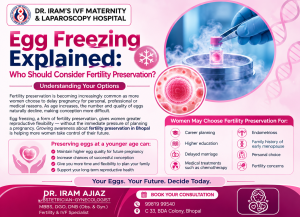
Why Is Fertility Preservation Becoming More Common?

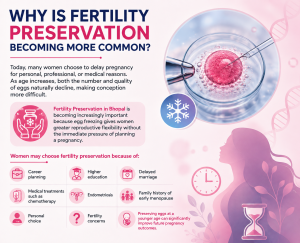
Today, many women choose to delay pregnancy for personal, professional, or medical reasons. As age increases, both the number and quality of eggs naturally decline, making conception more difficult.

Fertility Preservation in Bhopal is becoming increasingly important because egg freezing gives women greater reproductive flexibility without the immediate pressure of planning a pregnancy.

Women may choose fertility preservation because of:

  • Career planning
  • Higher education
  • Delayed marriage
  • Medical treatments such as chemotherapy
  • Endometriosis
  • Family history of early menopause
  • Personal choice
  • Fertility concerns

Preserving eggs at a younger age can significantly improve future pregnancy outcomes.


Who Should Consider Egg Freezing?

Egg freezing is not only for women facing infertility. It can also benefit women who wish to preserve their fertility before age-related decline or certain medical treatments.

You may consider Egg Freezing in Bhopal if you:

  • Want to delay pregnancy for personal reasons
  • Are focusing on career or higher education
  • Have been diagnosed with endometriosis
  • Are undergoing cancer treatment
  • Have low ovarian reserve
  • Have a family history of early menopause
  • Are planning fertility preservation before ovarian surgery
  • Want to preserve fertility before certain medical treatments

A fertility specialist can evaluate your reproductive health and help determine whether egg freezing is the right option for you.


What Is the Best Age for Egg Freezing?

Although egg freezing can be performed at different ages, fertility specialists generally recommend preserving eggs at a younger age because younger eggs have better quality and a higher chance of resulting in a healthy pregnancy later.

Many specialists suggest that the ideal age for egg freezing is between 25 and 35 years, when egg quality is usually at its best.

However, every woman is different. A fertility assessment can help determine the right timing based on ovarian reserve and overall reproductive health.


Benefits of Egg Freezing

Egg freezing offers several advantages for women planning their future families.

Some important benefits include:

  • Preserves fertility for future pregnancy
  • Maintains younger egg quality
  • Provides greater reproductive flexibility
  • Supports women undergoing cancer treatment
  • Reduces age-related fertility concerns
  • Helps with long-term family planning
  • Gives emotional reassurance for future parenthood

While egg freezing cannot guarantee pregnancy, it significantly improves future reproductive options when performed at the appropriate age.

How Is the Egg Freezing Procedure Performed?

The Egg Freezing Procedure is a well-planned fertility preservation process that is performed over a period of about two to three weeks. At Dr. Iram’s IVF Hospital, every step is carefully monitored to ensure patient safety and maximize the number of healthy eggs collected.

The procedure generally includes:

  • Fertility consultation and evaluation
  • Hormonal blood tests
  • Ultrasound assessment of the ovaries
  • Ovarian stimulation with fertility medications
  • Regular follicle monitoring
  • Egg retrieval procedure
  • Advanced cryopreservation (freezing) of mature eggs

The egg retrieval procedure is performed under mild anesthesia and usually takes about 20–30 minutes. Most women can return home the same day and resume normal activities within a short period.


Is Egg Freezing Safe?

One of the most common concerns women have is whether egg freezing is safe.

Modern Egg Freezing in Bhopal is considered a safe and well-established fertility preservation technique when performed by experienced fertility specialists. The procedure has helped thousands of women worldwide preserve their fertility for future family planning.

Some women may experience temporary side effects such as:

  • Mild abdominal discomfort
  • Bloating
  • Cramping
  • Temporary pelvic pain
  • Mild spotting after egg retrieval

These symptoms usually improve within a few days. Serious complications are uncommon when the procedure is performed in a specialized fertility center.


What Is the Success Rate of Egg Freezing?

The success of egg freezing depends on several important factors, including:

  • Woman’s age at the time of freezing
  • Number of eggs preserved
  • Egg quality
  • Overall reproductive health
  • Quality of the IVF laboratory

Women who freeze their eggs at a younger age generally have higher chances of achieving a successful pregnancy in the future.

Although egg freezing significantly improves future fertility options, no fertility treatment can guarantee pregnancy. An experienced fertility specialist can provide realistic expectations based on individual circumstances.


When Should You Consult a Fertility Specialist?

Many women wait until they experience fertility problems before consulting a specialist. However, discussing fertility preservation early allows women to make informed decisions while more reproductive options are available.

You should consider consulting a fertility specialist if you:

  • Are planning to delay pregnancy
  • Have irregular menstrual cycles
  • Have been diagnosed with PCOS or Endometriosis
  • Have a low ovarian reserve
  • Are preparing for cancer treatment
  • Have a family history of early menopause
  • Wish to preserve fertility before ovarian surgery

Early fertility evaluation can help determine whether egg freezing is the right choice for your future family planning goals.


Why Choose Dr. Iram’s IVF Hospital for Egg Freezing in Bhopal?

Women looking for Egg Freezing in Bhopal trust Dr. Iram’s IVF Hospital because of its patient-centered approach, advanced reproductive technology, and experienced fertility specialists.

Patients choose Dr. Iram’s IVF Hospital because of:

  • Experienced Fertility Specialists
  • Advanced Egg Freezing Technology
  • Modern IVF Laboratory
  • Personalized Fertility Counselling
  • Comprehensive Fertility Evaluation
  • Ethical and Transparent Treatment
  • High Standards of Patient Care
  • Complete Fertility Services Under One Roof

Every treatment plan is designed according to the patient’s age, reproductive health, and future family planning goals, ensuring compassionate and individualized care throughout the journey.

Summary

Egg Freezing in Bhopal has become an important fertility preservation option for women who want to delay pregnancy without compromising their future chances of becoming a mother. Whether the decision is based on career goals, medical treatment, personal circumstances, or age-related fertility decline, freezing healthy eggs at the right time can provide greater reproductive flexibility. While egg freezing cannot guarantee pregnancy in the future, preserving eggs at a younger age significantly improves the chances of successful conception later in life.

At Dr. Iram’s IVF Hospital, women receive personalized fertility counselling, comprehensive reproductive evaluation, advanced egg freezing technology, and compassionate support throughout the fertility preservation journey. Our experienced fertility specialists help every woman understand her reproductive health and make informed decisions with confidence.


Frequently Asked Questions (FAQs)

Who should consider egg freezing?

Egg freezing is recommended for women who wish to delay pregnancy, are undergoing cancer treatment, have PCOS, low ovarian reserve, endometriosis, or want to preserve fertility before age-related decline.

What is the best age for egg freezing?

Most fertility specialists recommend freezing eggs between the ages of 25 and 35, as egg quality and quantity are generally highest during these years.

Is the egg freezing procedure painful?

The egg retrieval procedure is performed under mild anesthesia, so most women experience little or no pain during the procedure. Mild discomfort or bloating may occur for a few days afterward.

How long can frozen eggs be stored?

Frozen eggs can be safely stored for many years using advanced cryopreservation techniques without significant loss of quality.

Does egg freezing guarantee pregnancy?

No. Egg freezing improves future fertility options, but pregnancy depends on several factors such as the woman’s age at freezing, egg quality, overall reproductive health, and embryo development.

Is egg freezing safe?

Yes. Egg freezing is considered a safe and well-established fertility preservation procedure when performed by experienced fertility specialists using modern laboratory techniques.


Conclusion

Egg Freezing in Bhopal offers women the opportunity to preserve their fertility and make future family planning decisions with greater confidence. As more women choose to balance their personal, professional, and medical priorities, fertility preservation has become an important part of reproductive healthcare. Consulting a fertility specialist at the right time allows women to understand their fertility potential and explore the best options for their future.

At Dr. Iram’s IVF Hospital, our experienced fertility team combines advanced reproductive technology with personalized, ethical, and compassionate care to support every woman’s parenthood journey. Whether you are considering egg freezing for medical reasons or personal planning, timely fertility preservation can help protect your future reproductive choices and provide peace of mind.